Log In
Don’t have an account? Sign up here »
Don’t have an account? Sign up here »
Recent studies show that videos are driving Internet content and increasing market revenue. ePlanet’s Asad Khan discusses why businesses should include videos in their marketing toolkits.
Salt Lake City, UT (PRWEB) March 20, 2017
With its ability to reach and engage multiple audiences worldwide, video is becoming a vital component of the marketing toolkit. In 2017, video content is expected to account for 74% of all Internet traffic.1 Research indicates that businesses that use video to market grew revenue 49% faster year-over-year than businesses that did not.2 When it comes to attracting an audience, four times as many customers would prefer to watch a product video rather than read about it.1 Asad Khan, founder of ePlanet Communications, Inc., a global business process outsourcing provider, points out that the use of video in marketing is a vital part of an overall strategy.
Research has shown that video marketing offers a significant return on investment and increases the likelihood of a sale.1,2,3 While it costs an average of $115 in marketing funds to convert a sales lead using non-video marketing, it costs just $93 to convert a lead using video marketing.3 Because video has such tremendous appeal, any upfront investment is rewarded with high click-through and share rates, and ultimately an increase in sales.4
Using video on a digital platform provides the advantage of improving search engine optimization (SEO).2,3 Video generally engages a visitor for a relatively long period, improving a website’s bounce rate and session duration—two factors which greatly influence search engine listings.2 According to Forrester Research, the use of video increases the chances of getting a page one search engine ranking by 50 times.3
« Marketing evolves constantly, » said Kahn. « Companies should always be open to trying different digital marketing strategies. I suggest video as a medium to my clients, because it offers the ability to reach various demographics and creates a connection with the customer. » Video can instill trust by offering useful, entertaining or interesting content to consumers. For international businesses, language barriers matter less when a story can be told with images.
Creating valuable content that interests and engages a customer (and, possibly, encourages them to share) serves to promote a positive brand image and demonstrate thought leadership. Industry leaders are realizing that their audience craves useful content. In 2016, videos with « how to » in their titles were 70% more prevalent.2 When making a decision to purchase a product, 90% of consumers say that video is helpful.2
Khan added, « Given the state of technology today, where most people in the western world are connected to the Internet and have a mobile device, the web is probably the best platform for showcasing video content. » Considering that YouTube reaches more 18 to 49 year-olds than any cable television network, creating the next viral Internet sensation may promise a much greater reach than a traditional television commercial.3
Khan emphasized that « content is king, » and producing something that resonates with the viewer is extremely important. As professional production costs are going down, it’s the right time for companies to budget for video marketing. Small businesses that can’t afford to hire professional production companies can use a smartphone or tablet to create their own amateur videos which, while possibly not as aesthetically pleasing as professionally shot videos, can nonetheless prove to be effective.
After successfully showcasing the business at the, 2017, Affiliate Summit Marketing Conference in Las Vegas. ePlanet will be showcasing again at the Affiliate Summit Marketing Conference from July 30-August 1, 2017, in New York City with others prominent in the performance/direct and digital marketing industry. The event promises to be a premier event in the global marketing industry, with over 5,500 digital marketers from over 70 countries attending.
About ePlanet Communications:
ePlanet Communications is a global business process outsourcing provider with extensive experience in call center operations, digital media solutions, and direct response solutions. By using its integrated channel management capabilities and highly-trained staff, ePlanet develops and deploys inbound and outbound customer support fully integrated with its clients’ marketing campaigns. Digital media solutions include website design, digital franchising, fully functioning eCommerce operations, and the creation of interactive, immersive and responsive social media campaigns across different platforms. ePlanet is also highly experienced in the area of direct response trial, consistently delivering improved customer satisfaction, increased customer retention, and better order value. To learn more about ePlanet and its capabilities, please visit http://www.eplanetcom.com.
1. Curtis, Matt. « The Benefits of Video Marketing in 2017. » Business 2 Community. N.p., 9 Mar. 2017. Web. 10 Mar. 2017.
2. Beccalori, Joe. « Five Reasons To Incorporate Video Into Your Next Marketing Campaign. » Forbes. Forbes Magazine, 08 Mar. 2017. Web. 10 Mar. 2017.
3. Totka, Megan. « 4 Reasons Why Video Is the New Star of Your Small Business Marketing Strategy. » All Business. Dun Bradstreet, 04 Mar. 2017. Web. 10 Mar. 2017.
4. Joshi, Swati. « Why Video Marketing Is the New Darling of the Marketing World. » The Huffington Post. TheHuffingtonPost.com, 15 Feb. 2016. Web. 13 Mar. 2017.
For the original version on PRWeb visit: http://www.prweb.com/releases/2017/03/prweb14158111.htm
According to eMarketer, over 62 percent of internet users around the world will watch digital video content in 2017. Cisco believes that by 2020 video traffic will account for 82 percent of all internet traffic. With numbers like those, video marketers must face the reality of discoverability. How are they supposed to ensure their content gets seen by the right eyes at the right time amidst the ever-growing video landscape?
The answer could be in artificial intelligence (AI). While major brands and publishers are already using machine-learning technology to deliver optimized viewing experiences to audiences, small- to mid-sized video marketers can also capitalize on this solution to discoverability and user experience as the market grows.
Iris.TV, a video automation and programming platform, knows the power of AI first-hand. The brand’s customers generally see a 70 percent increase in video views, a 62 percent increase in views/session engagement, and an impressive 10 percent decrease in bounce rates. On top of that, Iris.TV’s 10 biggest clients saw an average 400 percent increase in video views in 2016; one publisher saw a 465 percent view increase in just a week.
All of these numbers are because Iris.TV’s clients used its AI platform to serve personalized, relevant videos and ads to audiences.
 “AI/machine learning is going to be a huge equalizer for small- to mid-sized brands starting at the end of this year,” says Robert Bardunias, co-founder and chief revenue officer at Iris.TV. “Brands are going to start to realize that AI and machine learning help augment the work normally done by a team of analysts.”
“AI can provide a level of insight not available with general meta and share data, and removes a lot of the guesswork that goes into video targeting,” explains Fritz Brumder, CEO and co-founder of live streaming platform Brandlive. “AI technology allows marketers to create multiple variations of videos by use cases, audience, message, product, and performance. AI helps marketers better predict outcomes, and makes it possible for brands and publishers to make recommendations based on interests and interactions.”
So, if AI is that powerful, why aren’t more video marketers using it? Brumder believes it’s because the “scope of AI is intimidating,” and that “we are in a walk before we run state.” All marketers have access to the data they need to make AI work, he says, but it’s conceptualizing and taking the next step that’s daunting.
“We are all control freaks. Marketers even more so,” Bardunias adds. “The truth is that as much as we may pretend to be trailblazers, no one wants to be the guinea pig. The problem is that AI has evolved; it’s just that no one realizes it. It’s cool to say that you are working with AI, but the moment you tell someone to divert some budget to it, they give you the side-stare.”
However, plenty of larger media companies and agencies have already begun putting more of their marketing budgets towards AI implementations for 2017, Bardunias notes, and that “will only help speed up the learning curve that will help align AI metrics and marketers’ KPIs.”
“The real fun is coming in Q2/Q3 when more and more video marketers realize that a lot of the foundation has been laid,” Bardunias says.
Video marketers of all size can benefit from an AI-powered strategy, even more so now that the barrier of entry is becoming less expensive, less complicated, and less abstract. As such, video marketers looking to implement AI elements should follow these tips to use it well:
Always define the goal: Don’t put too much trust in AI’s supposedly inherent ability to judge what viewers want to watch next, Bardunias warns. Without proper parameters, even AI has flaws. Marketers who implement the technology and let it run the show unguided risk missing or skewing their marketing goals.
“AI is an amazing tool to leverage some of the data sets that are in the market, but depending on the KPIs, not always a broad-based solution,” Bardunias says. “The key tip would be to always define the goal for any new technology before you launch the campaign. The days of setting and forgetting or just blanketing and hoping that the AI decides the best course is not always the answer. A system is only as good as its inputs, and in video marketing that means people!”
Know the target audience. On a related note, video marketers must also have a solid grasp on who they’re trying to reach. “AI is undoubtedly a powerful technology, but in order to receive appropriate outputs, you must have quality inputs,” Brumder explains. “You can’t just scrape the bottom of the data barrel and expect machine learning to magically turn it into gold. It’s important to have a complete, thorough customer profile, with data from several different sources.”
Brumder adds, “It’s essential to paint the picture” for AI to make its best recommendations. This means video marketers must pull data from a wide variety of sources, not just their own websites or YouTube channels. Social media engagements, mobile usage, and similar benchmarks should also be primary inputs for any AI implementation.
Embrace the power of niche content. If video marketers are concerned about their brands being too small or niche to use AI, they should think again. In reality, AI can save such marketers hours upon hours of research and analysis time, a luxury only big brands with dedicated teams might have. This, in turn, helps video marketers guide their strategies, not micro-manage them, all while the views and engagement on their content skyrockets.
“With AI, in some cases, the smaller or more niche the brand, the greater the opportunity to be like marketer fruit flies!” Bardunias explains “If you know your target market/audience and where they live and play, AI streamlines the rollout process. That means more data to play with and turn into actionable intelligence.”

The Brandlive console uses AI to optimize clients’ campaigns.
Video marketing has never been more popular. Your social media strategy demands it, but I’m here to take some pressure off.
You don’t need a viral video.
 This is a great city, and you can hire any number of Milwaukee video production companies to create an awesome video for your business. However, none of them can guarantee it’ll go viral.
As a video producer, I don’t have any control over that phenomenon. I have the power to create a good video. I have the power to tell a great story. But I do not have the power to make someone share that video.
The good news: a viral video doesn’t ensure business success. For every “Will it blend?” (the viral blender infomercial) success story there’s a “Carrie” failure. The 2013 horror film reboot promotion went viral, with more than 67 million views to-date, but the movie was a box office flop.
It’s more important to produce videos focused on the “right” audience, instead of one that reaches millions who might not be your customers.
Focus on your viewers when you produce videos. Who is our audience? What is going to appeal to them? How can we help serve them with our content? All questions you should be asking before you start shooting.
Lutheran Social Services of Wisconsin and Upper Michigan, one of our customers, does an awesome job with this.
Its videos are incredibly powerful and effective marketing tools. LSS officials show the videos to people who might need the services, as well as potential donors. In short, they show the videos to the people they most want to connect with.
See… you don’t need a viral video. You need a marketing video plan that focuses on your core audience. That’s a better recipe for video success.
-Tony Gnau is founder and chief storytelling officer at Milwaukee-based T60 Productions.
Recent studies show that videos are driving Internet content and increasing market revenue. ePlanet’s Asad Khan discusses why businesses should include videos in their marketing toolkits.
Salt Lake City, UT (PRWEB) March 20, 2017
With its ability to reach and engage multiple audiences worldwide, video is becoming a vital component of the marketing toolkit. In 2017, video content is expected to account for 74% of all Internet traffic.1 Research indicates that businesses that use video to market grew revenue 49% faster year-over-year than businesses that did not.2 When it comes to attracting an audience, four times as many customers would prefer to watch a product video rather than read about it.1 Asad Khan, founder of ePlanet Communications, Inc., a global business process outsourcing provider, points out that the use of video in marketing is a vital part of an overall strategy.
Research has shown that video marketing offers a significant return on investment and increases the likelihood of a sale.1,2,3 While it costs an average of $115 in marketing funds to convert a sales lead using non-video marketing, it costs just $93 to convert a lead using video marketing.3 Because video has such tremendous appeal, any upfront investment is rewarded with high click-through and share rates, and ultimately an increase in sales.4
Using video on a digital platform provides the advantage of improving search engine optimization (SEO).2,3 Video generally engages a visitor for a relatively long period, improving a website’s bounce rate and session duration—two factors which greatly influence search engine listings.2 According to Forrester Research, the use of video increases the chances of getting a page one search engine ranking by 50 times.3
« Marketing evolves constantly, » said Kahn. « Companies should always be open to trying different digital marketing strategies. I suggest video as a medium to my clients, because it offers the ability to reach various demographics and creates a connection with the customer. » Video can instill trust by offering useful, entertaining or interesting content to consumers. For international businesses, language barriers matter less when a story can be told with images.
Creating valuable content that interests and engages a customer (and, possibly, encourages them to share) serves to promote a positive brand image and demonstrate thought leadership. Industry leaders are realizing that their audience craves useful content. In 2016, videos with « how to » in their titles were 70% more prevalent.2 When making a decision to purchase a product, 90% of consumers say that video is helpful.2
Khan added, « Given the state of technology today, where most people in the western world are connected to the Internet and have a mobile device, the web is probably the best platform for showcasing video content. » Considering that YouTube reaches more 18 to 49 year-olds than any cable television network, creating the next viral Internet sensation may promise a much greater reach than a traditional television commercial.3
Khan emphasized that « content is king, » and producing something that resonates with the viewer is extremely important. As professional production costs are going down, it’s the right time for companies to budget for video marketing. Small businesses that can’t afford to hire professional production companies can use a smartphone or tablet to create their own amateur videos which, while possibly not as aesthetically pleasing as professionally shot videos, can nonetheless prove to be effective.
After successfully showcasing the business at the, 2017, Affiliate Summit Marketing Conference in Las Vegas. ePlanet will be showcasing again at the Affiliate Summit Marketing Conference from July 30-August 1, 2017, in New York City with others prominent in the performance/direct and digital marketing industry. The event promises to be a premier event in the global marketing industry, with over 5,500 digital marketers from over 70 countries attending.
About ePlanet Communications:
ePlanet Communications is a global business process outsourcing provider with extensive experience in call center operations, digital media solutions, and direct response solutions. By using its integrated channel management capabilities and highly-trained staff, ePlanet develops and deploys inbound and outbound customer support fully integrated with its clients’ marketing campaigns. Digital media solutions include website design, digital franchising, fully functioning eCommerce operations, and the creation of interactive, immersive and responsive social media campaigns across different platforms. ePlanet is also highly experienced in the area of direct response trial, consistently delivering improved customer satisfaction, increased customer retention, and better order value. To learn more about ePlanet and its capabilities, please visit http://www.eplanetcom.com.
1. Curtis, Matt. « The Benefits of Video Marketing in 2017. » Business 2 Community. N.p., 9 Mar. 2017. Web. 10 Mar. 2017.
2. Beccalori, Joe. « Five Reasons To Incorporate Video Into Your Next Marketing Campaign. » Forbes. Forbes Magazine, 08 Mar. 2017. Web. 10 Mar. 2017.
3. Totka, Megan. « 4 Reasons Why Video Is the New Star of Your Small Business Marketing Strategy. » All Business. Dun Bradstreet, 04 Mar. 2017. Web. 10 Mar. 2017.
4. Joshi, Swati. « Why Video Marketing Is the New Darling of the Marketing World. » The Huffington Post. TheHuffingtonPost.com, 15 Feb. 2016. Web. 13 Mar. 2017.
For the original version on PRWeb visit: http://www.prweb.com/releases/2017/03/prweb14158111.htm
Brendan Smialowski / AFP / Getty Images
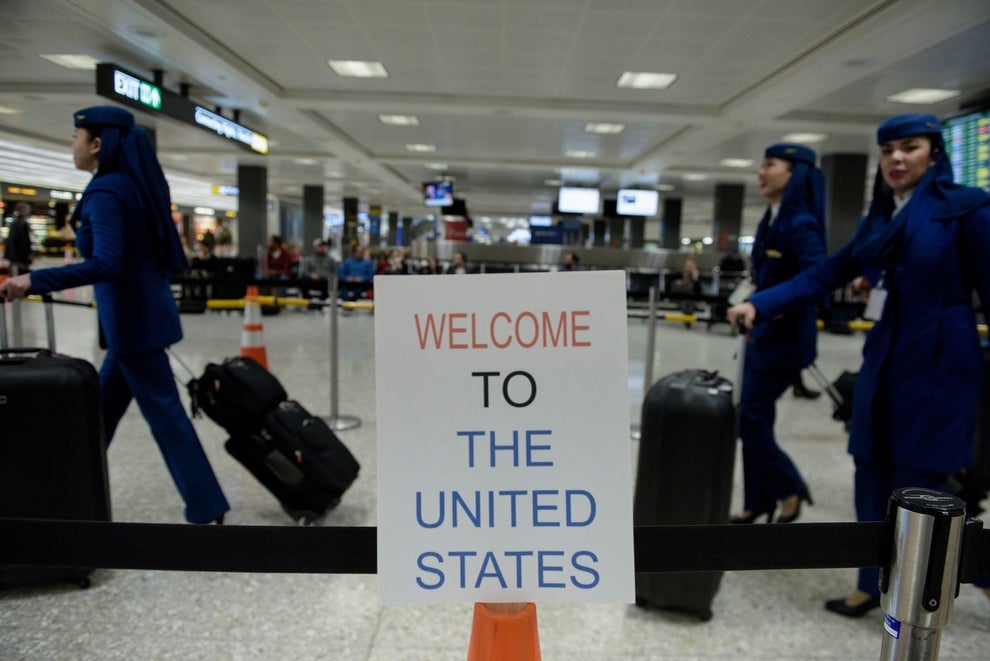
The US is barring passengers from bringing laptops, tablet computers, and other electronic devices as carry-on items on non-stop flights from 10 airports in the Middle East and North Africa.
The ban was revealed Monday after two Middle Eastern airlines began telling passengers about the new restrictions. A representative of Saudi Arabian Airlines, based at JFK International Airport in New York, told BuzzFeed News that the ban begins immediately, and covers all electronic devices, excluding cell phones. The airline said the ban applies on flights headed to the US.
The representative declined to answer further questions and said inquiries should be directed to the Transportation Security Administration.
The ban will hit every major air travel hub in the Middle East, including the home airports of global airline industry giants like Emirates, Etihad, Qatar Airways and Turkish Airlines. A US official told the Associated Press that the ban covers all direct flights to to the US from Cairo, Egypt; Amman, Jordan; Kuwait City, Kuwait; Casablanca, Morocco; Doha, Qatar; Riyadh and Jeddah in Saudi Arabia; Istanbul, Turkey; and Abu Dhabi and Dubai in the United Arab Emirates.
All these countries are US allies, many of them crucial ones: Turkey is a NATO member, Egypt is the second-largest recipient of American military aid and Qatar hosts the forward operating headquarters of the US Central Command. Dubai’s airport is the world’s busiest for international passenger traffic, while Abu Dhabi’s is so trusted that US customs and immigration checks are conducted there.
Details of the ban will be announced on Tuesday, NBC News reported, saying such changes to security rules “are made periodically in response to threat intelligence, and laptop computers have long been the source of concern.”
The devices banned from the cabin will need to be packed in checked baggage. Former officials said the use of certain electronic devices in the flight cabin has presented a longstanding threat, but some questioned why action is being taken now.
“If this is true, the threat of attempts to disguise explosives within laptops and other large electronic devices carried through the last point of departure airports bound for the United States is not new. What appears to be new is this latest overreaction,” a former administration official familiar with aviation security procedures told BuzzFeed News. “It appears to be a Muslim ban by a thousand cuts.”
For as many as two years, US officials have trained airport security personnel across the Middle East on how to search for explosives, the former official said.
“It’s an unnecessary piece of overreach that is a kind of punishment meted out to a group rather than a targeted application of reasonable security measures,” the person said.
The TSA referred inquiries on the matter to the Department of Homeland Security. A Homeland Security spokesperson told BuzzFeed News: “We have no comment on potential security precautions, but will provide an update when appropriate.”
A Republican aide to the House Homeland Security committee confirmed to BuzzFeed News that Chairman Michael McCaul and committee members had been briefed on the issue, but could not provide additional details.
Adam Comis, a spokesperson for Democrats on the committee, said ranking member Bennie Thompson had been briefed but Comis said he could not provide more details about the ban either.
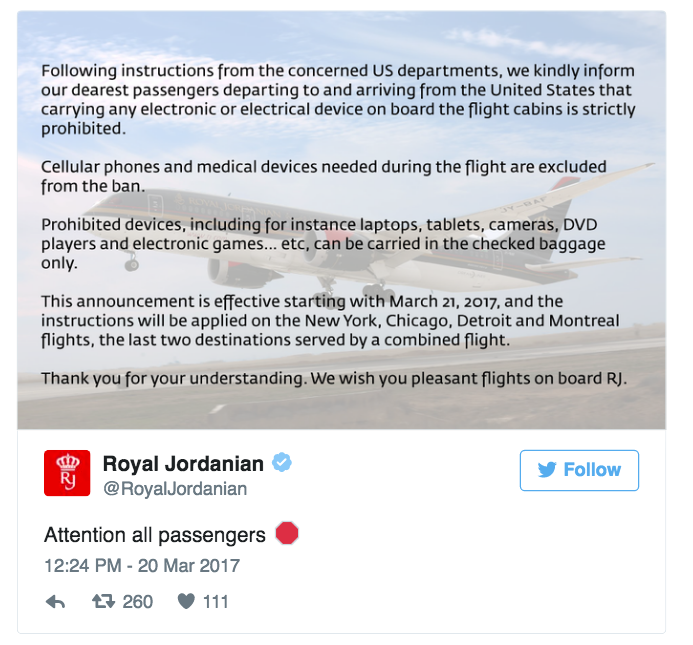
Royal Jordanian Airlines informed passengers of a ban coming into effect on Tuesday. “Following instructions from the concerned US departments,” it said in a tweet, all electronics are banned on US-bound flights, with an exception for cell phones and medical devices.
That tweet has since been deleted. In a response to inquiries from BuzzFeed News, a representative said “further updates will be announced soon.”
As of Monday night, not all members of the Homeland Security committee had been briefed on the security changes.
“I have not been briefed yet, but it’s a conversation that’s happening,” one member told BuzzFeed News. The committee will be briefed on Wednesday, the person said.
JFK-based representatives of Dubai’s Emirates Airline and Doha-based Qatar Airways said they had not heard of any changes. BuzzFeed News has reached out to other Middle Eastern and African airlines, and will update this article when responses are received.
BuzzFeed News reporters Emma Loop, Lissandra Villa and Nancy Youssef contributed to this report from Washington, DC.
FBI Director James B. Comey acknowledged Monday that his agency is conducting an investigation into possible coordination between the Kremlin and the Trump campaign in a counterintelligence probe that could reach all the way to the White House and may last for months.
The extraordinary disclosure came near the beginning of a sprawling, 5½ -hour public hearing before the House Intelligence Committee in which Comey also said there is “no information” that supports President Trump’s claims that his predecessor ordered surveillance of Trump Tower during the election campaign.
Comey repeatedly refused to answer whether specific individuals close to the president had fallen under suspicion of criminal wrongdoing, “so we don’t wind up smearing people” who may not be charged with a crime.
The FBI traditionally does not disclose the existence of an investigation, “but in unusual circumstances, where it is in the public interest,” Comey said, “it may be appropriate to do so.”
Comey also said he was authorized by the Justice Department to confirm the existence of the wide-ranging probe into Russian interference in the electoral process. He drew fire last year after he notified Congress 11 days before the presidential election — and against the department’s strong advice not to — that the FBI had reopened an examination of Hillary Clinton’s use of a private email server.
That move, Democrats charged, hurt Clinton as she was heading into the home stretch of her campaign. Now, the tables are turned.
Rep. Devin Nunes (R-Calif.), the committee chairman, urged Comey to reveal if and when the bureau has information clearing any of its targets, and to do so as quickly as possible.
“There’s a big gray cloud that you’ve now put over people who have very important work to do to lead this country, and so the faster that you can get to the bottom of this, it’s going to be better for all Americans,” Nunes said.
Comey said that the investigation began in late July and that for a counterintelligence probe, “that’s a fairly short period of time.”
The hearing came amid the controversy fired up by Trump more than two weeks ago when he tweeted, without providing evidence, that President Barack Obama had ordered his phones tapped at Trump Tower.
“I have no information that supports those tweets,’’ Comey said. “We have looked carefully inside the FBI,’’ and agents found nothing to support those claims.
He added that the Justice Department had asked him to tell the committee that the agency has no such information, either.
Under questioning from the top Democrat on the panel, Rep. Adam B. Schiff (Calif.), Comey said no president could order such surveillance.
Remarkably, Trump’s presidential Twitter account continued to fire away throughout the widely watched hearing, live-tweeting comments and assertions that lawmakers then referred to and used to question Comey and National Security Agency Director Michael S. Rogers.
[Full transcript: FBI Director James Comey testifies on Russian interference in 2016 election]
Comey and Rogers both predicted that Russian intelligence agencies will continue to seek to meddle in U.S. political campaigns, because they consider their work in the 2016 presidential race to have been successful.
In an influence campaign that the U.S. intelligence community in January said was ordered by Russian President Vladimir Putin, hackers working for Russian spy agencies penetrated the computers of the Democratic National Committee in 2015 and 2016, as well as the email accounts of Democratic officials. The material was relayed to WikiLeaks, the intelligence community reported, and the anti-secrecy group launched a series of damaging email releases that began just before the Democratic National Convention last summer and continued through the fall. The Russians’ goal was not only to undermine the legitimacy of the election process but also to harm Clinton’s campaign and boost Trump’s chances of winning, the intelligence community concluded.
“They’ll be back in 2020. They may be back in 2018,” Comey said. “One of the lessons they may draw from this is that they were successful, introducing chaos and discord” into the electoral process.
Rogers agreed: “I fully expect they will maintain this level of activity.” And, he said, Moscow is conducting a similar “active measures” campaign in Europe, where France and Germany are holding elections this year.
The panel’s Democrats focused on possible contacts between Trump associates and Russian officials. Schiff outlined a series of events that took place last July and August that he said appear to be “pivotal” to the question of whether there was improper contact.
He ticked off a list of more than a dozen incidents, including former Trump campaign adviser Carter Page’s trip to Moscow and alleged meeting with Igor Sechin, a Putin confidant and chief executive of the energy company Rosneft; and Trump political adviser Roger Stone’s boasts about his connections to WikiLeaks founder Julian Assange and Stone’s prediction that the emails of Clinton campaign adviser John Podesta would be published.
“Is it possible that all of these events and reports are completely unrelated and nothing more than an entirely unhappy coincidence? Yes, it is possible,” Schiff said. “But it is also possible, may be more than possible, that they are not coincidental, not disconnected and not unrelated. . . . We simply don’t know, not yet, and we owe it to the country to find out.”
At the White House, press secretary Sean Spicer stressed that an investigation into possible collusion between Russian officials and Trump associates doesn’t mean that there was any.
“Investigating it and having proof of it are two different things,” Spicer said. “I think it’s fine to look into it, but at the end of the day they’re going to come to the same conclusion that everybody else has had.” Said Spicer: “There’s no evidence of a Trump-Russian collusion.”
The committee Republicans, meanwhile, seemed most exercised by leaks to the media. Information shared with the press has resulted in stories since the election on the intelligence community’s conclusion about Moscow’s desire to see Trump win, and on contacts Trump administration officials or close associates had with Russian officials.
One story in particular that apparently upset the Republicans was a Feb. 9 piece by The Washington Post reporting that Trump’s then-national security adviser, Michael Flynn, discussed the subject of sanctions with the Russian ambassador, Sergey Kislyak, in the month before Trump took office. The Post reported that the discussions were observed under routine, court-approved monitoring of Kislyak’s calls. Flynn, who had denied to Vice President Pence that he had spoken about sanctions, was forced to resign.
Rep. Trey Gowdy (R-S.C.) suggested that the leaks were political. He asked Comey whether the intelligence community had shared such information with Obama or his attorney general, Loretta E. Lynch.
Comey — who had acknowledged that in general, senior officials, including Lynch, would have access to such information — said he would not comment on his conversations with Obama or Trump.
As the hearing was going on, Trump’s presidential Twitter account — in an apparent dig at Comey and carrying the suggestion that Obama administration officials were behind the leaks — posted the tweet: “FBI Director Comey refuses to deny he briefed President Obama on calls made by Michael Flynn to Russia.”
[Comey: Please don’t draw conclusions from my no-comments. Trump: Nah, I’m good.]
At another point, the account tweeted out, “The NSA and FBI tell Congress that Russia did not influence electoral process.”
Rep. Jim Himes (D-Conn.), noting that the tweet had gone out to 16.1 million Americans, asked Comey, “Is that accurate?”
“We’ve offered no opinion . . . on potential impact because it’s not something we looked at,” Comey said.
Nunes sought an admission from the officials that the leaks were illegal under the Foreign Intelligence Surveillance Act, the law that governs foreign intelligence-gathering on U.S. soil or U.S. persons overseas.
“Yes,” Comey answered. “In addition to being a breach of our trust with the FISA court.”
Rep. Thomas J. Rooney (R-Fla.) pressed Rogers to clarify under what circumstances it would be legitimate for Americans caught on tape speaking with people under surveillance to have their identities disclosed publicly.
Rogers stressed that the identities of U.S. persons picked up through “incidental collection” — in which investigating agents hear the words of people conversing with the targets of a wiretap — are disclosed only on a “valid, need-to-know” basis, and usually only when there is criminal activity or a potential threat to the United States at play.
Comey confirmed that individuals within the NSA, the CIA, the FBI, the Justice Department and others — including personnel in the White House, in some situations — could have requested the unmasking of the names of U.S. persons. But he stressed that only the collecting agency, whether it’s the FBI, the NSA or the CIA, can unmask the identities of people.
Read more:
It’s no secret mobile video is beginning to dominate digital content. According to Animoto, four times as many consumers prefer to watch a video about a product rather than read descriptive content — and social media networks such as Facebook and Instagram have been very open about their “video-first” approach. Developing a strategy based on stories in motion opens up exciting new opportunities for brands, as video has an unparalleled ability to promote brand awareness and recall, go viral and directly affect sales.
However, according to WireBuzz, almost one-third of marketers admitted that a lack of an effective video marketing strategy prevented them from seeing more return on investment (ROI). So, what makes a successful video marketing strategy?
 Invest in 360-degree videos and virtual reality
Digital marketing is a technological arms race, so it’s crucial to stay up-to-date with the latest developments. Both 360-degree videos and virtual reality (VR) offer new opportunities to turn consumers into brand advocates.
In a case study conducted by digital marketing agency Magnifyre, 360-degree video outperformed traditional video in terms of views, completion, cost per impression (CPM) and click-through rate (CTR). Average percentage viewed for these videos was 28.81 percent higher, and twice as many viewers watched the video to completion, despite the same copy, ad spend and content produced.
This trend is set to continue, with forward-thinking brands such as Audi, McDonald’s and the Marriott Hotel all leveraging VR to inspire consumers.
Live video tends to demonstrate higher engagement than traditional video and social media networks have been quick to react accordingly. Facebook noted that people spend three times as long watching Facebook Live videos compared to recorded video, so the company updated its algorithm in March 2016 to prioritize live content. As a result, live-streaming provides brands with a unique level of organic reach on social networks.
Similarly, temporary content encourages consumers to engage with your brand right now or miss out. It is particularly popular with millennials and younger audiences.
Research shows a correlation between video length and engagement — according to Invisia, 45 percent of viewers will stop watching a video after 1 minute, and 60 percent will stop after 2 minutes. These findings align with what is likely a strategic move from major social media networks that encourage shorter videos, with a time limit of 60 seconds for Instagram and 10 seconds for Snapchat.
According to Anand Madhavan from the IBM Digital Analytics Group, “Supplemental videos that are about 30 seconds long which show high-level use of the product or a how-to of the product add to the conversion rate of that product being purchased.”
However, the rules are more flexible with live content, where viewers are inclined to tune in for a longer period of time. This is true particularly in the case of webinars and high-value content.

As more brands embrace mobile video, consumers are becoming increasingly selective — rewarding brands who offer them a high-quality experience, and dismissing those who don’t. Consequently, videos need to be optimized for real-life user experience and not-ideal viewing conditions. Busy consumers on public transport, who quickly check their social media feeds before they do something else, are unlikely to turn on sound just to watch your video. In fact, research from HubSpot shows 85 percent of videos on Facebook are played without sound. Additionally, because smartphone users hold their phones vertically about 94 percent of the time, vertical video is key to both attract and hold the attention of smartphone users.
Smart marketers will rely on data to drive their video marketing strategy. Experimentation and data crunching can go a long way toward boosting key performance indicators (KPIs) for landing pages and emails. Just like with traditional content marketing, A/B test your videos to optimize and refine the content that provides the best results. Video marketing agency Wirebuzz recommends experimenting with length, call-to-action (CTA) buttons, animated versus talking-head styles and varying hooks in introductions.
Video marketing analytics can be challenging, since different social networks rely on different metrics. For example, one view is counted after three seconds on Facebook and Instagram, compared to 30 seconds on YouTube. Another key challenge is linking video analytics metrics, such as views and audience retention, to bottom-line business metrics. Ask yourself: Which videos generate the most sales? Do viewers who watch certain videos buy more often? How does their buying behavior change if they only view part of a video?
These questions are well worth finding the answers to, since 51.9 percent of marketers report that video marketing generates the best ROI, according to eMarketer. When leveraged correctly, video content combined with data-driven decision making can be hugely impactful at all stages of the marketing funnel, from raising brand awareness to driving sales.
Two years ago, the first weekend of the NCAA tournament featured one of the low-key worst calls in recent March history.
SMU, a No. 6 seed experiencing its first tournament breakthrough of the Larry Brown restoration, led its first-round opponent — 13-loss, 11-seed UCLA — by two with 22 seconds remaining. The Bruins inbounded from the sideline. By design, guard Norman Powell circled right and drove to the baseline, while Bryce Alford used a backscreen on the opposite wing. By the time Powell’s pass hit Alford in the short corner, however, SMU’s rangy defenders had closed in. Alford retreated, circled back around another screen, and then — despite having 12 seconds left, despite Markus Kennedy’s towering contest — flung an inexplicable fadeaway prayer from 23 feet.
The shot was so far off that SMU forward Yanick Moreira, fearing a UCLA putback, jumped to meet its trajectory as the ball flew wide of the rim. An official, standing at the most deceptive possible angle (and at least 30 feet from the rim) called Moreira for goaltending. He was wrong. UCLA won by one.
Earlier that day, 14th-seeded UAB shocked a disastrously casual Iowa State. Two days later, the overmatched, undersized Blazers got rolled. Just like that — almost by accident — the 2015 UCLA Bruins found themselves in the Sweet 16.
Good news: The 2017 NCAA tournament didn’t make these mistakes.
If there is one thing each and every one of the 16 teams playing in New York, San Jose, Memphis and Kansas City next weekend have in common, it is that they did not arrive at this stage by accident.
Surviving the NCAA tournament’s first weekend is nice. But the road only gets tougher from here. What’s it going to take for each team to advance? And what could send them packing?
The Blue Devils never quite could get a handle on the season and it showed in their turnover-filled 88-81 loss to the Gamecocks in the second round of the NCAA tournament.
Duke has the No. 2 recruiting class but a lot of question marks. Next season, the Blue Devils’ fortunes will depend on who returns and the freshmen.
We can thank the 2017 tourney’s unconventional methods for that. Thursday and Friday’s first-round action was almost disconertingly sleepy, equally free of overtimes, underdogs and buzzer-beaters — the good stuff, the stuff the first two days of the tournament usually serves in Cheesecake Factory-sized portions.
Yet this sleepy start came with a significant upside: A second-round chock-full of fascinating matchups between bona fide, high-quality (and, yes, sporadically mis-seeded) teams.
It didn’t disappoint — least of all on Sunday.
From start to finish, the second round’s second day was a gem. Michigan’s storybook postseason ride continued in Indianapolis, where the Wolverines’ incredible versatility and all-cylinders cohesion carried them past No. 2 seed Louisville, one of the best teams and toughest tactical matchups John Beilein has played all season. Michigan made only six 3s, 10 fewer than in its one-point first-round win over Oklahoma State, and a Wolverines team that doesn’t need to shoot the lights out to beat Louisville is a terrifying prospect indeed.
Equally terrifying? A Kentucky team that wins with its D. The Wildcats’ win over Wichita State, a team with top-10 efficiency numbers laughably carrying a No. 10 seed, was punctuated by back-to-back blocks on the final two possessions of the game.
A little later North Carolina shot poorly, turned the ball over too much, and didn’t come anywhere close to its nation’s-best offensive rebounding prowess, and still managed to narrowly escape a game Arkansas upset bid. Oregon, the best shot-blocking team in the country this season, had to weather Rhode Island’s 65 percent shooting from 2, an out-of-body experience by reserve guard Stanford Robinson, and a 7-of-22 night from Dillon Brooks to overcome Rhode Island in the closing moments in Sacramento. Baylor had to hold on for dear life against insurgent USC. Even Kansas and UCLA were in tight affairs until the final 10 minutes of respective wins over Michigan State and Cincinnati.
Then, of course, there was South Carolina — which, you know, beat Duke.
Combined with Saturday’s results (led by Wisconsin’s upset of overall No. 1 seed Villanova), the 16 teams still standing have either (A) beat at least one really good team, (B) been challenged deep into the second half, (C) won despite not having their best stuff, or (D) all of the above.
The result is a fascinating mix of second-weekend matchups. UCLA and Kentucky, and all those brilliant freshmen on one floor. Gonzaga’s inside-out attack against West Virginia’s swarming, turnover-fueled D. Baylor and South Carolina, where makes will be at a premium. Michigan’s ongoing scoring renaissance — and Beilein’s Super Soaker skills — against an Oregon back line missing Chris Boucher‘s blocks but still winning all the same.
Arizona coach Sean Miller facing his former program Xavier; Butler and whatever it will cook up for North Carolina; Kansas facing the ultimate frontcourt test in Purdue; locked-in Wisconsin on a quest for its third Final Four in four years in a region that suddenly looks a lot more open to the idea.
Somehow, this group manages to straddle March’s fundamental ideological divide: the desire for upsets on one hand, and the desire to see the best teams duke it out on the other. This Sweet 16 is chalky, but not too chalky; surprising, but not Butler-and-VCU-in-the-Final-Four surprising; full of great stories, but not to the detriment of high stakes.
(There are other themes at work here, too, especially if you’re into ridiculous retroactive litigation about conference strength. The Big Ten was underrated! Eight of the ACC’s nine teams are gone! Blah.)
Most of all, this Sweet 16 is defined by what it doesn’t have: mistakes.
No one got lucky. No one avoided a test. No one stumbled backward, like Mr. Magoo, into a goal some other team more readily deserved. There were bad calls and mis-seedings this weekend, sure, but none so big that the teams that eventually emerged didn’t deserve to do so.
Things don’t always work out this way. Not long after the 2015 NCAA tournament, it became an article of faith that Steve Alford, in his first two seasons in Westwood, had taken UCLA to « two straight Sweet 16s. » The details of how trip No. 2 came about, the caveats about the officials’ goaltending gift, were almost immediately discarded from the narrative.
The shorthand exists because getting to the Sweet 16 means something. Or at least it should. In an ideal world, there is no 2015 UCLA. In a great Sweet 16, everyone belongs.
This? This is a great Sweet 16. Whatever else we’ll say about 2017’s unusual, uneven first weekend, we can’t argue with the result. Because no one got here by accident.
WASHINGTON — It’s poker night in a row house on Cranham Street, Oxford, England, and Neil Gorsuch, studying for yet another degree, is feeling down. His housemates decide that what Gorsuch needs is a girlfriend.
Accounts differ on whether it was a dare, goading or a gentle prod, but Gorsuch phones a woman he’d clicked with during a school dinner more than a year earlier — and she doesn’t remember him.
Awkward.
That 1994 phone call may be one of the few times that Gorsuch, a federal judge nominated for the Supreme Court by President Donald Trump, didn’t immediately stand out from the crowd. Louise Burletson agreed to go out with him anyway, and ultimately married the man Trump now describes as “perfect in almost every way” for the high court.
Gorsuch, whose Senate confirmation hearings begin Monday, is roundly described by colleagues and friends as a silver-haired combination of wicked smarts, down-to-earth modesty, disarming warmth and careful deliberation.
Critics largely agree. But even so, they don’t think he belongs on the court, believing him too quick to side with conservative and business interests at the expense of working Americans and the poor.
At age 49, Gorsuch already has marked his 10th anniversary as an appellate judge in Colorado, styling himself in the mold of the late Justice Antonin Scalia, the conservative powerhouse whom he would replace.
In his writings and lectures, Gorsuch offers himself as a “workaday judge,” one wearing “honest, unadorned black polyester” robes from a uniform supply store. (Those robes perhaps hiding coffee stains on the shirt underneath, Gorsuch admits.)
Self-deprecation is not just his shtick.
Gorsuch never mentioned to his best friend, Michael Trent, that he’d been added to the list of prospective justices Trump released last fall.
Superstitious about his prospects for joining the court, the Denver-based judge put off decisions about where his family would live in Washington and his two teenage girls would attend school, telling Trent, “I’m not there yet.
___
Who is Neil Gorsuch?
He’s the dad whose standing birthday present from his family is an agreement to watch a Western with him.
He’s the sports nut who jogs with his law clerks, teaches them the Zen of fly fishing and waits at the top of the ski slopes to see which of them he’ll need to help up after a fall.
He’s the friend whose buddies remember his spot-on impressions of Jimmy Stewart and John McLaughlin, the conservative commentator who pioneered TV political talkfests.
He’s the writerly judge who crafts his opinions with uncommon clarity, going so far as to diagram a sentence in one ruling.
“He’s someone who knows the names of the security guards at the courthouse and gets to know who their families are,” says former law clerk Theresa Wardon.
“He’s the kind of person who talks about law for fun,” says Joshua Goodbaum, another former clerk.
“He’s a glass-half-full kind of guy,” says Luis Reyes, a former colleague at the Justice Department.
He’s also the judge who wrote that a university’s six-month sick leave policy was “more than sufficient” for a cancer patient who sought more time off when a flu epidemic hit and she worried about how an infection might affect her weakened immune system.
Says Ilyse Hogue, president of NARAL Pro-Choice America: “I’m hearing he’s a really nice guy. That’s way too low a bar for a jurist on the highest court in the land.”
___
From his boyhood in Colorado, Gorsuch was a dutiful student, “always on the brainy side,” says younger brother J.J. Gorsuch. Theirs was a typical Western childhood, filled with family outings to go hiking, skiing and fishing.
Even Gorsuch’s childhood mischief tended toward the intellectual — he once read a book about gambling and put it to use by starting a basement casino for neighborhood kids.
Flash forward a few years: Gorsuch is in a coat and tie at Georgetown Prep, an all-boys school in suburban Washington. President Ronald Reagan had chosen his mother, Anne Gorsuch, a state legislator, to lead the Environmental Protection Agency, and she brought her three children east. Her husband stayed in Colorado as their marriage dissolved.
Gorsuch’s friends at the Jesuit school included Bill Hughes, whose father was a Democratic congressman from New Jersey, and Trent, his father the deputy transportation secretary. Each felt pressure to protect his family name.
“We were all very cognizant of the responsibility we had to our parents not to screw up,” remembers Hughes.
With politics in the air, Gorsuch inhaled deeply. He led schoolmates to the Capitol to attend a rally for insurgents opposing the Soviet Army in Afghanistan. His yearbook entry includes a joking reference to founding the “Fascism Forever” club, a dig at left-leaning teachers. Most significant, he watched his mother’s stormy 22-month tenure at EPA end with her forced resignation after being cited for contempt of Congress for refusing to turn over subpoenaed documents.
Anne Burford, by then remarried, recalled her son telling her: “You only did what the president ordered. Why are you quitting? You raised me not to be a quitter.”
After high school, Gorsuch embarked on a grueling, decade-long tutorial: In and out of Columbia in three years, still finding time to co-found a conservative newspaper and magazine. On to Harvard Law without a break. Off to Oxford to study legal philosophy, ducking out in the middle for a clerkship with Supreme Court Justices Byron White and Anthony Kennedy.
“I kept asking him, ‘When are you going to stop doing all this and get a real job?’” recalls Trent.
___
Finally, in 1995, it was time for that real job.
Gorsuch passed up the big firms to go with a start-up, diving into “the muck and mess of real-life litigation,” representing both plaintiffs and defendants, recalls former partner Mark Hansen.
“He decided to go someplace where he’d get more experience, faster, and he could help build something,” says Hansen. He credits Gorsuch with a dogged work ethic — billing an average 2,400-3,000 hours a year as partner — but also an easygoing temperament.
Stuck in cramped working quarters during an out-of-town trial, Gorsuch gamely nicknamed the space “Das Boot,” after the movie about a German submarine.
After a decade in private practice, Gorsuch in 2005 joined the Justice Department, where he was deeply involved in lawsuits and legislative proposals supporting the George W. Bush administration’s warrantless wiretapping program and its treatment of detainees at Guantanamo Bay and elsewhere.
Justice colleague Reyes saw in Gorsuch “the makings of a great judge” and a “remarkably good human being.” When Reyes’ father was gravely ill, it was Gorsuch who encouraged him to take time off.
From Justice, Gorsuch made a quick leap to the judiciary when Bush nominated him in 2006 for the 10th Circuit, a lifetime appointment and chance to get back to Colorado.
Gorsuch struggled with the offer.
Trent recalls him saying, “I’m young. This is such a wonderful opportunity, but I don’t know that I’m at that point in my life where I should consider this.”
___
He took the job.
After a decade of advocacy, the 39-year-old Gorsuch promised to set aside personal political views in favor of the “cold neutrality of an impartial judge,” citing the words of political theorist Edmund Burke.
“I resist pigeon holes,” Gorsuch testified at his confirmation hearing. “Pigeon holes ignore gray areas in the law.”
Former law clerk Janie Nitze remembers Gorsuch as adamant his chambers be “all about the rule of law” and “not a place for the personal preferences of the judge.”
Over the next decade, Gorsuch became known for his plainly written opinions and his approach as a “textualist” who sticks within the boundaries of established law and precedent.
But some of Gorsuch’s rulings and outside writings lead critics to say he tends to favor powerful interests over ordinary Americans.
They cite the case of a truck driver fired for leaving his trailer of meat on the side of an Illinois road after breaking down on a frigid night in 2009, fearing he’d freeze to death.
Gorsuch dissented from a ruling in favor of Alphonse Maddin’s reinstatement, writing: “It might be fair to ask whether TransAm’s decision was a wise or kind one. But it’s not our job to answer questions like that.”
On Election Night 2016, Gorsuch and Trent texted back and forth as Trump’s upset victory became increasingly likely. Although he was on Trump’s list of potential justices, Gorsuch doubted he had much of a shot since he had no inside connections with the Trump campaign.
But Trump’s team was drawn to Gorsuch’s clear writings and restrained legal approach.
It’s those same writings that led detractors to conclude Gorsuch would be a certain conservative vote in the high-profile cases where justices tend to divide on ideological grounds.
As he was introduced to the nation, Gorsuch said it’s not his job to engineer happy endings:
“A judge who likes every outcome he reaches is very likely a bad judge, stretching for results he prefers rather than those the law demands.”
___
Follow Nancy Benac on Twitter at: http://twitter.com/nbenac and Mark Sherman at http://twitter.com/shermancourt .
___
Find AP’s reporting on Neil Gorsuch here: http://apne.ws/2mfXk4V
Copyright 2017 The Associated Press. All rights reserved. This material may not be published, broadcast, rewritten or redistributed.