Archives par mot-clé : marketing

Are you fishing in the right ponds? Is your business on the right digital platforms?

A fundamental element of every successful business is the ability to be present over a multitude of digital avenues to connect with their target audience.

If you’re thinking, ‘Well I’ve got a Facebook page for my business!’ you’re on the right track, but there are so many other channels you can integrate that go mostly unnoticed in the realm of digital marketing.

Digital mediums such as websites, blogs and social media are a staple to any successful business as they act as an extension of your unique brand. We all know this of course! However, you may not have explored video content.

Some ideas could be a ‘behind the scenes’ video, or a ‘brand story’ so your audience can familiarise themselves and connect on a deeper and personal level with your business. Videos, particularly if they are shared across your website, are highly valued by Google, which will also assist in your SEO ranking. So they certainly provide a multitude of benefits.

Utilise content sharing platforms

YouTube, with 1 billion users, is the world’s largest video sharing platform and as Fortune states “it’s only a matter of time before the Internet outpaces the tube”[1]. Posting videos relevant to your business on YouTube could potentially influence new prospective customers you may not have previously reached. What’s more is that YouTube is extremely cost effective – so not only can you promote your business on a greater scale, but for minimal cost.

Similarly, Slideshare on LinkedIn is a new, free, digital channel that allows people to share their ideas to the online corporate world. As of 2017, Slideshare had 70 million users and every month around 400,000 presentations are uploaded onto the platform[2]. As Forbes defines it, Slideshare is the “quiet giant of content marketing” [3]– it’s a great tool for hearing from the experts and integrating it into your product or campaign launches, can’t complain about that!

Why you still have to use paid media

For some, promoting a brand organically can be difficult and tedious.  However, through the use of paid media, you can ensure your content reaches the right audiences. At its core, paid media is often understood as advertising.

One simple way to leverage advertising within your digital marketing strategy is using social media advertising options. Facebook, Instagram and Twitter all offer advertising options that are generally effective at optimising your brand in the online sphere.

Why influencer marketing is critical in the digital age

As an alternative, integrating the use of influencer marketing can fuel business growth and customer engagement. Influencer marketing can be attributed to the rise of social media platforms, as individuals have effectively built a large following of generally like-minded individuals.

Through their established and trusted community, they can promote brands in an authentic and unique way. HiSmile are an iconic example of successfully incorporating influencer marketing to turn over $10 million in their first 18 months. Ultimately paying influencers to share your posts, tweets or links is a small cost when you can boost traffic, strengthen your brand image and gain a large reach.

Monitor your growth

As I am all too familiar with, the use of digital platforms is an intrinsic part of business development. As you continue to take new avenues to drive your brand’s exposure, consider this simple online tool to monitor success.

Google Analytics is a service that allows you to track website traffic, even showing you which campaign received the best response rate on your website. Probably one of the most exciting tools, however, is that you are able to monitor where a large sum of your audience comes from on a map – this is particularly helpful in targeting your audience.

Connect to your consumer through third party platforms

If you are seeking more of an individual response from your audience, consider using third party platforms such as Yelp or Tripadvisor. These enable you to see what customers might have to say about your business, but it also allows you to respond to them, as acknowledging your audience is extremely important in the online environment.

Digital marketing may seem confusing as the number of digital platforms increase by the day, with all of them offering a point of difference. However, you should take the time to explore what these new digital platforms could actually do for your business. That said, if it is proving to be too much then there is no shame in consulting a professional about the digital options you should utilise.

Sharon Zeev Poole, the Director of highly regarded boutique agency Agent99 Public Relations, has grown the agency from a one-man show to a full service, award-winning PR agency located in the thriving creative hub of Surry Hills, Sydney. The agency specialises in launching or relaunching brands in the food, beverage and travel spaces, as well as working with corporates and individuals to raise their profile in the B2B space.

Sharon has worked all over the world on high profile brands such as Warner Bros. Pictures and Starbucks Coffee. Today, the agency has an enviable list of lifestyle, consumer and corporate clients including William Grant Sons (Glenfiddich, Hendrick’s Gin, Monkey Shoulder), Buderim Ginger, Hunter Valley Gardens and many more. An agency built on strong strategic and creative credentials, Agent99 is in constant pursuit of the unconventional, routinely implementing bold brand campaigns that capture national attention in unexpected ways.

Agent99 has been recognised for its work, earning itself several award nominations including Finalist in the 2017 Mumbrella Commson Awards for Launch or Relaunch Campaign of the Year for their work on the Buderim Ginger ‘Ginger Pride Rally’, Finalist standings in the 2015 Mumbrella Commson Awards (Boutique PR Agency of the Year and Launch or Relaunch Campaign of the Year) and PRIA’s Medium PR Agency of the Year and Consumer Marketing Campaign of the Year, which was also Commended nationally.

With a strong philosophy on giving back, Sharon  often guest lectures to Marketing (Masters) and MBA students at the University of New South Wales, as a means of informing and encouraging students who are hoping to break into the industry.

Agent99 Public Relations. Photo by Sarah Keayes/The Photo Pitch

[1] Soloman, F. 2017, ‘Youtube Could Be About To Overtake TV as America’s Most Watched Platform’, Fortune

[2] https://expandedramblings.com/index.php/slideshare-statistics/

[3] Olenski, S. 2013, ‘Slideshare: The Quiet Giant of Content Marketing’, Forbes
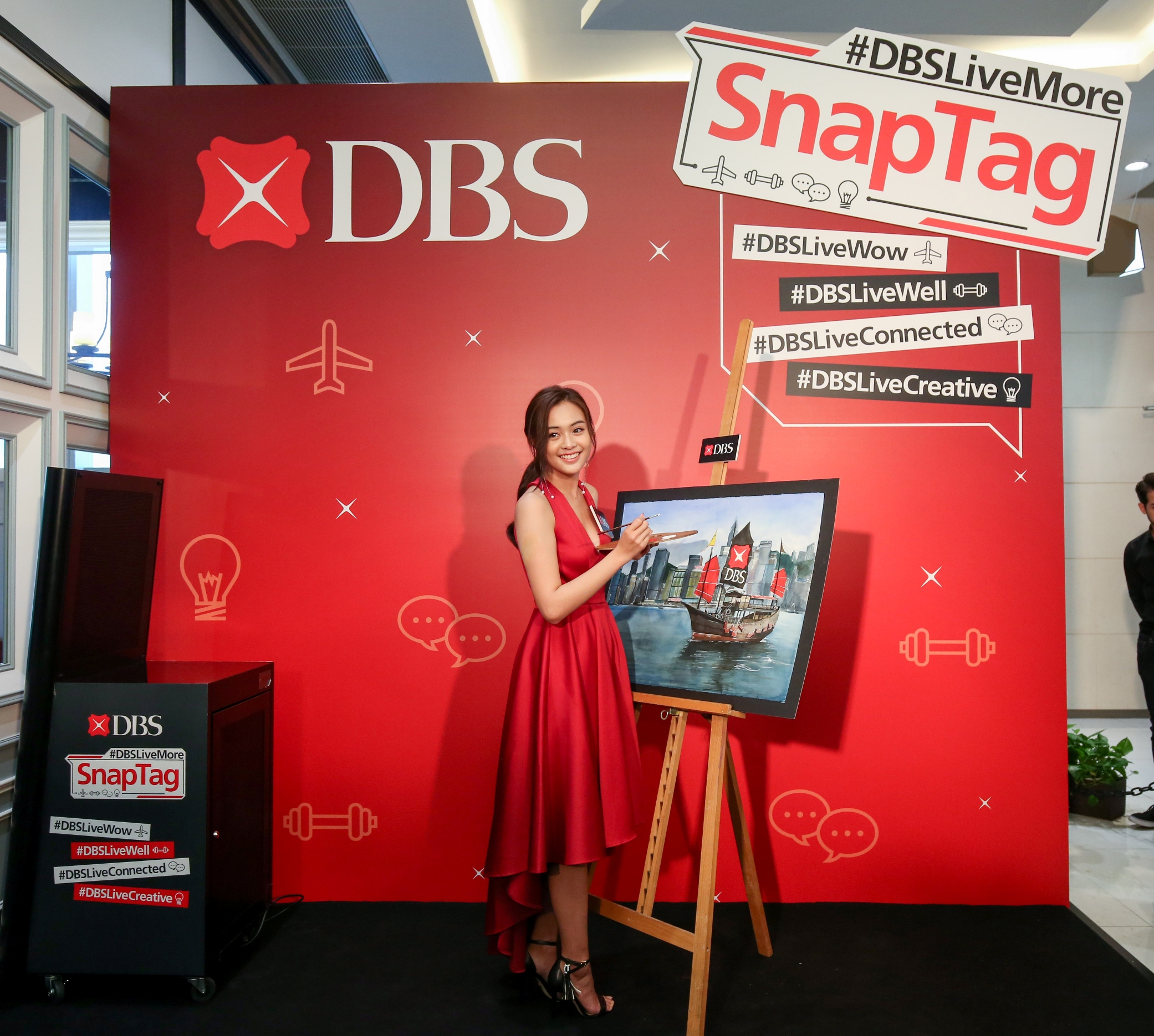
DBS’s campaign extends branding message, fuels up social media engagement

DBS has recently extended its branding message, “live the spark”, into “live more” with its new O2O campaign launch.

The extended tagline would further aspire the customers, as it “characterise the way DBS works”, according to DBS Bank (Hong Kong) Limited’s head of group strategic marketing communications Glendy Chu.

“People don’t bank to transact. They bank because they want to get the most out of life,” she explains.

While last year’s campaign saw the company teamed with several local influencers in a series of videos, the bank taps Canto-pop lyricist Wyman Wong in its “live more” videos this year.

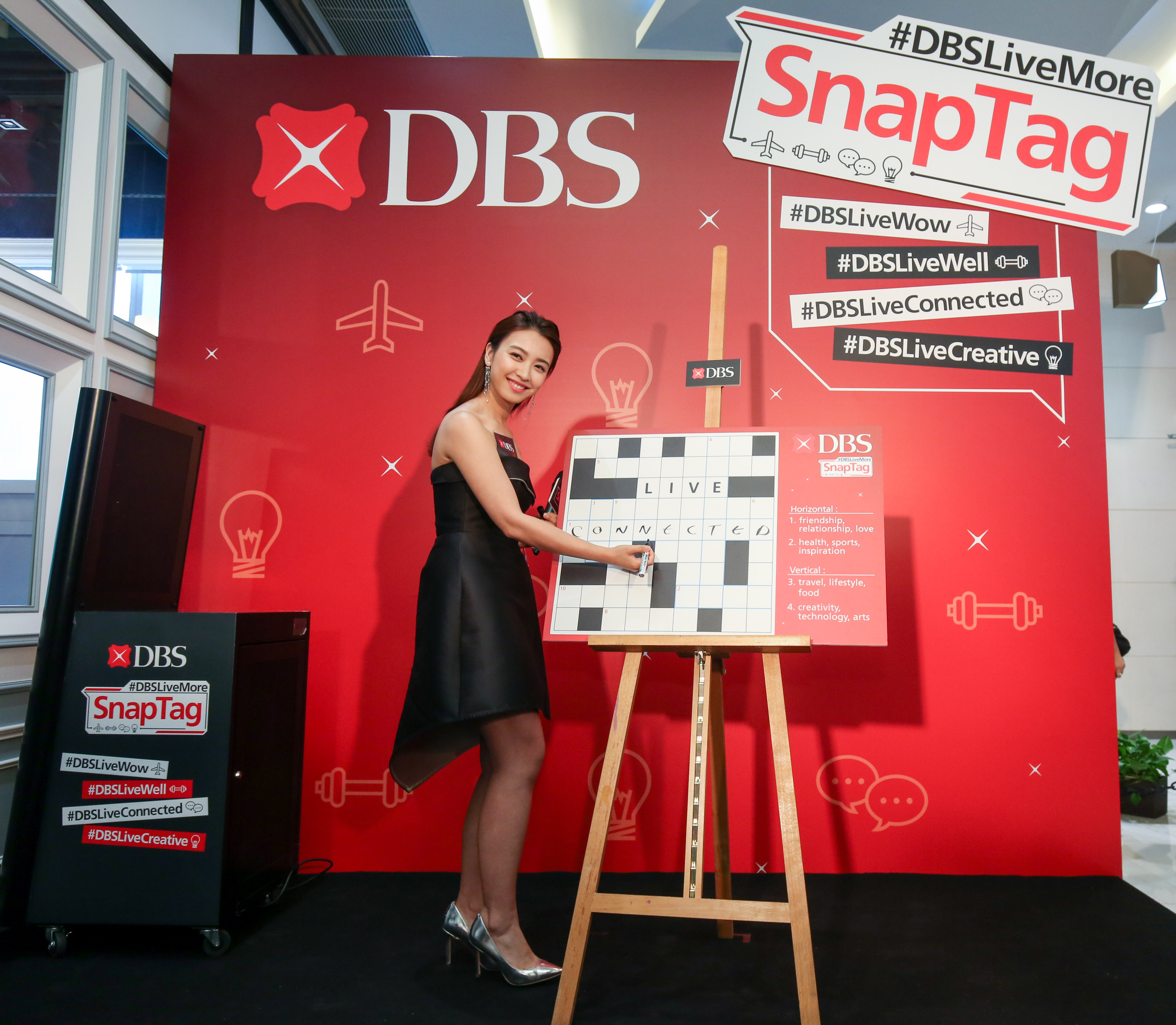
The bank also sets three instant photo printers at The ONE, Windsor House and Langham Place, to encourage the public sharing the video’s promoted philosophy through uploading photos to social media based on four weekly themes – “live Wow” (travel, lifestyle, food), “live Well” (health, sports, inspiration), “live Connected” (friendship, relationship, love) and “live Creative” (creativity, technology, arts). Participants would be rewarded with offers and prizes.

The company invited Tracy Chu (朱千雪), an actress and beauty queen, as well as Oomeisaya, a star of the highest grossing Thai movie of 2017, to fuel talks during last week’s launch.


Wyman Wong’s videos amassed a combined 5.7 million views in August, and the bank is currently expecting more.

6 ways you can improve your hotel marketing strategy

In the modern age of technology, hotels cannot hope to compete without a solid online marketing strategy to get their name out to potential customers. The local marketplace is important for a hotel, but nearly all travelers looking for a hotel look for information online and book their stay through the hotel’s website or an online travel agent (OTA).

Whether you have an existing online marketing strategy or not, there are a few things you should be doing if you want to stay competitive.

Be active and engaging through social media

Facebook, Instagram, and Twitter are great places for hotels to keep previous guests engaged. These and other social media platforms help your hotel to update people about events coming up, advertise rooms for special occasions or holidays, and keep the business fresh in people’s minds.

The demographics of social media users change with each platform, but if you’re present and active on these main three branches then you have a good chance of extending your reach to a lot of different demographics of potential consumers. Social media is often a place people go for recommendations, to ask questions about your business, to complain or compliment, and to get more information. Use your social media accounts to push people to your website and try to convert them to booking customers.

Have fantastic still images

In the case of hotels, pictures are often worth far more than a thousand words. No matter how elegant of a description you give the rooms and facilities, the modern consumer cares more about seeing it for themselves. Having high-quality stills for your website and for social media posts will make a big difference in converting browsers to customers.

To get fantastic pictures of your hotel, you need to look at hiring a professional, as they know how to stage the rooms, adjust the lighting, and pick the perfect angles for each image. If you choose a good photographer, you don’t need as many pictures taken, because the ones they produce will be worth more than a larger album of lower quality images. Quality is more important than quantity in this case.

Create video content

Videos are a hot topic for online marketing right now. Ads, social media posts, and websites with video content tend to do better than those with only images or without any media content. But, this is a double-edged sword of sorts, because that video content must be well-made or else it may hurt your marketing efforts.

Producing well-made videos relating to your hotel is a good way to attract more attention. Videos can be more eye-catching than images and will stick in the viewer’s memory longer. Live videos on Facebook, Instagram, YouTube, and other social media networks are an interesting option for making engaging content to grow your brand online. But, they must be done well, or live videos have the potential to be forgettable or embarrassing. Avoid full virtual tours of your hotel property.

Manage your third-party business profiles and reviews

It’s wise to go and claim your business account on TripAdvisor, Yelp, Google Maps, and other online review and information sites. These places let you put up images and information about your hotel, and also let you as the business owner respond to reviewers who are complimenting or critiquing your business. This is an excellent way to show people that you’re listening and you do care about their experience, which in turn makes them more interested in your hotel.

Having complete and informative profiles on these third-party sites makes it easier for customers to find you. They may not trust search engine results or social media, but they are likely to trust user review sites like these because of the appearance of unbiased information. Make sure they are getting an accurate picture of your hotel and have as much information as they might need to book.

hotel marketing strategy: picture of a hotel resort

Hotels need to up their marketing game if they want to remain relevant nowadays. (Source)

Network with other successful online brands

There’s no reason for you to struggle on your own to get your content in front of more people. It’s a good idea to get in touch with other brands that have a strong online presence and form partnerships. You can promote each other, give shout-outs, form bundle offers with local businesses, make arrangements with social media influencers, etc.

There are many ways to gain more exposure with the help of brands and companies that are already having success with their online marketing. If you approach this networking with a viewpoint of finding a mutually beneficial arrangement, you may find a lot of other businesses and people who are willing to work with you and increase your reach.

Build and maintain a functional, beautiful website

If you don’t already have a great website, you need to fix this before going on to do anything else on this list. Your website is at the center of all your online marketing efforts. You should be pointing people towards your website to get more information and book their stay! Have a professional, simple, modern website that will drive online visitors to become customers.

For a hotel website, the user experience should be very simple. You only need a few pages, which you will update regularly, and an online booking and payment system. It’s expected for hotels today to allow online booking and payments, so you may lose business if you don’t have this option on your website. Great images of rooms and facilities should be included, as well as some testimonies or reviews, events schedule, contact information, and anything else that’s relevant to your business specifically.

Some hotel owners have partnered with local businesses and will include a page about other local things to do, including links to those businesses, who are also linking to their hotel. This can be a good strategy to help your potential guests get a feel for what’s around the area while also bringing more traffic to your hotel through your partners’ websites.

Online marketing is multi-faceted and complex, but it’s an essential part of the modern hotel business. If you neglect to market your hotel online through the suggestions mentioned here, you may not get able to stay competitive against local and global competitors. These are simple suggestions that can make an enormous difference in your success as a business.

DISCLAIMER: This article expresses my own ideas and opinions. Any information I have shared are from sources that I believe to be reliable and accurate. I did not receive any financial compensation in writing this post, nor do I own any shares in any company I’ve mentioned. I encourage any reader to do their own diligent research first before making any investment decisions.


As Innovative Video Marketing Escalates in China, Tangeche Becomes First Youku NIVA CPM Client, Powered by …

SHANGHAI, Sept. 23, 2017 : Mirriad, together with Alibaba, today announced the launch of native-in-video advertising (NIVA) CPM in China. Tangeche, China’s leading APP for auto financial leasing, is supporting China’s leadership in advertising innovation. Tangeche is the first brand to run a NIVA CPM campaign with Alibaba/Youku and Mirriad.

Running until January 30, 2018 the campaign features signage and product ad unit insertions using the Tangeche brand mascot. The first flight will cover approximately 300-500 episodes of a variety of dramas and variety/reality shows. The campaign will be managed for viewability and verification in partnership with third party tracking.

Mr. Chen Qi, VP of Hangzhou Souche Automotive Services Co.,Ltd. (parent company of Tangeche), said « Auto consumption in China has entered a new inflection point, which presents a great opportunity for Tangeche, the leading brand for auto financial leasing in China. In terms of marketing, Tangeche selected a strong partner with Youku and became the first advertiser to use NIVA CPM, so that the brand appeared across the whole platform and in multiple shows – Tangeche could be seen everywhere. Besides cost-effective brand exposure, Tangeche attracted the attention of younger users, and communicated a new way for buying cars, thanks to its subtle messaging in scenes that featured urban mainstream working and living. »

« As a brand that typically purchases OOH, Tangeche is utilizing NIVA as a supplement with powerful ad tech and tracking capabilities that feature high quality integrations that deliver high relevancy, reach and efficiency, » says Mike Rees, Mirriad Managing Director APAC. « By delivering the quality, authenticity and editorial integrity mandated by the content, NIVA helps address critical issues brands and advertisers are currently facing, such as quality and brand safety. We are seeing brands, advertisers and content owners alike embracing NIVA as the future of advertising – to integrate advertising directly into entertainment content. »

China, a leader in the realm of media innovation and ad tech, is seeing their market for video content expanding rapidly. At the same time, the need to monetize content has led to an oversaturation of interruptive advertisement that hinders the viewing experience, requiring solutions. Mirriad’s NIVA technology allows brands to advertise directly within the content in a highly noticeable and relevant context, delivering unskippable advertising that respects viewers. At the same time, brands receive core reach and frequency metrics in order to buy NIVA as advertising.

Alibaba Digital Media Entertainment Group – Youku Chief Operating Officer Shen Wei said, « Thanks to the innovative ad product NIVA, advertisers can leverage hot IPs for increasing brand exposure and enhancing brand association, as well as generating more opportunities for content marketing. In the near future, Youku will strive to create more native ad products, which will inspire advertisers with new ideas for video marketing. »

As Mirriad continues to expand globally, they are introducing NIVA CPM, a product positioned for programmatic transaction that has created a long awaited currency for brand integration as an ad unit. NIVA allows advertisers to buy advertising in-video at very high quality whilst being compliant with the three V’s of digital advertising: viewability, verification and value. All NIVA ad units can be tracked and optimized during the course of the campaign and are scalable – key steps in providing brands with what they need to justify a native in-video campaign, and to move beyond more disruptive forms of advertising.

Snapchat has inked 14 partners for post-swipe ads

Snapchat DAUsBII

See Also

This story was delivered to BI Intelligence « Digital Media Briefing » subscribers. To learn more and subscribe, please click here.

Snapchat has partnered with 14 companies to help brands make the « post-swipe » ad experience more enjoyable for users.

The term refers to what users are shown after they swipe up on one of Snapchat’s full screen ads. The new partners include companies like Whalar, TreSensa, Entrypoint, and Popwallet and have a wide range of expertise, including influencer marketing, playable ads, 360-degree video, and mobile coupons.

Snapchat has already created some interactive post-swipe ad experiences for brands.Budweiser recently ran a playable football game ad that garnered an average watch time of nearly two minutes, while Adidas recently created a playable soccer ad on the platform.

Here are some key reason Snapchat’s new partners could help draw additional ad spending to the platform:

  • Marketers are highly interested in playable ads this year. Forty-five percent of mobile advertisers surveyed by AdColony indicated they were most excited about playable ads for 2017. That topped native ads, social video, and full-screen video. Snapchat’s new playable ad and gaming partners, like TreSensa and GameCommerce, can provide the expertise brands may not have in creating playable ad formats, potentially driving more ad spend to Snapchat.
  • Snapchat can capitalize on growing influencer marketing budgets. Sixty-three percent of marketers increased their budgets in 2017, according to a study by Bloglovin’ cited by Marketing Dive. Whalar, one of Snapchat’s new partners focused on influencer marketing, can cut down the time needed for brands to research and find influencers, which could cause more brands to include Snapchat in influencer marketing campaigns.  

Meanwhile, onboarding more advertisers is important as Snapchat builds out its Shows, Discover, and news content. The company has recently taken steps to build out this type of content like adding news shows like CNN’s The Update, and partnering with universities to serve college students on-campus news. And this additional content can all represent additional ad inventory. If Snapchat’s new partners are able to effectively ease the creative ad process, Snapchat may be able to more easily fill these ad spots.

Regardless, the new partnerships could indicate Snapchat isn’t onboarding advertisers as quickly as it hopes to. Snapchat may be partnering with these companies in response to lower-than-anticipated ad spend on the platform, with the goal of the partnership being to make Snapchat’s advertising capabilities more attractive.

Though Snap’s revenue — which is mostly generated from advertising — increased roughly 21% from Q1 2017 to Q2 2017, it has still largely missed user growth expectations. That has likely limited the platform’s ad business, and the partnership may be in response to this. 

To receive stories like this one directly to your inbox every morning, sign up for the Digital Media Briefing newsletter. Click here to learn more about how you can gain risk-free access today.

Tai Lopez’s 7 Steps to Start Your Own Marketing Agency

Most people dream of starting their own business and creating a life that lets you travel and have fun while getting paid. The problem is that 99 percent of people don’t follow through. But accomplishing it is easier than you think by creating a digital social media marketing agency.

Tai Lopez, member of The Oracles, says, “If I had to start out again with no money or experience, I’d find small businesses to pay me up to $10,000 per month to manage their social media. »

Unless you’ve been living under a rock, you can’t miss Lopez on social media. He’s leveraged social platforms to launch dozens of new businesses and scale existing ones.

He has one of the top 20 most popular TEDx talks ever. And his YouTube videos are used by some college professors to teach marketing. Why? He’s not afraid to experiment.

“I’ve spent $20 million running crazy social media experiments to see what works and doesn’t, making tens of millions in the process.”

As a marketer, Lopez quickly noticed that small-business owners find social media intimidating. “It’s technical and always changing,” Lopez says, citing Meerkat—the defunct live streaming platform—as an example of something that was popular in 2015, but now everyone barely remembers it. “Unless you’re immersed, it’s hard to keep up with how all the social platforms work.”

Lopez stresses how this creates an opportunity for you. “The secret to making money is to become valuable,” explains Lopez. “Even knowing how Facebook and Google work can be a game changer for a small business. They’ll gladly pay you forever if you can keep helping their bottom line.”

Lopez estimates that the average customer will pay you $1,500 a month—even if you work part-time. Five clients conservatively makes you $9,000 a month. That’s a six-figure business.

Lopez teaches how to create your own marketing agency with social media and get small businesses to hire you. Here are seven steps to start immediately.

1. Apply social media on yourself.

“Start marketing yourself,” Lopez explains. His viral « Here in My Garage » YouTube video was seen billions of times and shot with just an iPhone, “but it convinced people that I was a capable marketer.”

2. Pick lucrative niches.

Social media marketing is a « front-loading » business model, meaning that you put in a lot of work at the start. (The opposite is a « treadmill business:” if you don’t show up to work, your income goes to zero.)

Lopez recommends focusing on attracting high-value clients like doctors, lawyers, and dentists because they won’t struggle to pay you.

“Once you know how to help one dentist, it’s easy to duplicate and produce consistent results for other dentists,” Lopez explains. “You’ll avoid the death trap of trading time for money and build more predictable income streams from multiple retainers.”

3. Create packages.

“Clients want different things, and some always want the ‘luxury package,’” Lopez says. “If you only have one price, you’ll lose clients who want extra services.”

Instead, Lopez recommends creating four packages: $997, $1,997, $4,997, and $9,997. That way, you have a basic service and VIP option. The difference is the amount and type of work you’ll do.

For $997, you could optimize a client’s website to capture someone’s email address. And create a simple email marketing funnel—a highly valuable asset—to nurture the relationship.

For $1,997, you could manage all of a client’s social media accounts and create stories that build their brand. You could then add paid advertising for the more expensive packages.

« For $9,997, you could offer the same services as the $1,997 package but invest $4,000 on Google and Facebook Ads,” Lopez says. “You’d keep $4,000 profit, which is a 50 percent margin.”

4. Win clients, quickly.

“The best way to win clients is through friends, family, and referrals. If someone has never worked with you, they’ll be risk-averse to hiring you,” explains Lopez, who believes you should avoid taking any money initially.

“Do a free evaluation of their website and social accounts using a premade template. You can then confidently say, ‘Here’s what you’re doing and how I’d improve you.’

“Secure one or two clients and ask them for written or video testimonials,” he adds. “Success stories prove your credibility to other potential clients.”

5. Tell engaging stories to attract followers.

Lopez quickly built more than one million Snapchat followers. To the casual observer, he’s merely sharing his fun lifestyle, featuring models, supercars, and cool friends. But there’s more at work.

“My definition of branding is to make a business interesting,” Lopez says. “Jayden Gross, one of my first students, makes over $100,000 a month with his social media marketing agency at age 22. He told me the most valuable thing I taught him was how to create a ‘brand story.’”

Instead of traditional marketing that pushes sales, Lopez recommends creating a fun, compelling, behind-the-scenes, adventurous story that continues day to day. “It’s like an ongoing commercial that will keep people engaged and coming back to watch every day.”

“Become a master at telling your client’s story,” Lopez adds. “Start by recording a simple video [about their story] for their website.”

6. Track results.

“To get paid what you want, you’ve got to deserve it,” Lopez says. “You need to prove that you’re making your clients money. So, use tools like Hootsuite to track your marketing efforts and show them the results.”

7. Hire staff.

Lopez stresses the importance of becoming the Army General who builds a team to do the heavy lifting. “You at least need a personal or virtual assistant and an accountant to manage everyday operations and your money.”

Lopez shares the advice of his second mentor, Allan Nation: “You never really make money working for yourself. You make money when other people work for you.”

Click here to learn how to start your marketing agency with social media and get small businesses to hire you within four months.

Top 10 Video Marketing Trends And Statistics Roundup 2017

Over 500 million (that’s half a BILLION) people are watching video on Facebook every day. Whoa. #VideoMarketing

Internet Video Traffic will be over 80% of all consumer internet traffic in 4 yrs.

Look around: How common is it to see someone deeply engrossed in a video on their mobile device? In just a few years, it will take an individual more than 5 million years to watch the amount of video that will cross global IP networks each month. Every second, a million minutes, or almost 17,000 hours of video content will cross the network by 2021, according to Cisco.

Think about that – in just one second – more video will move across the internet than you could watch in almost two years of doing nothing else, including sleeping. Online video use is simply staggering from a consumer perspective. It is changing how businesses or brands communicate with customers and how we communicate with one another.

As a guy who sees and reads a lot of technology research and is barraged by statistics of every order, I find the data stream on online video, video marketing, and, in general, video in business to exceed nearly every other category that hits my wide tech-focused stream.

Animoto, an online video building platform, believes that we have shifted to a “video first” world. Cisco’s data certainly proves that out – we are building a world that does not include a lot of reading, but watching.

Here are just some of the video marketing trends I’m seeing:

  1. Video First. Consumers want to watch, but also produce video. Facebook coined this term last year when talking about making it easy for people to do both consume and produce – Facebook Live is one result of that overarching strategy. Businesses are shifting to using video to lead their marketing efforts.
  2. Live Video (or Live Streaming). Cisco states that Live Internet video will account for 13 percent of the total video traffic mentioned above.
  3. Square video grows in popularity. Square videos take up 78% more space in the Facebook News Feed, and get more engagement, than horizontal videos, according to Animoto.
  4. Video is driving purchase behavior (see the resources section at end of post)
  5. Video marketing creates stronger customer engagement
  6. Lower costs to shoot video and produce video; better tools. If you don’t do it yourself with software, you can hire it out – from the actual video shoot to the editing and final production of the video.
    • Take a look at the Smartshoot pricing survey, a nationwide list of videographers and photographers. The average small business marketing video was under $1,000 in 2015. A medium-sized product demonstration video might be $2,000.
  7. Video as marketing method, but also as training tool (which one could argue is a bit of marketing, too, for employees and prospective employees)
  8. Marketers investing in paid/sponsored social video. Brands are paying to “socialize” or promote their videos – in essence, advertising.
  9. Social Video is Mobile Video
  10. Video Content Increases Trust (sort of related to #4 and #5), but video alone doesn’t increase the trust. Video that resonates is what matters.
  11. It is not YouTube OR Facebook for posting your business video – most brands are using both. See Tubular Insights blog post link below to find out which other social platforms are doing well.

In a recent blog post from TechSmith, the makers of video editing software Camtasia, director of marketing, Sherri Powers goes in-depth to explain how consumers vary in their levels of awareness and that impacts how successful you can be with video marketing. She points out that 85 percent of Facebook videos are watched without sound.  If you didn’t know that, you might spend an inordinate amount of time on the sound part of your video to have it, more or less, go to waste.

Disclosure: Animoto granted me media access to their online marketing video builder and TechSmith loaned me a media copy of their software earlier this year for another post I was working on.  

Click CONTINUE to get to Page 2 and more great resources.

Superior Farms Captures Family Ranching in New Video Series

SACRAMENTO, Calif.–(BUSINESS WIRE)–Capturing the pastoral story of ranching life and the family commitment
to the animals it raises, Superior Farms released its latest digital
short. Shot like a film and featuring Ryan Mahoney and the Emigh family,
the three-minute piece provides an intimate window into the daily life
of a lamb shepherd and one family’s deep-rooted connection to the land.

Anders Hemphill, Vice President of Marketing Brand Strategy for
Superior Farms, has led production of the series. “It’s one thing to
talk about our ranchers as stewards of the land, but it’s another to
really capture it and then share it,” said Hemphill. “We’re proud to
work with family farms like the Emigh’s throughout the western states
and we believe that by sharing their stories through videos like this
one, people will gain a better understanding of where their food comes
from and the kinds of people who are raising that food,” added Hemphill.

The video, “Life Comes from the Farm,” located at http://superiorfarms.com/our-ranchers/
captures Mahoney, his 6-year-old daughter, and his 87-year-old
grandfather, at work on the Emigh family’s ranch. “The core philosophy
of the business is to put the animal first; it’s a long-term investment.
Sustainability is at the core of what we’ve been doing as a family for
150 years,” says Mahoney. “We pride ourselves on working quiet and
working correctly and making sure that that animal has the strongest,
healthiest, happiest life possible. You make sure that things are held
together because it’s your obligation to your crop, your family, your
community and your country.”

Superior Farms, founded in 1964 with headquarters in Sacramento,
California, is North America’s largest processor and marketer of lamb.
The company is the recognized leader in the retail and foodservice
markets it serves. An ESOP Company (Employee Stock Ownership Plan),
Superior Farms is an employee-owned company whose 400+ members take
pride in their individual roles and contributions to the company’s
success. The Superior Farms’ family of brands includes, Superior Farms,
Cascade Creek and Farmer’s Mark.