Archives par mot-clé : video

Video, AI and IoT emerge in new Bookmarks categories

New categories, in line with the changes and evolution in the digital media sector over the past year, have been introduced into Bookmarks 2018, the Interactive Advertising Bureau announced in a press release on Monday.

“We are expecting to see some great entries this year in the emerging technology space as video, AI and IoT remain hot topics in the media and in business,” says Jerry Mpufane, Jury President, The Bookmark Awards 2018.

Technology is playing a key role in driving change in the industry and continues to play an increasingly integral part in all aspects of the business environment.

As The Bookmark Awards enter its 10th Anniversary, in addition to introducing a number of new categories, IAB SA is also expanding on existing categories to accommodate growth in those areas.

“With millennials having a strong influence on how brands are getting into the hearts and minds of the consumer, interaction and engagement are key to any marketing strategy. Consumers are relying more and more on the opinions of their peers and influencers when it comes to making a decision on products and brands. As a result we are seeing an increase in CRM and loyalty programmes, with gamification providing the interaction with brands to achieve engagement and top of mind awareness in a very cluttered digital media space,” adds Mpufane.

Interactive digital media is overtaking traditional media and only those agencies and brands that are constantly embracing these changes and additions to the digital media environment will survive and thrive.

The consumption habits of the consumer today are resulting in more video being consumed as more content becomes available. In addition, AI and IoT are increasingly a factor when planning marketing strategies.

Gaming is another category to watch as it explodes both globally and locally. eGaming as a sport is taking the world by storm and it is expected to become one of The Bookmark Awards’ fastest growing categories.

“Our target audiences are the most sophisticated consumers of information in recent history. They choose what and when they engage with brand messages. Getting their attention, and keeping them engaged is the Holy Grail,” says Mpufane.

Entries for the Bookmark Awards 2018 close on 3 November 2017. The finalists will be announced in the new year, with the ceremony taking place on 1 March 2018 at The Empire Venue, Parktown, Johannesburg.


The full list of categories for 2018 is available here as are entry forms.

Image: Bookmarks 2017

Share this:

Regional marketing campaign pitches ‘Real Rutland’

RUTLAND — A marketing initiative aimed at boosting Rutland County’s declining population as well as helping the region land more tourists aims to show people the “Real Rutland.”

The “Real Rutland” campaign was unveiled Thursday night at the annual meeting of the Rutland Region Chamber of Commerce held in the downtown Paramount Theatre.

The video ads feature local people involved in recreational and cultural activities, from mountain biking to rock climbing to watching a live performance. It ends with an image displaying four letters, “RUVT.”

“There’s a come-as-you-are mentality here,” said Luke Stafford, the head of Brattleboro-based Mondo Mediaworks, the company hired to come up with the campaign.

“We realized all we had to do is to hold a mirror up to the mentality of the people here,” Stafford said. “They keep it real here.”

Everybody appearing the video ads, Stafford said, is from Rutland County, either a resident or a member of the workforce.

“There are no actors,” he said, “We didn’t want to put a spin on anything, that’s the being real aspect.”

“Real Rutland,” according to Stafford, is the campaign’s title, and he referred to “RUVT” as its “visual identity.”

“RU, is of course the first two letters in Rutland,” he said, “and then there is the play on, ‘Are you Vermont?’”

The regional marketing initiative has a steering committee made up of people from across the county and a variety of backgrounds. The panel reviewed a handful of other campaign themes before settling on the one unveiled Thursday night.

Mary Cohen, the chamber’s executive director, described the marketing campaign as “cool, hip and fun.”

“This is about changing the narrative,” Cohen said.

Lyle Jepson, executive director of the Rutland Economic Development Corp., agreed.

“For too long we have focused on the negative, for too long we have beaten ourselves up,” Jepson said. “We have some things that we need to start to market, the wonderful things, and that’s what this is all about.”

The ads started appearing online and on television as part of a “soft launch” of the campaign in the days leading up to Thursday’s formal unveiling.

REDC and the Rutland Region Chamber of Commerce teamed up for the regional marketing effort and raised more than $200,000 from businesses and organizations around the county.

Rutland City put up the biggest chunk of money, contributing $100,000. Surrounding towns have also chipped in.

In addition to attracting new residents to the region, the marketing effort is also seeking to promote tourism in the area with the hope of enticing visitors to consider living, working or starting a business in the area.

The ads end with the website url, realrutland.com, and a call to action asking visitors to post questions about the region. Replies will come from local experts.

The website homepage features an aerial shot of the county, with two prompts, asking viewers to “Ask” and “Tell.”

Mondo Mediaworks was hired earlier this year to oversee the first of what is expected to be a multi-year initiative. The campaign includes an effort to promote the region as the Killington Valley to tourists, highlighting outdoor recreational opportunities.

The digital marketing firm started with research, including a series of meetings with local people around the county. That was followed by strategy development, campaign creation and launch.

“From our first meeting with the (Rutland) Board of Aldermen, we had this sense that honesty and straight-shooting were not just appreciated, but almost revered here,” said Stafford of Mondo Mediaworks. “People here are not afraid to face things head on, like the opioid challenge.”

So far, about a dozen ads have been produced and they vary in length, including 15-second ones for Facebook and online marketing, and 30-second spots to air on television.

There are ads targeted to the local area, the statewide region and out-of-state markets, like Boston, New York City and Hartford, Connecticut.

“As you look at our ads, you’re going to see, that yes, we are targeting a specific population, the same population everyone is after, and that’s the millennials,” said Jepson, who is also the dean of entrepreneurial studies at Castleton University. “We hope that what they see will resonate with them and they will want to come here.”

Jepson said the county has outdoor recreational activities that young people are looking for, from skiing at Killington, to bike and hiking trails at Rutland’s Pine Hill Park.

“We’ve got so much that we can package together,” he said, rattling off a list of other outdoor activities taking place in other towns across the county.

And, he added, research has shown that another demographic is looking for some of the same kind of things as millennials.

“We believe that this will also target the baby boomers,” Jepson said, “and they also have a little more disposal income so we’d also like to have them come here.”

Asked if the region has the kind of jobs millennials are looking for, Jepson pointed to his organization’s website which lists many ads from employers in the region seeking to fill positions paying a “livable wage,” all more than $44,000 a year.

“One of the big reasons we’re doing this is because our employers are coming to us, REDC and the chamber, and they are saying, ‘I don’t have people to hire,’” Jepson said. “We need more people here.”

#SocialSkim: Facebook Tests Résumé Feature; New LinkedIn Video Ads: 10 Stories This Week

This week’s ‘Skim: Facebook tests a full-fledged résumé feature for users, also acquires popular feel-good social media app tbh; all you need to know about LinkedIn’s brand new mobile video ads; why you shouldn’t miss out on LinkedIn Website Demographics; Vine founder’s addictive new social trivia app that could skyrocket to the top of the charts; Facebook launches food delivery ordering; why your employees could be more powerful than paid influencers; eight great ways to improve your Instagram Stories; and much more…

Skim to stay a step ahead!

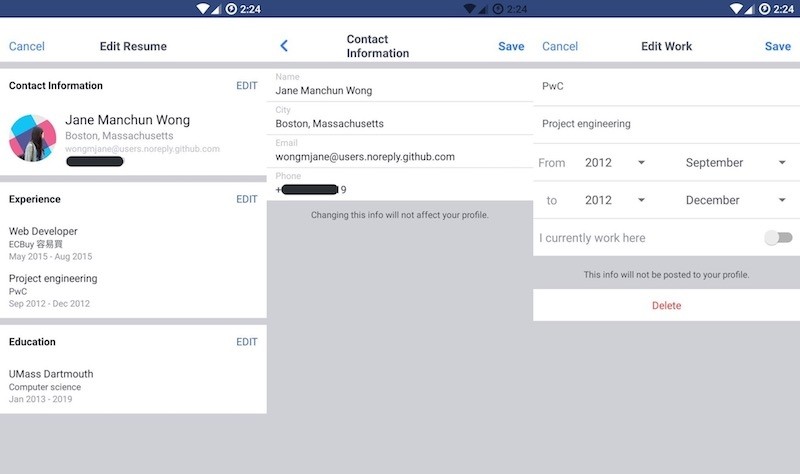
1. Facebook takes to recruitment with LinkedIn-like résumé feature

It’s no secret that Facebook would be happy to take a chunk of LinkedIn’s professional user base, and a recently surfaced screenshot suggests the social network is ready to do just that. Facebook’s apparently working on a way for users to build and maintain a resume or CV on their profiles that outlines their education, experience, contact information, and specific projects.

It’s not the first time that Facebook has dug into the professional networking space. Users can already include education and work history in their profiles, but this is the first time a test appears to go as far as including a « resume » section. No word on whether this means such a capability will roll out to all users, but we don’t have a reason to think otherwise.

2. LinkedIn brings autoplay video ads to mobile

The professionals’ social network introduced a native video capability for users just over two months ago, and marketers will be able to place mobile ads as Sponsored Content on the new feature starting in 2018.

Advertisers will be able to upload their videos via Campaign Manager, with audience targeting options remaining the same as those already available for other LinkedIn ads. For now, available metrics will include view count as well as a breakdown of views by percentage of video viewed, with new metrics to come once the closed beta is complete.

LinkedIn might be behind the times in video, but that doesn’t, by any means, make this move insignificant for B2B marketers.

3. Facebook buys its way to positivity with acquisition of tbh

Chart-topping social app tbh, which encourages users to provide anonymous, self-esteem-boosting compliments to their friends, was acquired by Facebook this week.

The app is only nine weeks old, but its 5+ million downloads in that short time apparently impressed Facebook enough to purchase it and bring tbh’s four-person team on board as Facebook employees. tbh will remain a standalone app, but it should have more resources thanks to gigantesque Facebook.

It’s unclear at this point, however, whether Facebook has grand plans for expansion, or this was simply a quick snatch before Snapchat had a chance to act.

4. LinkedIn Website Demographics: Everything marketers need to know

Setting up LinkedIn Website Demographics is key to helping your brand get more out of the platform and provide exactly the types of insights about your audience and website visitors to effectively retarget them with LinkedIn Ads. But how does one set it all up?

If you haven’t quite ventured into the LinkedIn advertising, creating an account for your business and selecting your first ad format is just the beginning. From placing LinkedIn’s Insight tag onto your website so visitor data can be collected, to drilling down and creating audiences for specific segments of your website traffic and retargeting them as desired, all the details you need are at Social Media Examiner.

5. The creators of Vine have a new app, and it’s the freshest thing we’ve seen in a while

Introducing HQ, a new trivia app from the founders of Vine that blends the fun of Facebook Live with the addiction of Who Wants to be a Millionaire. The iPhone-only app has two daily « tune in » times when users can access live trivia games, in which they can compete to answer the questions for their chance to win cash prizes.

Players who answer a question correctly within 10 seconds advance to the next round; those who answered incorrectly are still able to comment and watch until the end.

With Hollywood production value, a sense of urgency, and an addictive, twice-daily livestream, HQ might just prove to be one of the freshest, and social, ideas for apps we’ve seen in a while.

6. How micro influencers can help your brand find a niche

As organic reach continues its decline on social networks, big brands can afford to mitigate the problem by increasing their budget for influencer marketing. But, due to budget constraints, many small and midsize businesses, as well as those with more niche B2B audiences, often fall to the wayside without a solution to stretch their dollar as far.

Unity Influence recently raised $1 million to bolster its automated micro influencer platform that should give smaller brands the ability to seek out niche influencers in their industries to benefit from higher engagement rates (at a lower cost) than those of big-name influencers.

The most attractive part? The company charges only $200 per campaign, bringing influencer marketing into reach of brands that were previously put off by costs in the thousands of dollars.

7. Hungry but too tired to get off the couch? Facebook’s got you covered

Just when we thought it impossible, Facebook found yet a new way to keep users on its app: food delivery. The social network has officially rolled out the ability for US users to start a food-delivery order directly from a restaurant’s Facebook page, a move that might see more people searching for, and discovering, restaurants via Facebook, yet still drive traffic back to one of Facebook’s partners’ delivery platforms, like GrubHub and DoorDash.

Users who choose to begin an order on Facebook will be redirected via an in-app browser to a partner’s delivery service. The social network is also partnering directly with big chains like Chipotle, Five Guys, and Panera to redirect users to their delivery platforms.

The new feature isn’t a huge step toward taking on food delivery services like Seamless since Facebook isn’t serving up the ordering platform itself, but it might indicate where the social network hopes to go, and grow.

8. Why your employees should be your social media advocates

Research from SocialReacher finds that a brand’s own employees will play an increasingly important role in influencer marketing in the coming years, and that’s something your social media marketing team needs to consider.

Employees have not only the opportunity to share your business with new audiences but also the ability to do so in a credible way that external influencers often cannot. Consumers trust branded content shared by family and friends more than advertisers, and the surprisingly significant reach of your employees’ social media accounts could play a major role in driving your message.

Check out the full infographic to see how employee advocacy on social media can drive engagement and awareness for your company.

9. Eight easy ways to enhance your Instagram Stories

Ever missed the 24-hour window Instagram gives you to post photo and video content from your phone’s camera roll as a Story? Or recorded a video at a trade event or conference that just doesn’t fit to Instagram Stories’ specs?

Fear no more. Social Media Examiner has an exhaustive list of eight amazing apps to not only fix these headaches but also help kick your brand’s Instagram Stories up a notch—from adding animated text overlays and converting videos from landscape to portrait, to making video collages and editing your vertical videos. Check out all the ways to wow your Instagram audience!

10. We’ll wrap with… #MeToo

You probably saw your social media news feeds filled with « #MeToo » this week, sometimes with an explanation, and at other times with no context at all. But thanks to social media, « me too » reverberated around the globe, bringing with it harrowing stories of sexual harassment and assault, as reported by your friends, your neighbors, your daughters, and your colleagues.

Originally suggested by Alyssa Milano as a way to show the magnitude of sexual harassment in light of the Harvey Weinstein scandal, users (men, too, but mostly women) took to social networks to mark themselves as having been harassed, and to raise awareness of a problem we’ve yet to effectively address.

Within the first 24 hours, #metoo generated over 500,000 mentions across Twitter, Facebook, and Instagram. Perhaps this social revelation might bring about some meaningful change, and destigmatize an issue that many find difficult to speak up about.
10 Social Media and Other Tips Aimed at Growing Your Small Business

Social media has undoubtedly changed the way a lot of small businesses communicate with customers. And those social media channels are constantly changing with new features. So if you’re looking for new ways to utilize social media and other business tools and methods, check out these tips from members of the online small business community.

Focus on Value Over Character Count

Twitter recently announced a new expansion of the platform’s famous character limit — raising it from 140 to 280. But having more characters doesn’t necessarily mean more value. In this post on the TopRank Marketing blog, Caitlin Burgess dives into the potential of the expanded character count and how you can use it to add value.

Find Smart Ways to Utilize Instagram Marketing

Instagram is only an effective marketing platform if you know how to use it. It can help to look at some of the brands that do a great job with the platform. In a recent DIY Marketers post Megan Totka offers some ways smart businesses are making use of Instagram for marketing.

Use Link Retargeting to Grow Your Business

Link retargeting is a method that lets you target customers who have previously been to your website or looked at specific products. And it can be a very powerful marketing tool for small businesses, according to Mike Allton of the Social Media Hat. Members of the BizSugar community also share thoughts on the post here.

Embrace Social Media for Retail This Holiday Season

The holiday season is the busiest time of year for retail businesses. And social media can make a big difference in how you promote such a business during the holidays. Chris Zilles elaborates in this Social Media HQ post.

Improve Outreach and Blog Engagement with These Useful Tools

Content marketing can give you a great way to reach out to potential customers and engage with them. But there are tools out there that can make your blogging and content marketing methods even more effective. Zac Johnson shares some of those tools in this Basic Blog Tips post.

Learn the Importance of a Trademark

A strong brand is the backbone of any great promotion or marketing effort. And once you create that brand, you need to protect it. Trademarks can help with that, as Nellie Akalp of CorpNet details in a recent blog post.

Use These YouTube Video Optimization Tips

Video has become a huge part of a lot of small business marketing strategies. And YouTube is one of the major platforms you can use to leverage that format. Read some video optimization strategies for YouTube in a recent Social Media Examiner post by Richa Pathak.

Consider Monetizing on YouTube

In fact, YouTube isn’t just a great outlet for marketing. It can also be a source of actual revenue for a business. Learn how YouTubers monetize their content in a Web Hosting Secrets Revealed post by Azreen Azmi. You can also see discussion about the post over on BizSugar.

Know the Three Pillars of Online Reputation Management

Your reputation can make or break your business. And there are plenty of online tools you can use to manage your reputation. Read about the three pillars of online reputation management in this post by Ivan Widjaya of SMB CEO.

Watch Out for These Hidden Website Costs

Building a website for your business doesn’t have to be expensive. But there are some costs involved. And those costs can really add up if you don’t consider every aspect of website creation. Here are some website costs to consider from Sreeram Sreenivasan of Smallbiztechnology.com.

If you’d like to suggest your favorite small business content to be considered for an upcoming community roundup, please send your news tips to: [email protected]

Social Media image via Shutterstock


Comment ▼


15 Essentials To Consider When Employing Video Marketing

More and more businesses are turning to video to promote their brands, as well as their products and services. Companies are becoming more business savvy about the value of video, with 85% of them employing staff and resources to produce their own video content internally, according to a report by Hubspot.

Whether you use video to showcase your product in use or to provide education on your services, a business can benefit greatly from the use of video content internally, as well as externally. The ROI from video is immense, as users are continually asking for more video content from businesses.

Below, 15 Forbes Agency Council members weigh in on whether all brands should be using video to promote their offerings and what they should consider when deciding whether to include visual content in their marketing strategies.

All photos courtesy of individual Forbes Agency Council members

Creating quality video takes commitment. 

1. Video Content Needs To Be Done Well To Work

Video is a great way to show your product’s features, tell a story and get people engaged, but not all video is good video. If you have the resources to create a video that represents your brand in a beautiful and succinct way, then I’d say definitely make video a part of your mix, but if you’re not able to produce a great video product, focus on creative that is simpler to execute. – Kate Aurell, Hawke Media

2. Curated Video Should Represent The Brand

Creating strictly video content may not fit every brand; however, considering we are in a digital era that continues to grow and demand creative and engaging content, many brands should follow suit. Producing videos should represent the brand and what it stands for, as well as attract and connect the audience to the brand. A video without a purpose or storyline should not be published. – Alex Quin, UADV

3. Video Helps Adapt To Customer Preferences

Companies are pivoting to videos for a reason, and their analytics are telling them that they are on point. People are consuming more video content, and they’re getting used to it. I understand that different markets have different preferences, but if I were an investor, I’d look at the significant infrastructure investments that are spent to facilitate smoother streaming as a healthy sign. – Ahmad Kareh, Twistlab Marketing

4. Designing Video Is Expensive

It’s expensive to design videos and there’s only a 5% chance that any video will achieve a positive return on ad spend. In-house design teams frequently get trapped producing derivative ads based on top concepts, and as ad fatigue sets in, performance drops. We encourage brands to test many videos and bring in external creative partners to share heavy lift in creative development. – Brian Bowman, ConsumerAcquisition.com

5. Video Is A Commitment

Creating quality video content requires far more significant commitment than traditional content. You also need the audience to actually decide to watch your content — not always an easy task. The more video content of poor quality there is out there, the harder it becomes to convince audiences to gamble on watching yours. – Gil Eyal, HYPR!

6. Interactive Video Is Tomorrow

It’s not just about seeing, it’s about doing. New video technology allows companies to not just show their wares or services, but allows immediate engagement, with fast purchases, downloads, or even instant calls with your sales team members. Now a campaign is not measured in « views, » it’s measured in engagement. – Jaymie Scotto Cutaia, Jaymie Scotto Associates

7. Video Needs To Tackle Trending Topics

Not every business model will necessarily benefit from video content, and not all content should be in a video format. I do believe that investing in video is important and in high demand, but you should really see what video topics are trending in your industry and working for your competitors. Video production is a larger financial loss than a written post if it receives no engagement. – Kristopher Jones, LSEO.com

8. Visual Content Is Critical To Overall Strategy

Visual content is critical in an overall content strategy. However, sometimes prospects need information quickly and don’t have the time or the right internet connection to watch a video so it needs to be augmented by other forms of communication. Because good video is relatively expensive to produce, pick a pillar piece of content and create an awesome video, then surround it with supporting content. – Lisa Allocca, Red Javelin Communications

9. Video Educates And Influences Your Customers

Although getting millions of views on your latest video might seem appealing, it likely isn’t the best way to grow your business. Tailor your videos for each of the customer journey stages: awareness, consideration and decision. At each stage, video can be an amazing way to further educate and influence your target customers. Your story told through video at the right time beats YouTube fame. – Todd Earwood, MoneyPath Marketing

10. Video Can Humanize Your Brand

In today’s age of rapid technology and device adoption, we have to connect on a human level. Now more than ever, many companies and publishers are moving to video as an engagement platform through web, mobile and other outlets. It’s the perfect way for a brand to talk to users and begin building a more humanized connection point. If we can’t be there next to you, video is the next best thing. – Michael Gaizutis, RNO1

11. Video Increases Brand Authority

Since people have short attention spans in today’s digital world, creating quality video content that agrees with your marketing objectives, products and services, industry trends, and more can be an effective way to bring in new business. It’s pretty simple to get started, and as you create more content, you’ll see an increase in searches, views, customers and revenue. – Solomon Thimothy, OneIMS

12. Strategic Video Is Key To Brand Storytelling

Yes, customers crave concise videos that move them, but videos should not be produced just for the sake of it. Authentic brand storytelling achieved through video is essential, emotional and effective. If a picture is worth one thousand words, then video equates to hundreds of thousands of words. When done right, powerful, professional video brand storytelling is worth millions of dollars, too. – Stephen Rosa, (add)ventures

13. Video Can Benefit Almost Every Business

I believe that almost every business can benefit from some type of video. The key is finding the type that is right for your business and budget. Not everyone needs a slick corporate video to help people understand their products and services. There are affordable and user-generated videos that can help build customer engagement. – Laura Cole, Vivial

14. Video Allows Your Voice To Go Global

I always encourage my clients to have a strong online video presence. Content is still the driving factor of the search algorithms, but video has a higher convincing factor, videos get much more engagement than blogs, and the probability of a user to watch a short video is higher than a user reading an entire article. Videos make information sharing easier and more accessible. – Raffi Keuhnelian, INexxus

15. Video Is The Future

The effectiveness of video advertising has been evident for 50+ years on TV but is just now becoming cost-effective and accessible to the average advertiser. With the ability to buy video media on YouTube and Facebook and to shoot high-quality video on your cell phone, the barrier to entry for video has never been lower. – Steve Dinelli, Blackbird Garage

Digital Video Marketing Is A $135 Billion Industry In The U.S. Alone …


(Associated Press)

Mobile TV antenna attachments. The U.S. digital video marketing industry will be nearly as large as the digital advertising and TV commercial markets this year, Magisto predicts.

The rise of video isn’t slowing down. From producing videos to distributing and promoting them, the U.S. digital video marketing industry is expected to reach $135 billion this year, according to a new study by mobile video platform Magisto.

The 2017 estimate — which includes the cost of video capturing, creation, hosting, distribution, analytics and staffing — is sizeable and would make video marketing nearly as large of a market as digital and television advertising combined. By contrast, advertisers are expected to spend $83 billion on digital ads and $71 billion on TV commercials (a total of $154 billion) in the U.S. this year. On average, each American businesses will spend $20,000 on video marketing this year, the study predicts. Magisto, which is based in Menlo Park, Calif. and makes a web-based video editing tool, published its study on Wednesday based on voluntary, anonymous responses from 545 marketing decision makers at small, medium and large U.S. businesses, surveyed this summer.

The pace of video creation is also accelerating as companies seek to better cater to millennials — the first digitally native generation — and to teens. More than half of businesses in the study said they create video content at least once a week, and 26% said they create video content daily. Video marketing also appears to make up a growing portion of businesses’ marketing budgets. 60% of businesses said they spend more than a quarter of their marketing budget on video, and 64% of those surveyed said they create video content internally.

“Our research allowed us to examine and size the entire video ecosystem, including production, tools, people and media,” Magisto said in its report. “Our research points to the digital video spend nearly equaling the combined spend of digital and TV advertising in the U.S.”

The massive size of the online video market can largely be attributed to the growing focus on video across media channels (such as
Facebook
,
YouTube
, Instagram, Musical.ly,
Twitter
and Snapchat) as well as to a shift among consumers, who increasingly prefer to receive information through the medium.

« Twenty years ago, television and the web was the video mechanism, and now, all of the platforms are primarily image- and video-based, » said Jim Louderback, the CEO of VidCon. « The younger you are, the more likely you are to want to consume information in video form. If you’re under the age of 35, video is the way you want to be communicated with, it’s the way you want to learn and understand. »

At a time when more and more digital information (and white noise) is directed at smartphone owners, especially on social media sites, the immersiveness of video can give brands a more vivid, immediate way to appeal to the consumer’s emotions and desire for entertainment than other mobile formats.

“Since video combines the emotional impact of story with the efficacy of digital advertising, it is a perfect way for businesses to authentically engage with today’s consumers,” Oren Boiman, CEO of Magisto, said in a statement. “The enormous influence of social media and the bottom up culture of millennials have led to a new marketing condition where the consumer is in control, word-of-mouth is a medium unto itself and authenticity is paramount to engaging customers.”

For advertising, YouTube remains the most important video platform, followed by Facebook, propelled by their reach and the scope of tools they offer marketers. Louderback said he expects Amazon-owned video-game streaming site Twitch will be an increasingly important video platform over time. The shift to mobile video — which makes up about 80 to 90% of content viewed across digital media channels; the rise in episodic, longer-form video; and the growth of influencer marketing are key trends brands and creators should watch. Live video and virtual reality should also become more mainstream over time, Louderback added.

« We see all of these platforms trying to become television, » Louderback said.

Magisto’s Wednesday report is the first in a three-part series the company plans to release this year. The company expects its second report to focus on where and how advertisers are spending the $135 billion. The third part of the series will focus on consumers’ reactions to business video.

So far, companies appear to think video is worth the cost. Businesses are 150% more concerned about the speed of video creation than the price, according to Magisto.

“Done correctly, video has the scale of television, the precision of digital marketing and the power of authentic story,” the company said in its report.

5 Low-Cost Ways to Get Started With Video Marketing

In case you weren’t aware, video marketing is a pretty big deal right now. 92 percent of smartphone users actively share videos with their friends, while over 60 percent of marketers and small-business owners said they’d be investing more money into video marketing in 2017.

Video content works especially well on product pages, since you can convey the attributes of the product in a way that immediately resonates. Unsurprisingly, four times as many consumers would rather watch a video about a product than read sales copy explaining it.

People are bombarded with information all day, every day. So, in order to cut through the noise and get your voice heard, video content is your most powerful asset. Video provides a sensory-rich experience for viewers and engages emotions in a way that simply isn’t possible with textual content.

While video is the best type of content available, it’s also the most expensive. If you’re on a shoestring budget but still want to leverage the immense power of video, here are five low-cost tips to get you started.

Related: 10 Laws of Social Media Marketing

1. Screencast presentations

If you’re just getting started with video marketing, producing screencast videos of slideshow presentations is an effective-yet-inexpensive option.

I recommend purchasing the standard version of ScreenFlow. For $99, you can use a wide range of functions, but there are free screencasting applications available too. I would also suggest using a good podcasting microphone, which can be purchased for less than $100.

Once you’ve written the script for your video and have created the visuals using PowerPoint, simply open your presentation, turn on ScreenFlow and narrate as if you were giving the presentation to a live audience.

ScreenFlow has an abundance of editing features and you can export your video directly to YouTube.

If you don’t want to spend money on a high-quality camera, or if you’re just camera shy, definitely give screencasting a try.

2. Video testimonials

Video testimonials are popular among ecommerce store owners because they convey social proof and trust more effectively than text reviews. A couple of video testimonials from real clients on your product page can definitely help to improve conversions.

Fortunately, customers are very forgiving about the video quality when it comes to testimonials. In fact, an exceptionally well-produced video testimonial can appear less trustworthy, since it’s probably well-rehearsed and shot with multiple takes.

Consider emailing your previous customers and offering them discount codes in return for video testimonials of your product. People love discounts, and you’ll benefit greatly from the social proof.

It’s a win-win scenario.

Related: 4 Ways to Market Your Business for Free

3. DIY animation

A quality, animated, explainer video from a leading agency will set you back thousands of dollars. While you’re likely to get excellent results for this kind of investment, it’s not within everyone’s price range.

As an alternative option, consider using DIY animation tools. Most of them are inexpensive or free and you can still create engaging videos (albeit not of the same quality as those that are professionally designed).

I recommend starting with Animaker, which features a simple drag-and-drop interface. Check out the free tutorial here.

4. Freelancers

Employing an in-house team of video marketing experts is not feasible for every company. Fortunately, with sites such as Fiverr and Upwork, you can tap into the international labor market and find skilled freelancers to help you with every facet of your video marketing strategy.

For example, audio mixing is one of the most critical parts of producing a high-quality video. Most people can’t articulate why they think an audio track sounds professional, but they intuitively know when it doesn’t.

A freelance audio engineer will remove any unpleasant clicks and pops from your audio tracks, as well as mix the narration and background music to blend perfectly.

You can also hire freelancers to narrate complete green-screen videos for you — just give them the script and any other specific directions you have.

Related: Use These 5 Steps to Create a Marketing Plan

5. Use live video

Amazingly, Facebook users spend three times more time watching live videos than standard videos.

Facebook Live is free to use and audiences aren’t going to expect flawless video quality on a livestream. This is an excellent way to create a more intimate connection with your audience without investing in expensive recording equipment and editing software.

Related video

Can you think of any other tips for producing excellent video content inexpensively? Please let me know in the comments below.

As Music Videos Grow Into Important Revenue Streams, Directors Have to Adjust

When Emil Nava shot Julia Michaels’ video for “Uh Huh,” he had to deliver both a regular and a vertical video to adapt to platforms like Spotify. “The deliverables have grown considerably,” says Nava, who just shot a Calvin Harris project with a main video, two album commercials and stills for its artwork.

Until two years ago, a music video was simply used to promote a song. Now, with the advent of monetized streaming services, the music video has become an important revenue driver, changing the field’s delivery expectations.

“Videos today are seen as a revenue source on the product,” says Jim Roppo, Republic’s executive vp marketing. “When you make videos with the potential to reach 500 million to 1 billion impressions, what can we invest to get the best creative possible? We need more iterations.”

For instance, the official video for Taylor Swift’s « Look What You Made Me Do » had 586 million views as of Oct 16; the lyric video had 82 million; a 21-second teaser had 4 million; and three behind-the-scenes videos count a combined 3 million. Billboard calculates YouTube plays of the lyric and official videos would bring in $868,000 to the label (of which 25-50 percent go to the artist) and $237,000 to the music publisher (which would then distribute to its songwriters). Ed Sheeran’s « Shape Of You, » with combined official video and lyric video plays of 3.22 billion, could generate $4.2 million to the label and $1.142 million for the publisher, before distribution to the artist and songwriters.

“We’re being asked to deliver more content that will intrigue the viewer to watch the video,” says Carlos Perez, who directed Luis Fonsi and Daddy Yankee’s “Despacito,” the most-viewed video on YouTube with more than 4 billion views. “Labels want to create concepts the viewer wants to be part of.”

For “Shape of You,” directed by Jason Koenig, the artist wanted a prelude to the video with the goal of creating a mini-movie in three and a half minutes. “My job with the music video is to bolster the song, give it a whole new component, connect it to a visual narrative and add,” Koenig says.

“We can come out with a lyric video, then the proper music video, then acoustic,” explains Roppo. “It extends the [song’s] life cycle.”

Several video directors now have creative teams that specialize in other aspects of the content-creation process; Koenig’s former apprentice, for example, does photography when required. Last year, Nava launched Ammolite Inc., a community of young creators who specialize in different deliverables. Recently, the group delivered five music videos of Jack Jack for Samsung, plus an audiovisual EP, three VR music videos and the single photography. “We like the idea of creating something big at the top [along with] other elements, almost as a map,” says Nava.

Vertical videos, more user-friendly for smartphone viewing, are also becoming a trend. Instead of merely flipping a camera around to make a horizontal shot vertical, which results in that ungainly space on both sides, directors are shooting vertical format videos and Spotify is also commissioning them for vertical-friendly platform.

While additional content can lead to increased budgets, costs still pale in comparison to those in the music industry’s heyday. Multiple sources say typical videos are priced between $40,000 and $60,000; Koenig has produced Macklemore videos ranging from $20,000 to $500,000. “I remember back in the day working on $1 million videos,” says Rebeca Leon, who manages J Balvin. « Now, people are more resourceful. You can make something great for $10,000.”

“We’re trying to get as much content for our production dollar as we can, » says Roppo, who describes video content budgets as “fluid.” « The bottom line is, whether you spend $25,000 or $1 million, the creative is really the most important part.”

5 Low-Cost Ways to Get Started With Video Marketing – Entrepreneur

In case you weren’t aware, video marketing is a pretty big deal right now. 92 percent of smartphone users actively share videos with their friends, while over 60 percent of marketers and small-business owners said they’d be investing more money into video marketing in 2017.

Video content works especially well on product pages, since you can convey the attributes of the product in a way that immediately resonates. Unsurprisingly, four times as many consumers would rather watch a video about a product than read sales copy explaining it.

People are bombarded with information all day, every day. So, in order to cut through the noise and get your voice heard, video content is your most powerful asset. Video provides a sensory-rich experience for viewers and engages emotions in a way that simply isn’t possible with textual content.

While video is the best type of content available, it’s also the most expensive. If you’re on a shoestring budget but still want to leverage the immense power of video, here are five low-cost tips to get you started.

Related: 10 Laws of Social Media Marketing

1. Screencast presentations

If you’re just getting started with video marketing, producing screencast videos of slideshow presentations is an effective-yet-inexpensive option.

I recommend purchasing the standard version of ScreenFlow. For $99, you can use a wide range of functions, but there are free screencasting applications available too. I would also suggest using a good podcasting microphone, which can be purchased for less than $100.

Once you’ve written the script for your video and have created the visuals using PowerPoint, simply open your presentation, turn on ScreenFlow and narrate as if you were giving the presentation to a live audience.

ScreenFlow has an abundance of editing features and you can export your video directly to YouTube.

If you don’t want to spend money on a high-quality camera, or if you’re just camera shy, definitely give screencasting a try.

2. Video testimonials

Video testimonials are popular among ecommerce store owners because they convey social proof and trust more effectively than text reviews. A couple of video testimonials from real clients on your product page can definitely help to improve conversions.

Fortunately, customers are very forgiving about the video quality when it comes to testimonials. In fact, an exceptionally well-produced video testimonial can appear less trustworthy, since it’s probably well-rehearsed and shot with multiple takes.

Consider emailing your previous customers and offering them discount codes in return for video testimonials of your product. People love discounts, and you’ll benefit greatly from the social proof.

It’s a win-win scenario.

Related: 4 Ways to Market Your Business for Free

3. DIY animation

A quality, animated, explainer video from a leading agency will set you back thousands of dollars. While you’re likely to get excellent results for this kind of investment, it’s not within everyone’s price range.

As an alternative option, consider using DIY animation tools. Most of them are inexpensive or free and you can still create engaging videos (albeit not of the same quality as those that are professionally designed).

I recommend starting with Animaker, which features a simple drag-and-drop interface. Check out the free tutorial here.

4. Freelancers

Employing an in-house team of video marketing experts is not feasible for every company. Fortunately, with sites such as Fiverr and Upwork, you can tap into the international labor market and find skilled freelancers to help you with every facet of your video marketing strategy.

For example, audio mixing is one of the most critical parts of producing a high-quality video. Most people can’t articulate why they think an audio track sounds professional, but they intuitively know when it doesn’t.

A freelance audio engineer will remove any unpleasant clicks and pops from your audio tracks, as well as mix the narration and background music to blend perfectly.

You can also hire freelancers to narrate complete green-screen videos for you — just give them the script and any other specific directions you have.

Related: Use These 5 Steps to Create a Marketing Plan

5. Use live video

Amazingly, Facebook users spend three times more time watching live videos than standard videos.

Facebook Live is free to use and audiences aren’t going to expect flawless video quality on a livestream. This is an excellent way to create a more intimate connection with your audience without investing in expensive recording equipment and editing software.

Related video

Can you think of any other tips for producing excellent video content inexpensively? Please let me know in the comments below.