Archives par mot-clé : video

Apple fires iPhone X engineer after daughter posts hands-on video before official release

One of Apple’s iPhone X engineer has been fired after his daughter Brooke Peterson uploaded a hands-on video of iPhone X on YouTube before the official release of the device. Brooke, meanwhile, claims that the video was not any serious look at the device or its review. She said that she had created it only for fun. But then Apple is known for secrecy surrounding the new devices and its marketing teams are very particular in the way they release information about the company devices. It seems that video that Brooke made clearly violated some company rules and that resulted in the firing of her father.

The hands-on video of the iPhone X was uploaded by Brooke Peterson a couple of days ago. However, soon after Apple got to know about the hands-on video, the company reportedly requested Brooke to take it down, which she did from YouTube. But then, before she could remove the video, it went viral and several publications wrote about the video.

As a consequence of which — Brooke’s father — an iPhone X engineer had to pay for it. He was fired for allowing daughter to shoot the video before the official release of the phone and without the company’s consent.  The Apple employee was fired on the grounds of violating rules and regulations of the company, though not intentionally.

Also Read: iPhone X Face ID is fine and its accuracy has not been changed, says Apple

The hands-on video was uploaded on Brooke Peterson’s YouTube channel, but it isn’t available anymore. In the video, Brooke reportedly shows the Apple campus that she shot while accompanying her father and then she gives a detailed look at the iPhone X, which is going on sale from November 3. Going by the rules and regulations set by Apple, filming an unreleased product, and that too inside Apple’s campus is probably strictly prohibited.

Well, although the iPhone X hands-on video was just done in fun, it did include footage of the device with special employee-only QR codes. Not only that, the video reportedly showed a notes app which apparently included the codenames of some of the unreleased Apple products. In any other company it might have been overlooked, probably with a warning to the guy whose daughter filmed it, but in Apple such things are not tolerated.

Later, Brooke shot and uploaded another video, in which she broke down. She said that it was her mistake, and not her father’s. Brooke said that she didn’t like her father was paying for her mistake. She also said that the video was shot only for fun and she, or her father, had no other intentions behind it. In another follow-up video, Brooke said she and her father understood the decision taken by Apple top brass and agreed with the company.

Media headlines and viral videos – the method behind Circles.Life’s ‘noisy’ marketing

Singapore’s self-dubbed ‘fourth telco’ Circles.Life has courted quite the number of headlines with its marketing efforts in recent months.

First came the ‘vandalisation’ stunt, which saw viral video duo Youtiao666 deface a ‘competitor’s’ billboard in Bugis station – which was later revealed to be a fake company.

Then there was the ‘Hungry for more data’ outdoor campaign, which faced a public backlash for allegedly trivialising poverty last August.

However, according to Circles.Life marketing manager Megan Yulga, the more noise the better, as the relatively new company attempts to position itself as a major competitor to Singapore’s legacy telcos – Singtel and Star Hub.

Speaking to Mumbrella Asia about the brand’s marketing strategy, Yulga said: “We want to be innovative as a telco, but also with our marketing and we want to stand out from the crowd with all our campaigns. I think of all of my campaigns in terms of PR headlines.  I think: what’s the story and what’s the headline? That’s how we start everything. Why should people care in one sentence.

“Obviously we’re not going out there to offend people. But sometimes when you do, it means you’re grabbing their attention at the same time. But I would be worried if the feedback wasn’t balanced, and everything we have done has so far got balanced feedback. However, if we did do something that triggered a chord, or was totally tone deaf, obviously that’s something we would address.”

On the ‘vandalisation’ campaign in particular, Yulga added: “We did a lot of market research, and we found there was a big gap in the market for limited data plans or a lot of data for not that much money. At this point, we didn’t have the brand awareness that we needed, so we had to make a huge splash and be very noisy, very fast.

“To plug this gap, we wanted to launch this 20GB for 20 dollars product. So we started with the problem – the current data packages. We created a fake telco – the fourth telco – because we didn’t want to specifically hit one competitor, though the data plans were similar to those we felt were inadequate in the market. Then, we went and vandalised them, before revealing we were in fact ‘the fourth telco’. 

“Obviously the reaction was what we planned for, but it was still quite overwhelming. The website traffic was 250 times what it normally is and we originally set ourselves to get three-to-five per cent of the market – and we did that much faster because of this campaign.

“I think people really got it. It really resonated with customers… That’s what I want do more of going forward.”

Founded in May 2016 as Singapore’s first mobile digital telco, Circles.Life has had a rocky road in the 18 months since its launch. Although credited for its data-centric and flexible mobile plans, the company has faced criticism for botching SIM deliveries and for poor customer service. 

However according to Yulga, who previously worked at project management firm PM Group in Singapore, the company invests an “insane” amount of effort into customer feedback and takes their comments “very seriously”. And despite having no shops or storefronts, Yulga said the company still strives to be “physically be in front of people” through market research roundtables. 

Megan Yulga

“We have ears on every part of the journey. We do social listening and we do a lot of manual listening ourselves. We want to physically be in front of people. We have surveys at every touchpoint, from building your plan to your first bill experience because I want to know if we’re dropping the ball at any stage. And yes it is a little insane. But we gain a lot of insights from it: and we have changed our entire strategies and plans from them. We have got quite a lot of public feedback and we take it very seriously. We don’t want to lose any customer.”

Now almost two years on since its launch, Circles.Life is expected to expand into Hong Kong and Indonesia, although no dates have been given as to exactly when. Meanwhile in Singapore, the company is “on track” towards taking a five-per cent share of the mobile market, said Yulga.

She added: “We  had to innovate beyond price point. You can always be the cheapest, but that’s not what’s going to get you customer loyalty. You need to involve them and make sure the experience is so much better.”

For tickets to Mumbrella360 Asia, including Yulga’s panel on ‘Creating loyalty in an age of disloyalty’ visit the event website here. The three-day media and marketing conference will take place at Marina Bay Sands on November 7-9. 


Entertainment marketing – Luxury Memo special report

While luxury brands have long had relationships with the fields of theater, dance, film, music and literature, now they are taking on more active roles in the entertainment industry, raising their profile from partner to producer.

Due to the lifestyle associated with the luxury business, these brands make frequent appearances in entertainment, with placements ranging from organic mentions to product placement. Associating themselves with forms of entertainment or becoming the entertainment allows luxury brands to market themselves to a broader audience without sacrificing their image or exclusivity.

« The biggest tool entertainment marketing provides for luxury brands is not only the potential for immediate sales, but that it opens the doors to a massive opportunity to engage millennials who may not quite have the ability to afford luxury now, but will aspire to purchase that brand one day in the near future, as they rise in their careers, » said Stacy Jones, CEO of Hollywood Branded, El Segundo, CA.

« This includes celebrity endorsement deals inclusive of social posts, product placement in films, TV shows and music videos, as well as event sponsorship activations at trendy fashion driven events like Coachella, » she said. « Brands participating in these hip and cool opportunities with celebrities make the brand less stuffy, less like their mom’s—or worse yet—grandmother’s brands, and more appealing.

« Using entertainment marketing to communicate with these younger buyers is key to luxury brands’ success. »

Top 5 trends in entertainment marketing:

Brands as entertainment producers:

A number of luxury brands have taken on production projects, creating everything from music videos and films to original songs through in-house studios.

Sponsorship deals:

Luxury labels have linked up with live events as far ranging as the ballet and music festivals, looking to reach attendees through a shared passion for art.

Elevated product placement:

While product placement has been around for a long time, some brands have taken the marketing concept to another level, turning an appearance in a film or television show into a multifaceted campaign. A number of brands have also created special collections tied into a particular movie.

Celebrities as muses and models:

Famous faces from the entertainment industry are common choices for brand ambassadors, as luxury labels look to align themselves with the glitz and glamour of celebrity. These spokesmodels also provide brands with household name recognition by association.

Celebrities-turned-luxury competition:

While celebrities frequently serve as the faces of luxury campaigns, a number of entertainment industry personalities have evolved their personal brand into a lifestyle company. Certain players, including Kanye West and Rihanna, have launched fashion and beauty lines that retail alongside luxury brands in stores such as Barneys New York and Harvey Nichols.

The big screen

Luxury brands have often been attractive partners for films, particularly when a production wants to convey a sense of affluence or aspiration.

In the blockbuster movie “Fifty Shades of Grey,” Audi, Omega and a number of home furnishings labels were among the brands used to convey the billionaire lifestyle of the titular character, Christian Grey (see story).

While the product placement likely made an impact, Audi expanded on its appearance with a parody spot (see story).

Similarly transforming a film partnership into a larger branding opportunity, Mr Porter’s association with the British spy franchise « Kingsman » has seen merchandising and marketing efforts that take the association beyond the screen. Between the launches of the two films, Mr Porter created a GIF generator to place consumers within scenes from the film and opened a dedicated pop-up shop (see story).

Automakers frequently partner with action and superhero films, with the relationship often going beyond simple product placement.

Mercedes-Benz is heralding its appearance in the upcoming release “Justice League” with television and digital ads. The automaker is also debuting a branded comic (see story).

Diana Prince must help a woman in labor get to the hospital in time. But she can’t do it without Victor Stone. Can the two heroes actually work together to save the day? #DCComics #JusticeLeague #MercedesBenz #EClass #Cabriolet #Cyborg #WonderWoman

A post shared by Mercedes-Benz (@mercedesbenz) on Oct 25, 2017 at 6:22am PDT

Aside from serving as props or costumes for fictional plots, luxury brands have found their way into movie theaters courtesy of documentaries. From Tiffany Co. to Bergdorf Goodman, the stories of some of luxury’s key players have proven popular topics for behind-the-scenes features, owing to the audience’s interest in the glamorous world of luxury.

Film is one area where luxury brands have struck out on their own, commissioning filmmakers or producing their own features.

Prada’s Miu Miu, for instance, established a series of female-directed films dubbed Women’s Tales. To-date, the project has released 14 shorts from talents including Chloë Sevigny and Miranda July (see story).

BMW has similarly developed a series of short movies, tapping producers and directors who work in Hollywood. The latest BMW Films project, “The Escape,” featured Clive Owen and Dakota Fanning (see story).

In 2013, Swarovski Entertainment premiered its maiden feature film, marking the first time the crystal maker had worked with Hollywood partners to develop, finance and produce a film. The adaptation of Shakespeare’s “Romeo Juliet” debuted alongside a corresponding jewelry collection (see story).

Official Romeo Juliet (2013) trailer presented by Swarovski Entertainment

In addition to working with established filmmakers, luxury brands have also given a voice to budding talent through projects.

Armani’s ongoing Films of City Frames initiative invites film school students to tell stories surrounding its eyewear (see story). More recently, the brand launched its Armani/Laboratorio coursework in Milan to train up-and-coming filmmakers in aspects such as makeup artistry and editing (see story).

At the Condé Nast International Luxury Conference in 2016, Armani global communications director Claudio Calò spoke of how the brand has leveraged the power of cinema to elevate its brand beyond products. Fashion and cinema have had a dialogic relationship for decades, and by leveraging cinematic tools, fashion brands can give themselves and their products a fuller lifestyle (see story).

This symbiotic relationship between luxury and film is on view at events around the globe, such as award shows and film festivals, as luxury brands sponsor VIP lounges or launch other activations aimed at engaging the filmmaking community.

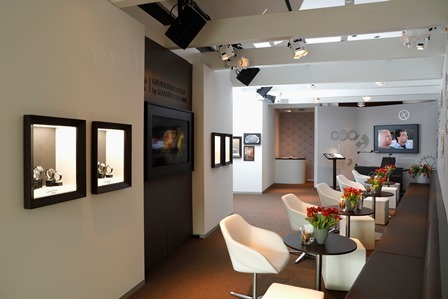
The Golden Bear Lounge by Glashütte Original at the Berlin International Film Festival in 2017. Image credit: Glashütte

For instance, Jaeger-LeCoultre’s “The Art of Behind the Scenes” exhibit has been on view in Cannes, New York and Los Angeles to align with industry events. The display, curated by Finch Partners, features photographs that captured the making of some iconic films (see story).

Tuning in

As with film, television is also home to luxury product placement. In addition to coordinated placement, luxury labels make appearances both in scripted shows and reality television.

Along with cameos, sometimes brands become the main event.

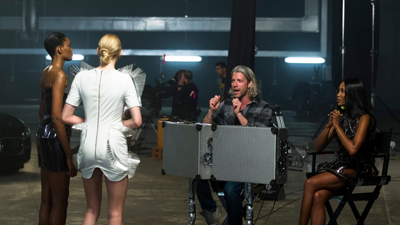
For instance, an episode of the modeling competition show “The Face” featured a challenge revolving around Maserati’s Quattroporte, wherein contestants were asked to create a commercial for the car. Unlike the fleeting nature of product placements that can stay invisible to consumers, structuring an entire episode around a product likely creates a greater impact (see story).

Maserati on « The Face. »

Television shows that feature affluent characters frequently call upon luxury labels to add a touch of aspiration to scenes. For instance, an episode of The CW’s “Gossip Girl” depicted a private sales appointment with a Cartier brand representative (see story).

Taking this approach a step further, a number of companies have developed branded content.

“House of DVF,” which ran for two seasons on the E! network, featured a group of 10 millennial women vying for the chance to be a brand ambassador (see story).

Lexus’ branded series “Verses and Flow” is a variety show designed to reach an African American audience through performances ranging from spoken word to music (see story). Additionally, the automaker’s content channel L/Studio positions itself as a substitute for a streaming service, serving up shows ranging from the comedic to the inspirational.

I Turn My Camera On Trailer | L/Studio Created by Lexus

Branded partnerships with television shows and channels are also popular.

Tag Heuer inked a sponsorship deal with RedBull TV, putting its brand within the digital media platform (see story), while Ralph Lauren became a corporate sponsor of the U.S.’ Public Broadcasting Service’s Masterpiece (see story). Cartier similarly sponsored CNN’s “Ones to Watch” series, which featured up-and-coming artists (see story).

Tie-ins with television shows offer a chance to bring a viewing audience to a brand’s channels.

Lexus teamed with ABC’s “Quantico” on a second-screen virtual reality experience. The interactive scripted content allowed consumers to take on the role of a new FBI recruit (see story).

Musically minded

Live events offer a means for brands to deliver an immersive experience. Therefore, performances such as music festivals and concerts have been a frequent choice of luxury brands looking to engage with particular audiences.

« One reason luxury brands are working with live entertainment is that each entertainment platform creates an experience for the event goer, » said Keetria Garner-Chambers, entertainment marketing director at AMW Group, Houston.

« Luxury brands want to tap into that excitement and enjoyment within those environments where individuals would be more receptive and inclined to their ad campaigns, » she said. « What better way to do that than reaching people who are happy and excited, and luxury brands can cater their promotional messages to target a specific demographic. »

In an effort to appeal to the next generation of luxury consumers, Tag Heuer became a sponsor of the Coachella Valley Music Arts Festival in 2016. The watchmaker had a branded tent in the VIP section, which included a photo booth and an interactive display about its Connected watch (see story).

Also catering to a younger crowd, Gucci hosted the EDM festival Club to Club at its Milan headquarters (see story).

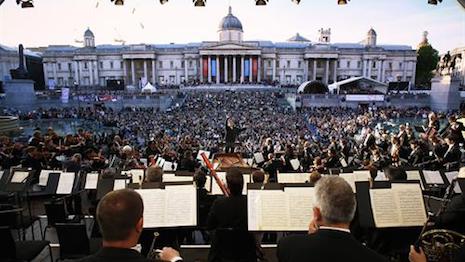
Embracing a different genre, BMW has worked with symphonies in London, Munich and Berlin to bring live classical music to audiences for free. The London concerts have drawn out a considerable crowd of first-time symphony attendees and those under the age of 35 (see story).

BMW LSO Open Air Classics in 2017. Image courtesy of BMW

Whether with their blessing or not, luxury brands are frequently name-dropped in popular music.

A number of brands such as Michael Kors, Tom Ford, Versace, Richard Mille, Maybach, Mercedes-Benz and others have been mentioned in hip-hop, rap, pop and rock songs that have topped the charts. By being mentioned in these lyrics, musicians are giving an organic endorsement of a brand that may encourage consumers to buy certain brands instead of others (see story).

Often, brands choose to let these references go by without acknowledgement.

However, recently Versace fully embraced its title placement in Bruno Mars’ “Versace on the Floor.” From creating custom attire for the artist and his music video costar Zendaya to filming its own lip synch to the track, Versace showed it was on-board with its association (see story).

Bruno Mars – Versace On The Floor Official Video

Chaumet also took Chinese singer Zhang Yixing’s music video for “I Need U” as a branding opportunity, letting the artist film within its Paris boutique and salons (see story).

Creative directors, including Gucci’s Alessandro Michele and Givenchy’s former designer Riccardo Tisci, have lent their creative talents to music videos (see story).

Brands’ music appreciation has also manifested in curated digital playlists and channels, such as Apple Music’s partnerships with Burberry and Chloë (see story).

« Luxury brands have always associated themselves with celebrities by using these individuals in celebrity endorsement campaigns, » Hollywood Branded’s Ms. Jones said. « But in those instances, the brand has to fund and control how the consumer is going to see that partnership. The brand is going to have to create the ad, purchase the media or produce the red carpet event.

« What entertainment marketing content opportunities in TV, film, music videos or related events do is provide the platform as well as the celebrity – the brand simply needs to show up to take advantage of potential global awareness, » she said.

On stage

Similar to music, theatrical performances and dance have the ability to engage live audiences. Luxury brands have sought placement as sponsors of performances, putting themselves in front of affluent attendees.

For instance, as part of its artistic patronage, Ruinart became the official Champagne of the New York City Ballet in 2014. As part of its new role, Ruinart opened a branded Champagne bar at the company’s home at the David H. Koch Theater in Lincoln Center (see story).

Mr Porter similarly sponsored the London run of a musical adaptation of Bret Easton Ellis’ “American Psycho.” The retailer promoted its role and the show itself through a themed edition of its online magazine The Journal (see story).

Van Cleef Arpels’ gems have served as the inspiration for choreographers George Balanchine and Benjamin Millepied, who translated the concept of the precious stones into dance.

Emerald section of George Balanchine’s « Jewels » ballet. Image credit: Van Cleef Arpels

Taking on the role of producer, Fornasetti staged a version of Wolfgang Amadeus Mozart’s opera “Don Giovanni.” Fornasetti’s production included set designs that took inspiration from some of the brand’s motifs (see story).

Taking advantage of their fashion expertise, luxury brands have frequently been called upon to serve as the costume designers for productions.

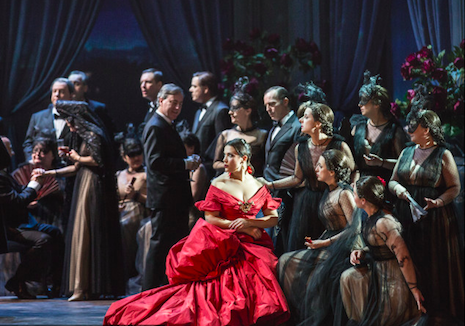
Valentino linked with the Teatro dell’Opera di Roma for its staging of opera “La Traviata,” while Balmain was tapped to design costumes for ballet dancers at the Paris Opera (see story).

The costumes for « La Traviata » were designed by Valentino. Image credit: Teatro dell’Opera di Roma, photo by Yasuko Kageyama

Dance and fashion have a symbiotic relationship, with designers appearing on-stage and performers starring in marketing efforts.

For instance, Alexander McQueen teamed up with French ballet dancer Marie-Agnès Gillot for an Another magazine shoot (see story).

London’s The Dorchester has also collaborated with the English National Ballet School to add a touch of performance to its afternoon tea.

« Entertainment marketing is by definition entertaining, » said Damian Bazadona, president/founder of Situation, New York. « It’s a simple concept, but it’s not easy to be entertaining, and today, it’s what separate good brands from great brands.

« Entertainment marketing often takes the form of an event or an experience, and great brands create great experiences for their consumers, » he said.

« Digital media amplifies the magic of the experience. It’s how the impact of an event or campaign can be extended beyond just the four walls of the venue or the limited number of people the space could accommodate.

« And by capturing content that tells the story of the event or campaign, you create another touchpoint that allows you to reach a wider audience and communicate just what the experience of your brand is. »

Playing games

Leveraging gaming’s ability to engage, luxury brands have sought placement in the medium.

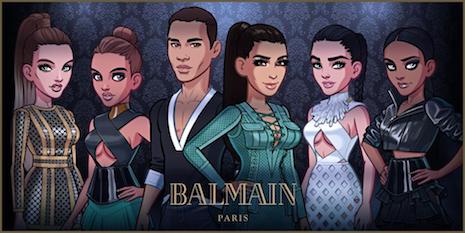
Drawing off Balmain creative director Olivier Rousteing’s friendship with reality television celebrity Kim Kardashian, the French label made appearances in her mobile game. Players could dress avatars in Balmain runway looks and also see Mr. Rousteing in animated form as they played (see story).

Balmain for Kim Kardashian Hollywood. Image credit: Kim Kardashian Hollywood

Similarly, automakers have often teamed with racing franchises to show off their vehicles. Lamborghini offered players of Microsoft Turn 10 Studios’ racing franchise Forza the ability to drive its Centario in the game before the model was available for the real road (see story).

Gamification has also become a tactic employed by brands in the in-store environment or digital channels. For instance, LVMH’s DFS allowed consumers to test their skills in a “Pink Jungle” to promote a Michael Kors collaboration (see story).

With the growth of entertainment on mobile and digital, brands are discovering that by creating marketing efforts with a game-like experience, they make a larger impact.

Italian fashion house Fendi and London’s Harrods department store recently worked together to create a memory game on mobile where users had to match photos of the brand’s handbags. According to a Fashionbi report, marketers are adopting more strategies such as this in an attempt to better connect with consumers, with market spend in this way likely to overtake traditional spend (see story).

Read all about it

Along with becoming creators of performance art and cinema, luxury brands have also tried their hand at publishing.

Louis Vuitton has drawn from its positioning as a travel-centric house for a series of travel books. The set of 15 City Guides covers international destinations such as Paris, Beijing, New York and Moscow (see story).

Aside from films, coffee table books are another way to tell a brand story in long-form. These volumes reassert brand positioning and heritage while also allowing consumers to keep a piece of a favorite label in their own home.

As luxury has done with other artistic mediums, brands also act as curators and sponsors of the written word.

The annual Prada Journal competition, in partnership with publisher Giangiacomo Feltrinelli Editore and the label’s eyewear licensee Luxottica, has asked authors to submit works related to a themed prompt. After judging, the winning writer receives a cash prize and publication of their e-book.

Prada Journal is moving away from print and text and towards visuals and images. Image credit: Prada

This year’s contest centers on the storytelling power of images, asking interested participants to share photos, illustrations or video for a chance to be featured on a multimedia gallery (see story).

Famous faces

Luxury brands often seek out relationships with the entertainment industry’s most notable names, whether dressing them for a red carpet affair or bringing them on-board as an ambassador.

Many of these associations have been long-term, as actors or musicians appear in multiple ad campaigns for a particular house or make appearances at parties or events.

« What we’re seeing is that there really is a commitment from the brands to work with talent that really is living those brands before they go sign and partner with them, » said Matthew Lalin, founder of Starpower, New York. « And it’s more challenging for us as an agency, but it’s almost better, because when you find those right fits, it’s special.

« It’s about aligning from a pop culture perspective with what are the core values of the brand and what can that talent or property offer you that aligns with your core values, » he said.

Mr. Lalin looks at the celebrity-brand partnership as a give and take, as brands should also find ways to tap into a star’s passions, while also looking at them as a media platform.

Along with popularity or prestige from awards won or high-profile work, today brands also look at a celebrity’s social media prowess and audience as a deciding point.

Although the definition of what constitutes a celebrity has evolved with the advancement of social media, a report by Celebrity Intelligence finds that 40 percent of agency respondents feel that celebrity-driven marketing strategies remain very effective. Close to eight in 10 brands have worked with a celebrity on a social media strategy (see story).

Some brands have taken the celebrity relationship a step further, tapping a personality as a collaborator in the design process.

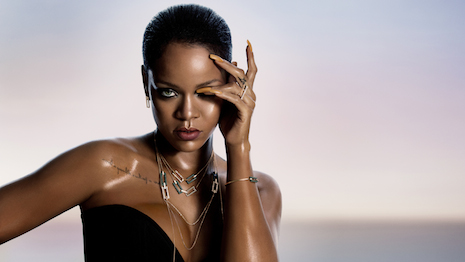
Pop star Rihanna, for instance, has teamed with Dior, Chopard and Manolo Blahnik on collections that reflect her personal style.

Rihanna modeling the Rihanna Loves Chopard jewelry collection. Image credit: Chopard

The singer, who has also branched into acting, was found to be the most marketable celebrity in rankings by the NPD Group. When an endorsement partnership is strong, fans of the celebrity are at least 50 percent more likely to make a purchase from the brand (see story).

Due to the enhanced interest to buy, entertainment personalities can lend support to brand charity efforts. For instance, Rolls-Royce invited music legends to take advantage of its bespoke capabilities for a good cause.

The brand commissioned collaborators such as The Who’s Roger Daltrey and The Kink’s Sir Ray Davies to put their own spin on Wraiths, with the resulting vehicles being sold to fundraise for charities. The first four cars in a series of nine Wraith “Inspired by British Music” vehicles were unveiled on March 29 at the Sanderson Hotel in London (see story).

While celebrity relationships can often bring more notoriety to a brand thanks to the star’s fame, brands need to do their due diligence when picking partners.

When working with a celebrity there are inherent risks, as the ambassador is invited into the brand’s inner workings and serves as a real-life representation of the company’s positioning. Despite being the face of a brand, celebrity ambassadors also have personal lives, careers and opinions that may occasionally outshine or undermine the message the brand is hoping to portray via its selected spokesmodels (see story).

To lower this risk, Mr. Lalin stressed the importance of brands doing their due diligence on a potential ambassador. His firm advises clients to run a background check on celebrities, with the star’s knowledge, before signing.

« It’s one thing to just do a contract, but it’s another thing to truly develop a relationship with that potential partner, » Mr. Lalin said. « And I think that’s also key, too, so you really learn who you’re aligning your brand or your product with.

« There’s always going to be risk, but the more due diligence you do, the least risk there becomes. »

Aside from acting as luxury partners, celebrities have also become luxury competition as performers turn into lifestyle moguls. From Madonna’s MDNA skincare line to Kanye West’s Yeezy adidas collection, celebrity brands are carried alongside more traditional luxury labels in high-end retailers such as Barneys New York.

Inspiration point

Entertainment frequently plays a key role in the development of products, services and marketing initiatives.

Brands have taken inspiration from pop culture and entertainment for collections and campaigns.

For instance, Turnbull Asser looked to both James Bond and cult classic cartoon character Mr. Benn for a line of pocket squares, depicting the animated figure as the famed spy (see story).

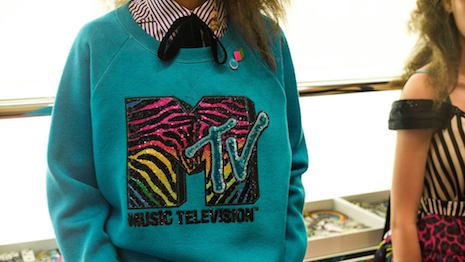
Marc Jacobs likewise paid homage to 1980s MTV with a capsule collection that launched before the television networks’ Video Music Awards last year (see story).

Marc Jacobs resort 2017 collection. Image credit: Marc Jacobs

Luxury marketing has also co-opted some of its tactics from the entertainment industry.

Brand films sometimes blur the boundaries between commercial messaging and pure storytelling. They have also challenged marketing norms with long-form content.

Chanel has made a number of films dedicated to the story of its founder Gabrielle “Coco” Chanel. For instance, the brand’s « Once Upon a Time, » directed and produced by creative director Karl Lagerfeld, clocked in at 18 minutes.

Starring actress Keira Knightley, the longtime ambassador for Chanel’s Coco Mademoiselle fragrance, the film starts in 1913 when Gabrielle “Coco” Chanel has opened a namesake hat boutique in on the Rue Gontaut-Biron in Deauville, France (see story).

« Once Upon A Time… » by Karl Lagerfeld

Brands have also turned music producer to get their point across.

French perfume house Fragrance Du Bois promoted the sustainable use of one of its main ingredients by producing a song in collaboration with Arab singer Nadeem Nour.

The song, titled “Life’s Treasure,” was written to celebrate the dark, resinous heartwood commonly known as Oud or Agarwood that is a key ingredient in many perfumes and incense (see story).

« The consumer is very smart, and I think the consumer is conscious of, ‘I like brand x, I’m celebrity y, you should buy me’ versus a brand really understanding who their consumer is and creating content that that consumer is going to want to watch, consume and believe in, » Starpower’s Mr. Lalin said. « A lot of people say, ‘Do you concern yourself, because then maybe that’s competing with what you do?’ But I think it’s actually really good for the industry, because it shows that brands are making a commitment to the space.

« Given the landscape that we’re in, pop culture does play a role in everything that’s going on in the world, and if content can be created in a smart, articulate way to tell a really creative story and one that comes with a positive message, whether brands are doing that internally or working with agencies, I think that’s great. »

Best practices for entertainment marketing:

  • Situation’s Damian Bazadoza:

    • « Behave like an experience. Great experiences use each consumer touchpoint as an opportunity to connect with them directly and enhance their experience. And every single touch point matters. Most people flop on this point. They focus on the obvious, shiny objects; but forget the small, seemingly insignificant moments where you can have significant impact.
    • « Don’t overpromise and under-deliver. Creating a remarkable experience is far harder than most people realize. Make the proper investments so you can be successful. »

  • AMW Group’s Keetria Garner-Chambers:

    • « Do your research before considering teaming with an entertainment marketing partner. Make sure you’re familiar with the event or influencers audience and their interests.
    • « Consider the potential reach of your promotional message. Even if you don’t have product available to give away or for direct purchase, any marketing collateral and other ways to connect with the audience will be a way for them to mention your brand name when recounting their experience to others. »

  • Hollywood Branded’s Stacy Jones:

    • « Try to not settle with just the brand being shown on-screen in a scene without a logo. Look for a sign, a shopping bag or a branded box to bring that brand to life. And if you can’t get that in-content branding, then blog about it, post about it on social media, get press coverage or look at ways to utilize Google Adwords to answer that long tail keyword search question by a consumer when they Google ‘long earrings Kate Hudson wears in xyz film’ or ‘purse carried by Sarah Jessica Parker in xyz TV show.’  Do whatever you can to help bring that partnership to life off the screen for the consumer who wants to be in the know. And in that vein, also look to see what media or retail extensions your brand can offer the content partners, specifically movies, to help bring more awareness to that film.  Print ads, billboards, in-store campaigns, all bring value of raising awareness and getting more people to the theater to buy tickets and see the movie. And also look out for premiere party and screening opportunities which can yield co-branded step and repeat red carpets of your brand, and media coverage.
    • « Luxury brands need to understand when it comes to product placement, that simply budgeting to make sure you have enough product inventory is a large part of the way luxury brands can win home runs. The biggest obstacle we typically see in the luxury brand space is a lack of product available – at the last minute – for product placement opportunities that could become wins for the brand.  And the brand loses out.  You really have two options with TV and film – you either have product that helps productions save money from purchasing or renting an item, or you pay your way in.  Sometimes it may require a combination of both – but there is a lot that is possible to obtain simply with product and having the right relationships to get your brand on screen. »

  • Starpower’s Matthew Lalin:

    • « Authenticity is number one…I think the consumers’ really smart and you need to respect that and think about the partnerships from an authentic perspective.
    • « One piece of advice we always give our clients is developing those relationships and that it’s a long game. If you want to play in the world of pop culture, you don’t need to sign everyone under the sun, but you do need to make sure your brand is relevant, it’s out in the marketplace and you’re having conversations with the various stakeholders, letting them know your story, why you’re different, so that you’re not just making outreach when you need something but you have a real message that you’re communicating to the consumer and also internally in the trades so that when there is an opportunity for partnership, you’ve been front and center and viewed as a leader. »

2 Navy SEALs Under Suspicion in Strangling of Green Beret in Mali

No one has been charged in Sergeant Melgar’s death, which a military medical examiner ruled to be “a homicide by asphyxiation,” or strangulation, said three military officials briefed on the autopsy results. The two Navy SEALs, who have not been identified, were flown out of Mali shortly after the episode and were placed on administrative leave.

The biggest unanswered question is why Sergeant Melgar was killed. “N.C.I.S. does not discuss the details of ongoing investigations,” Ed Buice, the agency’s spokesman, said in an email, confirming that his service had taken over the case on Sept. 25.

Neither the Army nor the military’s Africa Command issued a statement about Sergeant Melgar’s death, not even after investigators changed their description of the two SEALs from “witnesses” to “persons of interest,” meaning the authorities were trying to determine what the commandos knew about the death and if they were involved.

The uncertainty has left soldiers in the tight-knit Green Beret community to speculate wildly about any number of possible motives, from whether it was a personal dispute among housemates gone horribly wrong to whether Sergeant Melgar had stumbled upon some illicit activity the SEALs were involved in, and they silenced him, according to interviews with troops and their families. Other officials briefed on the inquiry said they had heard no suggestion that the Navy commandos had been doing anything illegal.

When contacted separately by telephone on Saturday, Sergeant Melgar’s widow, Michelle, and his brother, Shawn, declined to comment.

Lawmakers have criticized top officers and Pentagon officials for offering a shifting timeline of the events in the Niger attack, and for failing to respond with timely, accurate information about the American military’s role on the continent at a time when President Trump has loosened restrictions on the armed forces to intensify attacks against the Islamic State and Al Qaeda around the world.

Sergeant Melgar, a graduate of Texas Tech University who joined the Army in 2012, was assigned to the 3rd Special Forces Group, based at Fort Bragg, N.C., the same unit whose soldiers were attacked by a much larger and heavily armed group of Islamic State fighters near the border between Niger and Mali on Oct. 4.

Advertisement

Continue reading the main story

According to military officials, Sergeant Melgar was part of a small team in Bamako assigned to help provide intelligence about Islamic militancies in Mali to the United States ambassador there, Paul A. Folmsbee, to protect American personnel against attacks. The sergeant also helped assess which Malian Army troops might be trained and equipped to build a counterterrorism force.

Sergeant Melgar, a native of Lubbock, Tex., was about four months into what military officials said was a six-month tour in Mali, and was living with three other American Special Operations troops in a house provided by the American Embassy.

Photo

Staff Sgt. Logan J. Melgar

Two of those housemates were members of the Navy’s SEAL Team 6, which has over the past decade carried out kill-or-capture missions in Libya, Yemen, Afghanistan, Iraq and Somalia, as well as the one that killed bin Laden in Abbottabad, Pakistan, in 2011.

According to two senior American military officials, the two SEAL commandos were in Mali with the approval of Mr. Folmsbee in a previously undisclosed and unusual clandestine mission to support French and Malian counterterrorism forces battling Al Qaeda’s branch in North and West Africa, known as Al Qaeda in the Islamic Maghreb, as well as smaller cells aligned with Al Qaeda or the Islamic State. The Americans helped provide intelligence for missions, and had participated in at least two such operations in Mali this year before Sergeant Melgar’s death.

Much is unknown about what happened around 5 a.m. on June 4 in the team house. The initial reports to Sergeant Melgar’s superiors in Germany said he had been injured while wrestling or grappling with the two Navy commandos, according to three officials who have been briefed on the investigation.

Newsletter Sign Up

Continue reading the main story

According to one version of events, one of the SEALs put Sergeant Melgar in a chokehold. When the sergeant passed out, the commandos frantically tried to revive him. Failing that, they rushed him to an emergency clinic, where he was pronounced dead.

Spokesmen for the Africa Command, the Special Operations Command, the Defense Department and the Army and Navy investigative services declined to comment, citing the continuing investigation, or did not respond to emails and phone calls on Sunday.

A spokesman for the State Department’s Africa Bureau and Mr. Folmsbee, Nicholas A. Sadoski, directed all questions to the Pentagon. Mr. Sadoski declined to answer questions about what kind of oversight the ambassador exercised over the American military personnel in Mali, how frequently he was briefed on Special Operations missions there and when he learned about Sergeant Melgar’s death.

Why American Special Operations forces are in Mali at all is a story in a nutshell of the American military’s successes and failures in Africa.

Advertisement

Continue reading the main story

Mali had been one of West Africa’s most stable nations before 2012, and was held up by the Pentagon as a model partner in combating Islamic militants. But when secular Tuareg separatists began an uprising, as they had done in the past, insurgents linked to Al Qaeda took advantage of the deteriorating security situation.

When the militants surged across Mali’s northern desert in 2012, American-trained commanders of the country’s elite army units defected at a critical time, taking troops, trucks, weapons and their newfound skills to the enemy. A confidential internal review completed by the Africa Command after the debacle concluded that there were critical gaps in the American training for Malian troops and senior officers.

With Mali’s army in collapse, the rebels were pushed out by French and Chadian troops early in 2013, and the United Nations established a peacekeeping mission. But the chaos continues today. Various armed insurgents regularly attack Malian forces and the United Nations peacekeepers. To date, 149 peacekeepers have been killed in Mali, making it one of the most dangerous peacekeeping missions in the world.

And terrorists continue to mount deadly attacks, including an assault in June on a resort outside Bamako that killed at least five people.

For the 3rd Special Forces Group, the past year has served as a reminder that Africa remains a dangerous assignment. In addition to Sergeant Melgar and the four soldiers killed in Niger, one soldier committed suicide in Kenya last October and another died in a vehicle accident while on patrol in Niger in February.

Those who knew Sergeant Melgar described him as a soldier’s soldier — he deployed to Afghanistan twice on training missions between July 2014 and February 2016, according to his Army service record — and a devoted father of two sons, 13 and 15, who texted and talked via Skype multiple times a day with his wife while serving overseas.

More than four months later, his death still has many at Fort Bragg and in Lubbock reeling. An online community bulletin board in Lubbock stated: “A Melgar family representative shared that ‘Staff Sgt. Melgar did what most only dream of and excelled at every turn! His life was epic! He is missed dearly every single day.’”

Sergeant Melgar was also honored at the high school he attended in Wolfforth, Tex., Frenship High, during the homecoming football game on Oct. 6.

A final tribute awaits Sergeant Melgar: He is scheduled to be buried at Arlington National Cemetery on Nov. 20.


Continue reading the main story

Sorting the Sunday Pile Week 8: Wilson, Watson emerge as faces of NFL QB future

Seattle is not the most likely place for a shootout to break out, but the NFL has a funny way of letting outstanding football games emerge out of nowhere and we got one of the best games anyone will see in 2017 as Deshaun Watson and Russell Wilson dueled it out in a marvelous, high-octane battle that showcased the future of football.

Wilson and Watson both showcased their unique skillsets, lighting up the scoreboard while throwing for four touchdowns each, with half of said touchdowns coming in a wild fourth quarter that featured four different touchdown drives of 71 yards or longer. 

Watson now has 19 touchdown passes in his first seven games, the most in NFL history, beating Kurt Warner’s record, but it was Wilson who got the last laugh, casually marching the Seahawks 80 yards down the field in three plays before finding tight end Jimmy Graham for a wide-open touchdown that would ultimately win the game.

« It’s crazy, because at those moments, [Russell] has the most confidence you’ve ever seen him with, » Graham said of his quarterback after the game. « It’s just unbelievable his mindset, his focus at those times, how upbeat he is. You believe every time, if there’s 20 seconds left on the clock that we’re going to score, that we’re going to hit that Hail Mary. It’s just unbelievable, his actions. His demeanor in the huddle is just unbelievable. » 

It’s not hard to see what Graham is talking about — that was hardly the only big-time throw (and catch) on that drive, with Wilson picking up a massive chunk of yardage on a deep completion to Paul Richardson that showcased his mobility, pocket presence and arm.

Wilson may as well have been looking at a mirror during this game, with Watson serving as an impressive facsimile for Wilson from his rookie year. 

Folks will recall that it was Matt Flynn, not Wilson, who was set to be the starter for the Seahawks in 2012. Flynn had been signed in free agency and Wilson was just a third-round pick for Seattle. The Seahawks were hoping Flynn could put them over the top. Instead, Wilson, who just has a certain winning quality about him, stole the job before the season and never looked back.

Like Wilson, Watson wasn’t going to be the starter originally. Tom Savage was named the Texans starter for Week 1 and spent the first half getting pounded by the Jaguars before Bill O’Brien quick-hooked him for Watson. 

And like Wilson, Watson has that quality about him. Dabo Swinney described it before the draft and we just didn’t listen. With every crunch-time play and every touchdown he throws, it’s hard to imagine how anyone thought starting Savage was the right play.

Watson still had his share of rookie mistakes and eventually threw two interceptions (one to seal the game) in Richard Sherman’s direction. But it’s a testament to Watson that, with 21 seconds left and the Texans holding the ball down three points to the Seahawks in Seattle, it wasn’t out of the question for the rookie quarterback to find a way to get the Texans a look at tying up the game.

He is playing a little above his head right now, in the sense of having a lot of breaks go his way. One of his touchdown throws is going to give him 70 yards but it was DeAndre Hopkins who did most of the work. 

That was still a « WOAH » moment for Houston, a big-play score that gave the Texans the lead with less than five minutes to play. They had that game and gave their defense a shot to hold off Wilson and the Seahawks enough to steal a pretty massive upset. 

Regardless of the final score, it’s clear just how much Watson belongs. And it’s also fortuitous for both the Texans and the NFL that Watson was able to produce such a big performance, going head-to-head against Wilson for 60 fantastic minutes of football, when he did.

The Texans started the game by taking a knee in protest of owner Bob McNair’s referring to NFL players as « inmates » in a « prison » (he was worried the protesting players and the anthem issues would result in the owners losing control). The world was focusing on something other than football when this game began, and a blah performance by Houston would have led to questions about their focus, etc.

Instead, the narrative coming out of the game was laser-locked on Watson and Wilson, the two young quarterbacks who have, at every stage of their career, denied the doubters, refusing to back down from a challenge. 

We often hear people complain about the level of quarterbacking in the NFL and the concern about the future once guys like Tom Brady and Drew Brees move on. Maybe the game is in pretty good hands after all. 

As Russia case unfolds, Trump and Republicans go to battle with Clinton and Democrats

Tensions between Republicans and Democrats over the investigation of Russian involvement in the 2016 presidential election intensified Sunday, with President Trump demanding to know why his campaign is under federal scrutiny while his former opponent Hillary Clinton is not.

The president’s latest outburst over the inquiry led by special counsel Robert S. Mueller III surfaced on Twitter as his administration braced for the possibility that the first batch of charges in the case could be publicly announced as soon as Monday. CNN reported that a federal grand jury had approved an indictment, although details of the possible charges and the name of a defendant remained unclear.

Trump issued four tweets over 24 minutes, attacking the Mueller probe as unfair and citing various Clinton controversies that he said warranted investigation.

“Instead they look at phony Trump/Russia, ‘collusion,’ which doesn’t exist,” the president said. “The Dems are using this terrible (and bad for our country) Witch Hunt for evil politics, but the R’s are now fighting back like never before. There is so much GUILT by Democrats/Clinton, and now the facts are pouring out. DO SOMETHING!”

Later in the morning, Trump added: “All of this ‘Russia’ talk right when the Republicans are making their big push for historic Tax Cuts Reform. Is this coincidental? NOT!”

On Sunday talk shows, Republicans rallied around Trump and questioned how CNN could have received information about secret grand jury proceedings.

“There are very, very strict laws on grand jury secrecy, so depending on who leaked this to CNN, that’s a criminal violation, potentially,” New Jersey Gov. Chris Christie (R), a longtime friend of Trump’s, said on CNN’s “State of the Union” on Sunday. “For us to have confidence in this process, we’ve got to make sure that the grand jury process remains confidential, remains secret, so that the special counsel can work effectively to be able to get to the bottom of all that he’s looking into.”

House Majority Leader Kevin McCarthy (R-Calif.) cast doubt on the objectivity of Mueller’s team, noting that the prosecutor’s staff includes “a lot of individuals, attorneys who played in politics, who’ve given money on the Democratic side.” Of the eight attorneys on the team who have been publicly identified, four made donations to Democrats, including President Barack Obama and Clinton.

“This president won the election solely on the idea that he connected with the American people. No other influence involved,” McCarthy said on Fox’s “Sunday Morning Futures.” “But the idea of what I’ve watched, of what the Democrats have been doing, it sure raises a lot of questions.”

Rep. Trey Gowdy (R-S.C.), chairman of the House Oversight Committee, came to Mueller’s defense and said that he doesn’t agree with Republicans who are calling for Mueller to resign or stop his investigation.

“I would encourage my Republican friends — give the guy a chance to do his job,” Gowdy said on Fox News Sunday. “The result will be known by the facts, by what he uncovers. . . . I would say give the guy a chance to do his job.”

Democratic lawmakers mostly stayed out of the Sunday fray after a week in which Clinton’s 2016 campaign came under fresh scrutiny. The campaign funded political opposition research into Trump that helped create a highly publicized “dossier” on the Republican candidate and fueled some allegations now under scrutiny by Mueller.

The 35-page dossier is composed of 17 memos containing raw intelligence, some of it highly salacious and not independently confirmed. It relies on Kremlin-linked sources and alleges that the Russian government had been trying to support Trump’s candidacy while gathering compromising information that could be used as blackmail. The dossier was published in full by BuzzFeed in January.

It’s unclear how much the Clinton campaign and Democratic National Committee paid for the opposition research by Fusion GPS, a Washington firm that conducts investigations for private clients. The Clinton campaign paid $5.6 million in legal fees to a law firm from June 2015 to December 2016, according to campaign finance records, and the DNC paid the firm $3.6 million in “legal and compliance consulting’’ since November 2015. It’s impossible to tell from the filings how much of that work was for other legal matters and how much of it related to Fusion GPS.

Trump tweeted Sunday morning that the dossier, which he called “Clinton made Fake Dossier,” could have cost as much as $12 million, although he did not explain how he reached that number.

Compiled by former British intelligence agent Christopher Steele, the dossier mirrors a separate conclusion reached by U.S. intelligence agencies that the Russian government intervened in the U.S. election in an effort to bolster Trump and harm Clinton, such as through hacking the DNC and distributing materials to WikiLeaks to publish at key moments.

Fusion GPS, which hired Steele to gather information, was first employed to investigate Trump during the Republican primaries by the Washington Free Beacon, a conservative publication that receives financial support from billionaire GOP donor Paul Singer, according to two people familiar with Singer. The Beacon said in a statement that its research ended before Fusion GPS hired Steele and that none of the research that it commissioned is included in the dossier.

In April 2016, an attorney representing Clinton’s presidential campaign and the DNC hired Fusion GPS, which then hired Steele. Brian Fallon, a former spokesman for the Clinton campaign, said he learned about Steele and the dossier after the election. People familiar with the matter told The Washington Post that the Clinton campaign and the DNC did not direct Steele’s activities.

Rep. Adam B. Schiff (Calif.), the ranking Democrat on the House Permanent Select Committee on Intelligence, said Sunday that “a lot” of the information in the dossier has been corroborated.

“I certainly would have liked to know who paid for it earlier, but nonetheless, that’s just one factor to be considered,” Schiff said on ABC’s “This Week” on Sunday. “It doesn’t answer the ultimate question, which is: How much of the work is accurate? How much of it is true? And my colleagues don’t seem particularly interested in that question, but that is really the most important question for the American people.”

Schiff said he has not been told anything about any impending indictments in Mueller’s investigation, noting that such notification would not have been appropriate.

Trump also tweeted Sunday about Clinton’s involvement in what he called the “Uranium to Russia deal,” demanding that the matter receive greater scrutiny.

The 2010 deal approved by the Obama administration while Clinton was secretary of state allowed a Russian nuclear energy agency to acquire a controlling stake in a Canadian-based company that had mining licenses for about 20 percent of U.S. uranium extraction capacity. The company cannot export the uranium.

Earlier this month, House and Senate Republican leaders announced they would investigate the uranium deal, and the House Oversight Committee launched a probe into how the FBI investigated Clinton during the campaign. In the latter investigation, Republicans say they want to know why then-FBI Director James B. Comey publicly announced that the bureau was investigating Clinton but waited months before making a similar announcement about its inquiries into the Trump campaign.

Ed O’Keefe and Karoun Demirjian contributed to this report.

Trump team’s response to Russia news: Focus on Clinton, leaks or anything else


Hillary Clinton is pictured. | Getty Images

Former Secretary of State Hillary Clinton is interviewed by Mariella Frostrup (not pictured) at the Cheltenham Literature Festival on Oct. 15 in Cheltenham, England. | Matthew Horwood/Getty Images

Caught off guard by reports of criminal charges in the Russia probe, Trump advisers sought to keep up their political attacks and divert attention from allegations of Russian collusion.

The White House has been anticipating for months that special counsel Robert Mueller would eventually file criminal charges in his Russia investigation. But President Donald Trump, his lawyers and senior administration officials were all caught off guard by the news.

Two of Trump’s top lawyers were traveling out of town when the first report broke Friday night that a federal grand jury had approved the first indictment in the probe into Russian interference in the 2016 election. One of Trump’s personal attorneys, Ty Cobb, was relaxing on his deck in South Carolina, while the entire team was still working to confirm the veracity of the CNN report over the weekend.

Story Continued Below

The lack of information, on a case that could have major ramifications for the president, left many current and former Trump advisers livid, focusing their rage on how the information leaked and on a forever target: Hillary Clinton.

“It is unusual for prosecutors to file indictments under seal and then have it leak out,” said Mark Corallo, a former spokesman for Trump’s legal team, noting that the only people in the loop would be the prosecutors and agents on Mueller’s team, the grand jurors and the judge. “This was an ill-advised leak of information,” Corallo added. “I’m disgusted by the tactics of the prosecutors to leak the information.”

That leak, he said, left the White House in an uncomfortable position. “All you can do is wait and see,” he said.

The latest news came at a point of low morale in the West Wing, where many officials see the one-year mark of the administration approaching and are starting to consider their graceful departures. The Trump administration has also struggled to deliver major legislative achievements on the president’s key priorities such as health care, which has contributed to the Republican congressional leadership’s do-or-die bind on passing tax reform legislation.

On Saturday, the president appeared to be abiding by his wait-and-see strategy on Russia. His Twitter feed remained unusually quiet for a weekend morning, and he spent the warm fall day at his Trump National Golf Club in Sterling, Virginia.

In recent days, the president has been sticking to his long-held mantra when it comes to Russia, according to associates who have spoken with him. He maintains that Mueller is on a wild goose chase if he’s trying to find any connection between the president and Russia, because there’s nothing to find.

But silence from the commander-in-chief didn’t stop some finger pointing from his closest advisers over the weekend, as people waited to see the size of the axe that might fall as early as Monday.

Some Trump allies expressed skepticism of the go-along-to-get-along legal strategy advanced by the president’s personal attorneys, Cobb and John Dowd. The two have been the main internal proponents of a strategy to cooperate with Mueller’s investigation by turning over all emails and documents requested. That they were given no head’s up about the charges on Friday “is a huge indictment of their cooperation strategy,” said one close Trump ally.

Others, however, said that charge was unfair until it was clear who the indictment applies to — and if it even applies to someone with any connection to the White House.

The president’s political adversaries, however, were not waiting to see if the person under indictment was connected to the White House before deciding the story spelled bad news for Trump.

“It obviously should be a matter of concern,” said David Axelrod, a former top adviser to President Barack Obama. “The indictment of associates of the president is never good news. Even if the charges are not directly related to the campaign or the president, this is the way prosecutors often work in unraveling larger puzzles.”

White House officials tried to downplay the significance of the upcoming indictments, distancing themselves from likely targets such as former campaign chairman Paul Manafort and former national security adviser Michael Flynn.

“This was a tremendously successful week,” counselor Kellyanne Conway said in a text message Saturday, slapping away any sense of dread building in the West Wing. “Budget passed, which is a critical step toward tax cuts; GDP again at 3%; ‘Russia collusion’ boomeranged toward the Democrats; the President and the First Lady delivered a major policy speech and nationwide call to action on opioids and drug demand; POTUS is preparing for his first trip as President to Asia.”

The rest of the administration’s media strategy on Saturday consisted of a scramble to shift any conversation about Russian collusion over to Hillary Clinton’s failed campaign — a difficult sell when it was former Clinton campaign chairman John Podesta whose personal email account was hacked by the Russians last year. “The evidence Clinton campaign, DNC Russia colluded to influence the election is indisputable,” press secretary Sarah Huckabee Sanders tweeted Saturday morning, with a link to an article from The Federalist website detailing how Democrats paid for the Steele dossier on Russia.

Outside surrogates pushed the same line. “The speculation is so insane right now,” former Trump adviser Corey Lewandowski told Fox News on Saturday. “What we should be focusing on are the continued lies of the Clinton administration.” It was not clear what “Clinton administration” he was referring to.

Sebastian Gorka, a former White House official who now runs a pro-Trump super PAC, said in an interview: “It’s very peculiar that just as we’re finding out about Hillary’s responsibility with the dodgy dossier, now’s the time that we can expect some action out of the special prosecutor’s office. It’s far too suspicious.”