50% of all website engagement is now from video, which means that brands are missing half of their attribution data to nurture and convert their users. This integration will allow marketers to track, automate, and manage all of their valuable video metrics.
“At HubSpot we’ve seen dramatic results when our customers combine video and marketing automation. This space is moving quickly and we’re excited that TwentyThree are pioneering video marketing automation as a category. We believe that TwentyThree will create impressive results for our customers going forward,” said Brad Coffey, Chief Strategy Officer, HubSpot
Using TwentyThree and HubSpot together, marketers can now:
Track and profile their video audience
Collect leads via gated video forms
Use powerful tools like, video email landing pages, to integrate video into email marketing and nurture flows
Integrate between the video marketing platform and marketing automation system
“TwentyThree has built a really deep integration that enables HubSpot users to use video marketing in new ways. For example by building audiences and segments using video”, said Al Biedrzycki, Principal Tech Partner Marketing Manager, HubSpot.
Early customers include Zendesk, Branch and Universal Robots, all of which have seen a significant impact on conversion rates, enhanced data, and increased lead-generation through video. Universal Robots increased their month-over-month lead conversion rate by 50% percent simply by using TwentyThree to convert viewers into leads.
“The 50% increase came with the same amount of traffic and the exact same videos — just by flipping a switch,” said Christian Johansen, the Digital Marketing Specialist at Universal Robots.
The video marketing automation release of TwentyThree is launched in correlation with the first ever conference on video marketing automation, featuring more than 15 speakers from HubSpot, Zendesk, Branch and EY; along with thought leaders like GrowthHackers’ Sean Ellis, Martech’s Scott Brinker and Forrester’s Nick Barber.
“The old marketing saying about not knowing which half of your marketing spend is going to waste is still uncomfortably true. Too often marketers count likes, shares and plays rather than the true performance of activities,” said TwentyThree CEO, Thomas Madsen-Mygdal.
“TwentyThree changes that by enabling detailed playback tracking and viewer profiling; through effective conversion tools within video players; and by integrating this data deeply into marketing automation flows.”
Learn more at www.vmaweek.twentythree.net
TwentyThree has offices in San Francisco and Copenhagen.
About TwentyThree
TwentyThree, The Video Marketing Platform, is the innovator in video marketing. Our video marketing platform is used by hundreds of leading digital marketers globally to run and optimize their video across social and inbound platforms. Our upcoming video marketing automation release is already increasing leadgen by 50% at early preview customers.
Contact Information
TwentyThree
Editorial Contact
Andrew Skinner
0044 207 221 1540 andrew@deliberate-pr.com
OnlineVideo.net provides this section as a service to its readers. Press releases are subject to approval.
The research, conducted by Dimensional Research, found that 96% of global marketer and agency employees surveyed claimed they faced challenges with mobile video – with difficulties in developing compelling creative being cited by 44% of them.
Finding properties to effectively deliver video was cited as the second biggest challenge by 35% of respondents. Finding the right properties and channels could also pose problems; 42% of respondents run mobile videos on six or more channels, while 17% run mobile videos on over 20 different channels.
Facebook was considered an important channel by 75% of respondents, followed by in-app advertising on other apps (69%), YouTube (66%), the company’s own app (20%) and Snapchat (18%). The ideal length for a mobile video was considered to be 15 seconds or less by 70% of those surveyed.
The broad range of metrics / KPIs used to measure performance of digital media, was also considered a major challenge. Respondents cited 15 different metrics/KPIs used, including Cost Per Install (CPI), Click Through Rate (CTR), Video Completion Rate (VCR) and Cost Per Completed Video (CPCV). Not one of these methods was used by more than half of those surveyed.
“This research shows that mobile marketers are dealing with a significant number of different metrics and KPIs for video, and an enormous range in the types of measurement,” said Diane Hagglund, founder and principal, Dimensional Research. “When you combine this with the fact that not even half can agree that any of these metrics is worth tracking, it clearly indicates a metric standardisation challenge for the industry.”
Although 55% of respondents are using three or more metrics / KPIs, 46% are still not satisfied at their ability to measure the success of their mobile video programmes.
“As a data-driven mobile growth solution, we see opportunities among the creative, channel and measurement challenges mentioned by the survey respondents,” said Moshe Vaknin, CEO and co-founder of YouAppi. “Along with our partners, we expect to roll out a range of solutions, which will enable our customers to overcome these challenges and utilise mobile video to grow their businesses while enhancing their customers’ experience.”
YouAppi’s OneRun platform combines machine learning with YouAppi’s proprietary predictive algorithms and cohort technology, to analyse the mobile content consumption patterns of over 1.5 billion users, claiming to convert data into profitable users.
Despite the challenges, well over 90% of YouAppi’s survey respondents believed the importance of mobile video will continue to increase in coming years.
Dimensional Research surveyed 218 global mobile marketer and agency employees in May and June 2017 for the study.
Want smart analysis of the most important news in your inbox every weekday along with other global reads, interesting ideas and opinions to know? Sign up for the Today’s WorldView newsletter.
It’s not surprising that President Trump was « very pleased » following the Supreme Court’s decision on Monday to partially reinstate the White House’s travel ban on refugees and citizens of six Muslim-majority countries. Two iterations of the controversial executive order prompted protests at airports and legal challenges, and both were thwarted by injunctions issued by federal courts. For a president short of significant political victories and surrounded by scandal, the high court’s announcement felt like a win.
Very grateful for the 9-O decision from the U. S. Supreme Court. We must keep America SAFE!
But it’s hardly a triumph. The Supreme Court decided to allow a limited version of the ban to come into effect — targeting the supposedly « terror-prone » countries of Iran, Syria, Yemen, Somalia, Libya and Sudan — but it will hear arguments in the case in the fall.
Given that the executive order was framed as a temporary stopgap while the Trump administration revamped vetting procedures, the court may very well rule there is no longer a need for such a blanket ban. Other observers counter that the nature of the court’s unsigned opinion suggests its justices are seeking compromise and will be loath to take such a politically provocative act as scrapping the ban outright.
Moreover, the court made a significant exemption: It said the ban « may not be enforced against foreign nationals who have a credible claim of a bona fide relationship with a person or entity in the United States. »
What does this mean in practice? « For now, if you have a relative here, have been hired by a U.S. employer or admitted to a U.S. university, you can still probably get a visa, » explained my colleague Matt Zapotosky. « But if you’re applying cold as a visitor or through the diversity visa program, you probably can’t. »
It is already extremely difficult to get a visa to the United States from most developing countries without the right family connections or justification, such as enrollment in an American university. As a result, the pool of people likely blocked by the current ban has shrunk drastically. Of course, refugees still remain frozen out — unfairly so, as I explained earlier.
Undoubtedly, the new status quo will throw up its own wrinkles and challenges. Who, for example, decides what a « bona fide relationship » is?
But whatever the case, it’s important to remember that the travel ban on its face makes very little sense. The two federal appeals courts that ruled against it said separately that Trump’s order was neither discriminatory toward Muslims nor necessary for national security, despite the White House’s continued insistence.
« There is no finding that present vetting standards are inadequate, and no finding that absent the improved vetting procedures there likely will be harm to our national interests, » the judges of the 9th Circuit wrote. « These identified reasons do not support the conclusion that the entry of nationals from the six designated countries would be harmful to our national interests. »
Not a single person has died in a terrorist attack on American soil carried out by a citizen from one of the six nations covered by the ban. Since the Refugee Act of 1980 set up a system for vetting refugees to the United States, no person accepted as a refugee has been implicated in a fatal terrorist attack. Critics of the order have also nitpicked in the past about the absence of other « terror-prone » nations in the ban’s purview, such as Pakistan, Afghanistan or even Saudi Arabia, whence 15 of the 9/11 attackers came. And, while Trump voices fear over foreign threats, he has been conspicuously quiet about the scourge of domestic terrorism within the United States.
Mourners at a memorial for the victims of the 2016 Pulse nightclub shooting in Orlando. (Amanda Voisard)
The broader point the ban’s opponents make is that singling out immigrants, tourists and refugees based on their country of origin will do little to keep the United States safe, while badly damaging the nation’s reputation abroad.
« Far from being foreign infiltrators, the large majority of jihadist terrorists in the United States have been American citizens or legal residents. Moreover, while a range of citizenship statuses are represented, every jihadist who conducted a lethal attack inside the United States since 9/11 was a citizen or legal resident, » concluded a recent report by the New America Foundation. « In addition about a quarter of the extremists are converts, further confirming that the challenge cannot be reduced to one of immigration. »
The judges of the 9th Circuit added that simply emphasizing the imperatives of national security can’t be a » ‘talismanic incantation’ that, once invoked, can support any and all exercise of executive power. »
The White House repeatedly points to the efforts of the Obama administration, which originally drew up this list of seven countries that required further scrutiny when vetting visa applications. But President Barack Obama never called for citizenship-based immigration bans and actively pushed for Syrian refugee resettlement in the face of heated domestic opposition.
The underlying impetus has always been Trump’s desire to make real a campaign promise for some kind of Muslim ban — « a total and complete shutdown of Muslims entering the United States, » as he put it in 2015. Taking into account the statements of both Trump and his allies before and after last year’s election, the 4th Circuit court had ruled that the executive order « in context drips with religious intolerance, animus and discrimination. »
The Supreme Court’s decision on Monday doesn’t strip away the moral validity of the arguments posed by the ban’s critics. And the court’s justices wrote « the relief we grant today » should enable the White House « to conclude its internal work and provide adequate notice to foreign governments within the 90-day life of [the order]. » If the Trump administration seeks to extend the ban well beyond the summer, it will be all the more clear that its motives aren’t quite as benign as it claims.
Want smart analysis of the most important news in your inbox every weekday along with other global reads, interesting ideas and opinions to know? Sign up for the Today’s WorldView newsletter.
But the budget office put Republicans in an untenable position. It found that next year, 15 million more people would be uninsured compared with current law. Premiums and out-of-pocket expenses could shoot skyward for some low-income people and for people nearing retirement, it said.
Advertisement
Continue reading the main story
The legislation would decrease federal deficits by a total of $321 billion over a decade, the budget office said.
Mr. McConnell, the chief author of the bill, wanted the Senate to approve it before a planned recess for the Fourth of July, but that looks increasingly doubtful. Misgivings in the Republican conference extend beyond just a few of the most moderate and conservative members, and Mr. McConnell can lose only two Republicans.
At least some of Ms. Collins’s concerns could be shared by Senators Lisa Murkowski of Alaska and Shelley Moore Capito of West Virginia, whose rural states would face effects similar to those in Maine.
“If you were on the fence, you were looking at this as a political vote, this C.B.O. score didn’t help you,” said Senator Lindsey Graham, Republican of South Carolina. “So I think it’s going to be harder to get to 50, not easier.”
He added, “I don’t know, if you delayed it for six weeks, if anything changes.”
Under the bill, the budget office said, subsidies to help people buy health insurance would be “substantially smaller than under current law.” And deductibles would, in many cases, be higher. Starting in 2020, the budget office said, premiums and deductibles would be so onerous that “few low-income people would purchase any plan.”
Moreover, the report said, premiums for older people would be much higher under the Senate bill than under current law. As an example, it said, for a typical 64-year-old with an annual income of $26,500, the net premium in 2026 for a midlevel silver plan, after subsidies, would average $6,500, compared with $1,700 under the Affordable Care Act. And the insurance would cover less of the consumer’s medical costs.
Likewise, the report said, for a 64-year-old with an annual income of $56,800, the premium in 2026 would average $20,500 a year, or three times the amount expected under the Affordable Care Act.
The budget office report was a major setback to Senate Republican leaders, but it was too early to declare the legislation dead, and turmoil in health insurance markets could still induce Congress to take action this year. Many people thought the House repeal bill was dead after Speaker Paul D. Ryan pulled it from the floor on March 24, but a slightly revised version was narrowly approved by the House six weeks later.
Advertisement
Continue reading the main story
Senator John Thune of South Dakota, a member of the Republican leadership, suggested that leaders would press forward with the Senate bill. He said that an argument could be made for delaying it “if you thought you were going to get a better policy,” but that that was not the case.
“This is the best we can do to try and satisfy all the different perspectives in our conference,” Mr. Thune said, adding that he did not think the politics would improve by waiting. “It’s time to fish or cut bait.”
The White House discounted the report, saying the budget office had “consistently proven it cannot accurately predict how health care legislation will impact insurance coverage.”
The Trump administration says the Senate Republican bill would not cut Medicaid because spending would still grow from year to year. But the Congressional Budget Office said that the bill would reduce projected Medicaid spending by a total of $772 billion in the coming decade, and that the number of people covered by Medicaid in 2026 would be 15 million lower than under current law.
Newsletter Sign Up
Continue reading the main story
Thank you for subscribing.
An error has occurred. Please try again later.
You are already subscribed to this email.
View all New York Times newsletters.
See Sample
Manage Email Preferences
Not you?
Privacy Policy
In 2026, it said, Medicaid spending would be 26 percent lower than under current law, and enrollment of people under 65 would be 16 percent lower. Beyond 2026, Medicaid enrollment would keep declining compared with what would happen under current law.
The Senate bill would make it much easier for states to obtain waivers exempting them from certain federal insurance standards, like those that require insurers to provide a minimum set of health benefits. The budget office said that nearly half of all Americans could be affected by these cutbacks in “essential benefits,” and that as a result, coverage for maternity care, mental health care, rehabilitation services and certain very expensive drugs “could be at risk.”
Before the budget office released its report, the American Medical Association had announced its opposition to the bill, and the National Governors Association had cautioned the Senate against moving too quickly.
The budget office’s findings immediately gave fodder to Democrats, who were already assailing the bill as cruel. Senator Chuck Schumer of New York, the Democratic leader, said Senate Republicans had been saying for weeks that their bill would be an improvement over the House bill, which President Trump had described as “mean.”
The budget office had found that under the House bill, the number of people without health insurance would increase by 23 million by 2026 — only slightly more than the 22 million projected for the Senate bill.
Advertisement
Continue reading the main story
“C.B.O.’s report today makes clear that this bill is every bit as mean as the House bill,” Mr. Schumer said. “This C.B.O. report should be the end of the road for Trumpcare. Republicans would be wise to read it like a giant stop sign, urging them to turn back from this path that would be disastrous for the country, for middle-class Americans and for their party.”
The criticism was not confined to the Democratic caucus. Mr. Johnson, one of five Senate Republicans who said last week that they could not support the bill as drafted, told a radio host that Senate leaders were “trying to jam this thing through.” He, too, suggested he would not vote even to begin debating the bill.
“I have a hard time believing I’ll have enough information for me to support a motion to proceed this week,” Mr. Johnson said later on Monday.
Beyond the number of Americans without insurance, the Senate bill’s $321 billion in deficit reduction is larger than the $119 billion that the budget office found for the bill that passed the House.
Earlier Monday afternoon, Senate Republican leaders altered their bill to penalize people who go without health insurance by requiring them to wait six months before their coverage would begin. Insurers would generally be required to impose the waiting period on people who lacked coverage for more than about two months in the previous year.
The waiting period was meant to address a notable omission in the Senate’s bill: The measure would end the Affordable Care Act’s mandate that most Americans have health insurance, but also require insurers to accept anyone who applied. The proposal is supposed to prevent people from waiting until they get sick to buy a health plan. Insurers need large numbers of healthy people, whose premiums help defray the cost of care for those who are sick.
Under one of the most unpopular provisions of the Affordable Care Act, the government can impose tax penalties on people who go without health coverage. Republicans have denounced this as government coercion.
The repeal bill passed by the House last month has a different kind of incentive. It would impose a 30 percent surcharge on premiums for people who have gone without insurance.
Mr. Trump wrote on Twitter on Monday that Republican senators were “working very hard to get there” but were not getting any help from Democrats.
Advertisement
Continue reading the main story
“Not easy! Perhaps just let OCare crash burn!” Mr. Trump wrote, reiterating his assertion that the Affordable Care Act would be doomed if Congress did not come to its rescue.
While the White House’s motivation in releasing the highly unusual statement is uncertain, it is possible that Mr. Trump or his advisers decided a public warning to Mr. Assad might deter another chemical strike.
Advertisement
Continue reading the main story
Any intelligence gathered by the United States or its allies — notably Israel, which keeps a robust watch on unconventional weapons in the Middle East — would by nature be classified. But any American president has absolute power to declassify anything he chooses to release.
Brian Hale, a spokesman for the director of national intelligence, referred questions to the White House. Marc Raimondi, a spokesman for the White House’s National Security Council, said, “We are letting the statement speak for itself.”
Nikki R. Haley, the American ambassador to the United Nations, made clear that the United States was taking the latest threat seriously. “Any further attacks done to the people of Syria will be blamed on Assad, but also on Russia Iran who support him killing his own people,” she tweeted late Monday.
Russia and Iran are both allied with the Assad government. Last week, after the United States downed a Syrian warplane that had dropped bombs near American-supported fighters battling the Islamic State, Russia’s Defense Ministry threatened to target any aircraft flown by the United States or its allies west of the Euphrates River valley.
Such a threat can cause an unintended showdown as competing forces converge on ungoverned areas of Syria. The collision has effectively created a war within a war.
Daryl G. Kimball, the executive director of the Arms Control Association, said that he had not heard of Syrian moves toward more chemical attacks, but that he suspected intelligence reports had prompted the statement. Rocket attacks using sarin gas, as in the April strikes, require considerable preparation that American intelligence might well have picked up, he said.
Mr. Kimball added that he did not recall such a precise, pre-emptive public warning against a foreign government regarding banned weapons “in at least the last 20 years.” More often, such matters are handled in private diplomatic or intelligence communications, he said.
Monday’s message appeared designed to set the stage for another possible military strike. After Mr. Assad allegedly used chemical weapons in April, the American military fired 59 Tomahawk cruise missiles at the air base his government had used to launch the attack.
Advertisement
Continue reading the main story
The use of chemical weapons by the Syrian government has long been part of the clash between Mr. Assad and the United States.
In 2013, President Barack Obama’s intelligence agencies concluded with “high confidence” that Mr. Assad had carried out a devastating chemical attack that killed hundreds of Syrians, despite having been warned by Mr. Obama against crossing a “red line” by using chemical weapons.
But Mr. Obama stopped just short of ordering a military strike, instead opting to work with the Russian government to identify and destroy Mr. Assad’s cache of chemical weapons. Critics argued that the president’s failure to enforce his own “red line” had emboldened Mr. Assad.
They also warned that all of the chemical weapons could not be found and destroyed. Within two months of Mr. Trump’s taking office, images of another chemical attack spurred him to take the action that Mr. Obama had rejected.
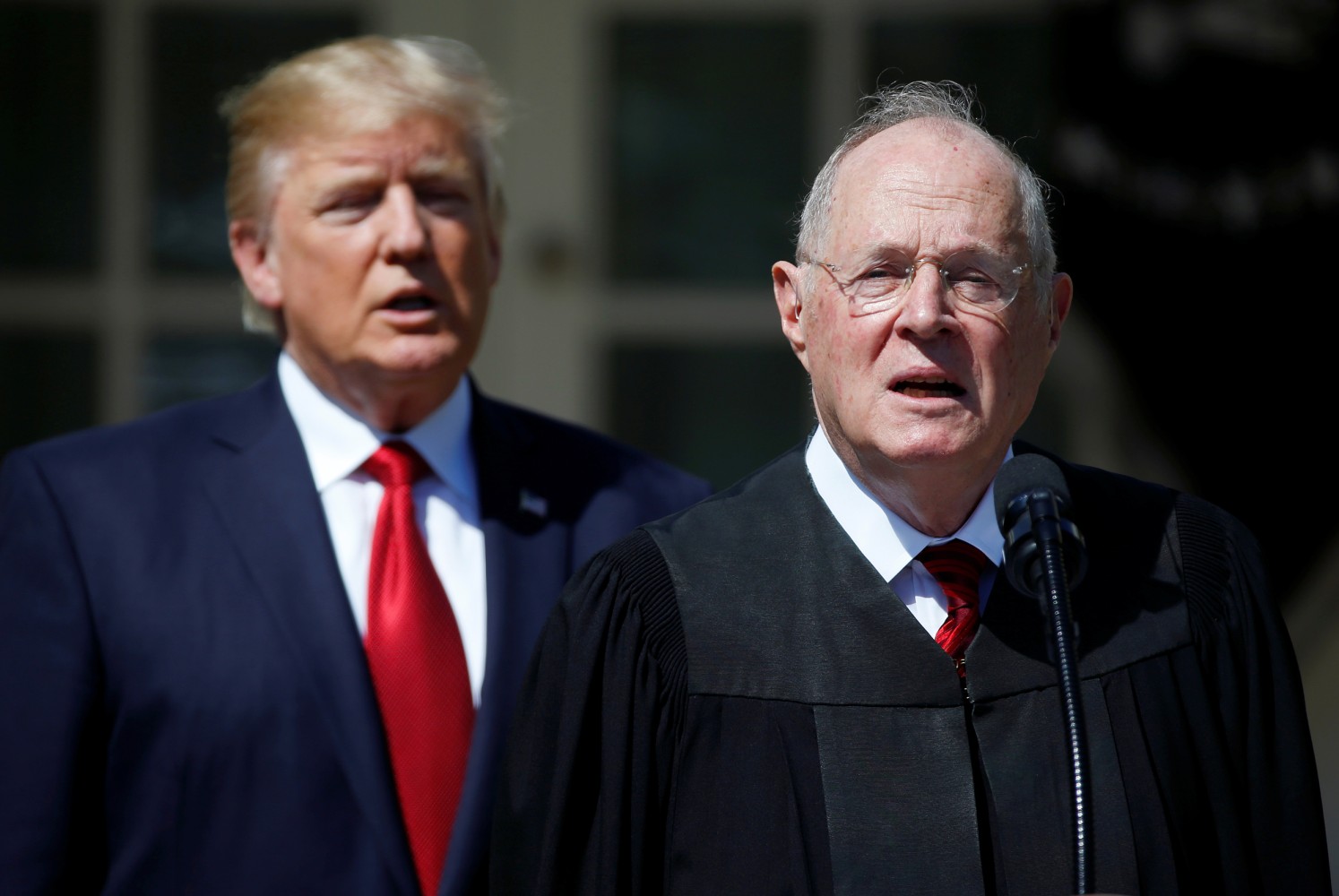
WASHINGTON — The U.S. Supreme Court heads into Monday, its last day of the current term, with two important questions so far unanswered: What’s to become of President Donald Trump’s travel ban and will 80-year-old Justice Anthony Kennedy retire?
The court will also announce the remaining decisions of the term, including the fate of laws in 39 states that bar direct taxpayer aid to churches and the ability of the parents of a 15-year-old boy to sue the federal border agent who killed him.
The Justice Department has urged the justices to lift bans imposed by lower courts blocking enforcement of the president’s executive order on travel. It called for a 90-day ban on issuing visas to citizens of Iran, Sudan, Syria, Libya, Somalia and Yemen who want to come to the US.
The administration argued that the measure had a legitimate national security purpose, allowing the government to assess the reliability of background information on visa applicants from six countries associated with terrorism.
Separately, a panel of three judges from the Ninth Circuit Court of Appeals said the order violated federal immigration laws that require a more substantial national security justification than the White House offered.
The Supreme Court is expected to announce whether it will take up the appeal of those lower court orders and, in the meantime, allow the government to enforce the executive order while the appeal is pending.
Speculation about a possible retirement by Kennedy also has been swirling for months, partly fueled by rumors. Sen. Charles Grassley, the Judiciary Committee chairman, said in April that he « would expect a resignation this summer, » but added that he had no definitive information.
Kennedy will turn 81 in another month. A Ronald Reagan appointee, he has served on the Supreme Court for 29 years. Some friends say he has suggested that he might retire. But he has given no outward sign that he might, and he has hired his normal complement of law clerks for the coming term.
A Kennedy retirement would give Trump the ability to profoundly reshape the court. In many divisive cases, the court lineup tends to be four conservatives and four liberals, with Kennedy casting the fifth and deciding vote.
With Kennedy joining the conservatives, the court gutted the Voting Rights Act, reduced federal regulation of money in political campaigns, and declared that the Second Amendment provides an individual right to gun ownership.
Kennedy’s votes with the liberals produced rulings striking down state laws against same-sex marriage, upholding abortion rights, and limiting the use of the death penalty.
« A Kennedy retirement would be an epic change, » said Tom Goldstein, a Washington, D.C., lawyer and publisher of SCOTUSblog. « Kennedy is a conservative but has moderate tendencies. A replacement chosen by President Trump would give conservatives the solid majority on the court they’ve been hoping for since the Nixon administration. »
Justices Ruth Bader Ginsburg, who is 84, and Stephen Breyer, 78, have shown no signs that they intend to step down.
Also Monday, the court will likely announce whether it will take or reject several appeals that have been piling up for months, including the right to carry a gun outside the home and whether businesses can refuse to provide their services for same-sex marriage ceremonies.
President Trump on Monday said President Obama took no action against Russia for its actions in the 2016 election because he expected Hillary ClintonHillary Rodham ClintonPelosi on criticism of leadership: ‘This is such a small item, it isn’t about me’ Trump: Obama didn’t ‘choke,’ he ‘colluded or obstructed’ Juan Williams: Trump refills the swamp MORE to win.
Trump concluded that Obama had not « choked » in taking no action against Russia, as a senior administration official told The Washington Post. Instead, Trump said Obama had « colluded » or « obstructed. »
« The reason that President Obama did NOTHING about Russia after being notified by the CIA of meddling is that he expected Clinton would win…..and did not want to ‘rock the boat,’ » Trump tweeted. « He didn’t ‘choke,’ he colluded or obstructed, and it did the Dems and Crooked Hillary no good. »
“The real story is that President Obama did NOTHING after being informed in August about Russian meddling. With 4 months looking at Russia … under a magnifying glass, they have zero ‘tapes’ of T people colluding. There is no collusion no obstruction. I should be given apology!” he added.
The reason that President Obama did NOTHING about Russia after being notified by the CIA of meddling is that he expected Clinton would win..
Trump’s accusations come as he is facing multiple investigations into whether his campaign colluded with Russia during the election. The U.S. intelligence community concluded that Moscow interfered in the U.S. election specifically to help Trump win.
The Justice Department, FBI and Senate and House Intelligence committees are probing possible links between Trump’s team and the Kremlin.
Trump in an interview last week criticized Obama over Russia’s interference in the 2016 election, accusing the former president of doing « nothing. »
“Well I just heard today for the first time that Obama knew about Russia a long time before the election, and he did nothing about it. But nobody wants to talk about that,” Trump told “Fox and Friends Weekend.”
“The CIA gave him information on Russia a long time before they even — before the election. And I hardly see it. It’s an amazing thing, » Trump continued.
The Obama administration is facing fresh criticism after The Washington Post reported that Obama was slow and cautious in responding to Russian election interference.
Some officials were reportedly wary of taking action before the election, which was dominated by Trump making claims on the campaign trail of the election being « rigged » against him.
The Democrats have become nothing but OBSTRUCTIONISTS, they have no policies or ideas. All they do is delay and complain.They own ObamaCare!
The Supreme Court on Monday said it will consider next term whether a Denver baker unlawfully discriminated against a gay couple by refusing to sell them a wedding cake.
Lower courts had ruled that Jack Phillips, the owner of Masterpiece Cakeshop, had violated Colorado’s public accommodations law, which prohibits refusing service to customers based on factors such as race, sex, marital status or sexual orientation.
There are similar lawsuits from florists, calligraphers and others who say their religious beliefs won’t allow them to provide services for same-sex weddings. But they have found little success in the courts, which have ruled that public businesses must comply with state anti-discrimination laws.
The court granted the case after weeks of considering it. In 2014, the justices declined to revisit a New Mexico Supreme Court decision that found that a photographer violated a state civil rights law when she declined to photograph a lesbian couple’s commitment ceremony.
Since then, the high court has found that marriage is a fundamental right that states may not prohibit to gay couples.
The justices also reversed the Arkansas Supreme Court and said the state must list same-sex parents on birth certificates in the state. To refuse, the court said, is to deny married same-sex couples the full “constellation of benefits” that government has linked to marriage.
Justices Clarence Thomas and Samuel A. Alito Jr. joined Justice Neil M. Gorsuch’s dissent, which said the law regarding such issues is not yet settled and stable.
The Washington Supreme Court found that Barronelle Stutzman, owner of Arlene’s Flowers in Richland, Wash., violated a state civil rights law that bars discrimination in public businesses on the basis of sexual orientation. The court also ruled that the law does not infringe on her free speech.
The Texas Supreme Court is considering a challenge to Houston’s provision that gives the same benefits to spouses of gay workers as it does to those of straight workers. Gay rights activists say the Supreme Court’s 2015 landmark decision in Obergefell v. Hodges should have settled the issue.
In the Colorado case, David Mullins and Charlie Craig visited Masterpiece Cakeshop in July 2012, along with Craig’s mother, to order a cake for their upcoming wedding reception. Mullins and Craig planned to marry in Massachusetts, where same-sex marriages were legal at the time, and then hold a reception in Colorado.
But Phillips refused to discuss the issue, saying his religious beliefs would not allow him to have anything to do with same-sex marriage. He said other bakeries would accommodate them.
The couple filed a complaint, and in 2014, the Colorado Civil Rights Commission determined that Phillips’s action violated state law. That ruling was upheld in Colorado state courts.
The snap-happy social network has come of age and marketing departments are buying in. Instagram has almost completed its transformation from frivolous camera app to serious marketing channel – almost. Here I talk about its marketing appeal, sweet spot and achilles heel.
Once the vacuous repository of trout pouts and lives more fabulous than yours, Instagram has evolved into the marketing channel of choice. As we’ll see, the numbers illustrating this are glowing. It’s fair to call Instagram a runaway marketing success – but it is this “runaway” quality that also poses a risk to brands.
All hail the king
Instagram has toppled its Snapchat inspiration-slash-blueprint to reign supreme among photo and video sharing networks.
Key to its coup-d’etat was last year’s introduction of Instagram Stories. Stories is a direct Snapchat borrowing, but thanks to design advantages such as its search feature, and an already avid fan base, it has officially taken over from big brother Snapchat.
Instagram Stories
Currently, 200 million people use Instagram Stories every day, beating Snapchat’s 161 million daily active users.
Not only that, with 600+ million users around the world, Instagram surpassed Twitter last year. Brands are prominent among the converted, with 90 percent of the ‘Top 100 Global Brands’ now active on the network.
The marketing appeal?
It’s not just the volume of users that forms the foundation of Instagram’s marketing appeal. The demographics favor the advertiser as well.
According to Pew Research, 59 percent of Instagram users are aged 18 to 29, and 31 percent earn more than USD$75,000. So that’s the coveted millennial market, soon to simply be ‘your primary market’, coupled with some serious purchasing power.
Then there is Instagram’s engagement rate – at 4.3 percent it is ten times that of Facebook and 84 times that of Twitter. It goes without saying that having the full Facebook monetization machine behind it hasn’t hurt the network, with more than 500,000 advertisers attracted so far.
These are being rewarded with higher conversion. According to two Instagram Case Studies, Apartments.com saw a 2.5 times return on ad spend using the platform and Sprite Mexico garnered an 18-point lift in ad recall.
The first used Facebook Pixel to target its listing ads towards website visitors, the second employed the full creative possibilities of Stories to create tight, attention-grabbing ads.
The sweet spot
Why the marketing success? Basically, Instagram has us pegged.
From the beginning, Instagram understood precisely what catapulted Snapchat so far so quickly onto the social scene.
First, there is the continuing rise of mobile in internet consumption. It is now at 49.73 percent worldwide (not including tablets), though with notable regional variation: 31 and 36 percent respectively in Europe and North America, compared to 65 percent in Asia.
Obviously, Instagram is a mobile-first app with 98% of users exclusively accessing it on mobile devices. The upshot being that from its inception its newsfeed algorithm was built to prioritize mobile-first content.
This combined with our seemingly almost insatiable demand for video content creates the sweet spot. Our brains are simply visual by nature. The often repeated (and debated) stat that we process images 60,000 times faster than text is just one of many explaining the exponential rise of visual formats and especially video.
Video is definitely the medium of the moment and Instagram Stories has it locked down. The format already secured 200 million users by January of this year. The Snapchat inspired 24-hour lifetime of Stories plays perfectly to our seeming preference for short-form, easily-shareable video content – as well as our mobile browsing habits. According to Google, the average session lasts 1.2 minutes and is repeated dozens of times in any given day.
Once again, brands have not been slow off the mark: in an interview with Fortune, Instagram’s product marketing director Jim Squires said that more than 70% of Instagram users follow at least one business, and businesses have posted a third of the most-viewed Instagram Stories so far.
In one high-brow success Story, Nike got 800,000 views on a single post in 24-hours. The format clearly extremely well, and brands would be foolish not to seize this opportunity with both hands.
However, there is one glaring pitfall that needs to be factored in before going full-steam ahead.
The achilles heel
That would be Instagram’s restricted API (application programming interface).
Amongst other limitations this prevents third-party tools such as social media management platforms to schedule or post directly to Instagram profiles. This stands in stark contrast to the other top networks such as Facebook, LinkedIn and Twitter.
The problem is that although loved for its off-the-cuff, real-time personality, Instagram in corporate hands is still a corporate comms channel. And as such it is just as prone to the fragmentation, inconsistencies and outright gaffes as any other.
Perhaps the biggest, and most Instagram-specific issue dogging the network is that of sponsored content. The disastrous Bahamas Fyre Festival made headlines for a multitude of reasons, including the failure of many of its paid Instagram influencers to disclose their status as such. The US Federal Trade Commission (FTC) has since been out to make an example of them.
This is a great example of how the real-time power of Instagram can quickly slip out of the control of the brands wielding it.
Whereas marketing departments can reign in and control their Facebook, Twitter and LinkedIn presence using content calendars, Instagram’s API makes the format something of a rogue outsider. Without the ability to see Instagram posts against the bigger picture of broader campaigns and activities, a lot of its potency can be lost.
Like any other network, Instagram needs to aligned with other channels and subjected to approval flows to ensure compliance and quality.
It’s a somewhat ironic limitation considering Instagram’s perception as the perfect format for developing brand image and personality.
Sure, marketing departments can always break open the excel sheets and attempt to maintain an overview via email, but any marketer knows how quickly campaigns unravel among the email chains. Add multiple teams, markets and timezones to the mix and the problem snowballs.
The Fyre example also demonstrates how crucial a central overview and approval process is, and how costly lack of it can be.
A handful of social media management vendors have created workarounds to enable Instagram publishing. And one or two of these even work well. But until Instagram opens up its API – and as yet there are no stated plans to do this – brands not taking advantage of the workarounds will remain at a disadvantage.
But that’s not going to stop anybody and certainly not Instagram. The evolution may be incomplete, but it remains the network every brand wants to develop its presence on.
So go crazy, stay snap-happy but don’t forget the basics of marketing and branding. Your Instagram Story may fade in 24-hours, but its mark on your brand–and the consequences of uncontrolled posting–could last a lot longer.
FORT WAYNE, Ind. (WANE) Local marketing professional and community activist Courtney Tritch will run for Indiana’s 3rd District seat in the U.S. House of Representatives.
Courtney Tritch (Facebook)
Tritch, a Democrat, announced her candidacy Sunday in a video post on Facebook. She will be on the ballot in the May 2018 primary. Rep. Jim Banks of Columbia City is be the Republican incumbent.
Tritch was the former vice president of marketing for the Northeast Indiana Regional Partnership for six and a half years. She also worked with Fort Wayne’s Downtown Improvement District. Tritch began a marketing consulting firm in November.
Tritch’s campaign will hold an official launch event on Thursday, July 6. In Sunday’s video, Tritch said she will speak about who she is and her stance on issues at the event.