Archives par mot-clé : marketing

SourceLink Announces the Addition of Tom Crusham as Associate Creative Director

SourceLink, Industry Leading Direct Marketing Company

His experience in many of the core industries we serve will have an immediate impact on our customers and internal teams

SourceLink, an industry-leading multi-channel marketing firm and statement solutions provider, announces the addition of Tom Crusham as the new Associate Creative Director. Crusham joins the team with over 25 years of brand-building experience in the Creative Services and Direct Marketing industries.

Prior to joining SourceLink, Crusham was the Creative Director for Strata-G Communications and Eric Mower Associates, leading a team of writers, art directors, designers and video experts. Crusham’s experience includes marketing for healthcare, financial services and building products with a focus on an integrated, multi-channeled marketing approach, including direct marketing, point of sale, video, print and digital executions.

Crusham is a firm believer in starting with an insight or differentiator, and utilizing a strategic approach to guide the creative process. He understands that in order to be successful, it is critical to understand the audience and focus on the relevance of the brand’s message to that audience.

“Tom brings extreme professionalism and a brilliant strategic mind to our team, and we are thrilled to have him on board,” shared Jay Blumberg, SourceLink’s Creative Director. “His experience in many of the core industries we serve will have an immediate impact on our customers and internal teams.”

Crusham brings a string of accolades to SourceLink – as he contributed to winning awards from the Direct Marketing Association, the Insurance Marketing Communications Association, The Summit Creative Award (Energy sector) and from Cincinnati American Advertising (ADDYS).

About SourceLink

SourceLink, a top-five ranked Direct Marketing agency, creates results-driven communication solutions. Combining strengths in marketing analytics, data intelligence, technology and production expertise, SourceLink crafts and executes data-driven direct marketing and document outsourcing solutions. SourceLink’s analytic and communication solutions improve marketing ROI through greater relevance and increased response. On the production side, SourceLink solutions reduce costs through more efficient operations and postal optimization. SourceLink operates in four U.S. locations. For more information, visit http://www.sourcelink.com.

Public Relations & Marketing Webcast Launches / Full Video – the KPI Banter Show – First Episodes Feature: Dallas …

KPI Banter Show logo

“We created the show to talk with people like us, in the public relations and marketing field that want to learn more, to get better at what we do and to hopefully have some fun,” said Brian Murnahan, President of Murnahan Public Relations.

The KPI Banter Show debuted last week during a kick-off party with hosts and co-founders Brian Murnahan and Michelle Keefer, along with partner Curtis Stratton. The new webcast features talks with professionals in public relations and marketing including Joe Trahan, the media relations coordinator for the Dallas Cowboys; Jessica Burnham, executive director for the Deep Ellum Foundation and Bob Hastings, executive vice president and chief of staff for Bell Helicopter.

“We created the show to talk with people like us, in the public relations and marketing field that want to learn more, to get better at what we do and to hopefully have some fun,” said Murnahan, President of Murnahan Public Relations (http://www.murnahanpr.com). “Practical success stories and insights for how others have measured success and defined their goals are helpful to everyone in the field and insightful to thousands of small business owners who wear a multitude of hats every day.”

The KPI Banter Show pushed out an app to the Google Play Store and published its website with the first three episodes at http://www.kpibanter.com. The iPhone app will be issued before the end of the year. In addition to the feature conversation, topics of the day have already included banter on SnapChat, a failed Pepsi Cola ad and personal leadership.

“Nerding out over patterns and trends is the best part of measuring success, the data tells you what to do next,” according to Keefer, President at MKConsulting (http://www.consultmk.com). “Simply putting out the content is not enough, we have to measure the success of each piece and across various channels. While it does come down to a repeatable process, there’s nothing one size fits all about it. This show explores real life examples of what that looks like in all types of situations.”

There is more content available in the premium content section of the site, including additional conversations with our featured interview, tips and insights. KPI Banter hosts Murnahan and Keefer have already had some gaffs around the studio that have generated bloopers to lighten up the mood.

“Featuring great content is our first goal, but then we want to make sure that it is consumable – timed right with the segments identified and with great visuals to help tell the story,” said Stratton, President of Stratton Productions (http://www.curtisstratton.com). “The shows production value will grow in time, but right now we want everyone to see what we have. They need to get excited about what we are doing and they will be impressed as the show progresses.”

The new show is looking for great new interviews to share their successes and tips for everyone to learn from. In addition, the show is looking for sponsors that would like to put their brands and products in front of the KPI Banter Show audience. Our first sponsor is Magik Digital, responsible for developing our debut website and mobile applications.

“We produce great websites and view our role as saving the internet one website at a time,” said DeeAnn Dubeansky, President of Magik Digital (http://www.magikdigital.com). “The KPI Banter Show works to elevate the conversation around public relations and marketing, not only in big business, but down on Main Street.”

Murnahan added, “We can all learn from the successes of our peers. Some of us have more resources that others, but that is not to say, the tactics used by Bell Helicopter could not be adapted and used by an innovative business owner.”

About KPI Banter Show:

The KPI Banter Show is your source for Marketing Communications news, trends, and entertainment. Each episode is constructed to provide you with easy to watch content sprinkled with the banter of two industry pros. The KPI Banter Show was designed to offer an alternative to the typical articles, blogs, and books that are largely available for the marketing and communication professional searching for ways to stay informed. http://www.kpibanter.com

Episode 1 – Dallas Cowboys http://kpibanter.com/2017/11/04/episode-1-dallas-cowboys/

Episode 2 – Deep Ellum Foundation http://kpibanter.com/2017/11/06/episode-2-deep-ellum-foundation/

Episode 3 – Bell Helicopter http://kpibanter.com/2017/11/07/episode-1-bell-helicopter/

###

Video Colposcope Market Entry Strategies, Countermeasures of Economic Impact and Marketing Channels in China …

China Video Colposcope Market Report communicates about the manufacturing process. The process is analysed thoroughly with respect three points, viz. raw material and equipment suppliers, various manufacturing associated costs (material cost, labour cost, etc.) and the actual process of whole Enterprise Video Colposcope market. The Enterprise Video Colposcope Industry research report is a resource, which provides technical and financial details of the Enterprise Video Colposcope Market (Volume and Value).

Get Sample PDF of Video Colposcope Market Report @ https://www.reportsmonitor.com/request-sample/?post=407767

Colposcopy is a medical diagnostic procedure to examine an illuminated, magnified view of the cervix and the tissues of the vagina and vulva. Many premalignant lesions and malignant lesions in these areas have discernible characteristics which can be detected through the examination. It is done using a colposcopy, which provides an enlarged view of the areas, allowing the colposcopies to visually distinguish normal from abnormal appearing tissue and take directed biopsies for further pathological examination. The main goal of colposcopy is to prevent cervical cancer by detecting precancerous lesions early and treating them.

Video Colposcope Market Segment by Manufacturers, this report covers: Olympus, Leisegang, Philips, Ecleris, Lutech, ATMOS, DYSIS Medical, Seiler, MedGyn, Wallach Surgical Devices, Zeiss, B’ORZE, NTL.

In this introductory section, the Video Colposcope industry research report incorporates analysis of definitions, classifications, applications and industry chain structure.

Video Colposcope Market Segment by Regions, regional analysis covers: South China, Southwest China, East China, Northeast China, North China.

Video Colposcope Market Segment by Type covers: Portable Type, Fixed Type, Handheld Type.

Video Colposcope Market Segment by Applications covers: Hospital, Clinic, Other.

Pre Order Enquiry for Video Colposcope Market report @ https://www.reportsmonitor.com/make-enquiry/?post=407767

Next part of Video Colposcope Market Research Report contains additional information like key vendors in Market space, Video Colposcope Market opportunities and threats faced by the vendors in the Video Colposcope Market , opportunities, market risk and market overview. The process is analysed thoroughly with respect three points, viz. raw material and equipment suppliers, various manufacturing associated costs (material cost, labour cost, etc.) and the actual process.

Apart from the mentioned information, growth rate of Video Colposcope markets in 2022 is also explained. Additionally, type wise and application wise consumption tables and figures are also given.

5 useful image tools to boost your social marketing engagement

ENGAGING image-content should be one of the most crucial features of your social media marketing. Research has consistently shown that content paired with vibrant images and other multimedia assets like video or audio tend to get more engagement on social media than text-heavy postings.

For instance, if information is paired with a relevant image, consumers retain 65 percent of the information up to three days later, and blog posts with images get more than double the views on those without.

If you work with social media frequently, it will not be news to you that each platform demands different dimensions for the images you upload. These differing dimensions ensure you are creating the optimum photo or that position or location, whether it is a Facebook cover photo or Twitter header.

HOW YOUR BUSINESS CAN TURN SOCIAL LISTENING INTO SALES

The differing dimensions need not hinder your social media efforts, since there are many tools available that can help you alter images into a suitable size for all social media sites. As well as this, there are also many tools which your business can utilize in order to make visually-engaging content. Here are 5 tools that can help you better manage your images for higher social engagement.

A screenshot of Fox 32 Chicago’s cover photo on Facebook. The publisher is said to have one of the most engaged audiences on the social network. Source: Fox 32 Chicago

Social Image Resizer Tool

With many rules and regulations concerning image size on social media sites, it can be tough keeping track of them all. For instance, Facebook requires 315px by 851px for its cover photo, whilst Twitter requires 1500px by 500px.

With Social Image Resizer Tool, you need not worry about the differing dimensions. Simply select the social media channel you wish to generate your image for, and the tool resizes your photo accordingly.

Pablo

With this handy tool, you can create the image you need in less than 30 seconds. Pablo also offers features such as inserting your quote, adding a secondary text or logo, changing text size, color, and background. The tool gives you the option to choose from a range of ready images or to upload your own. Once you’re done editing, this image can be shared directly to social media networks, or alternatively places in Buffer to be scheduled for later sharing.

5 STEPS FOR PLANNING YOUR COMPANY’S SOCIAL MEDIA MARKETING STRATEGY

Pinwords

This tool lets users add a quote or caption to one of six typographic layouts. This added text can be easily shuffled around as well as edited in size. You can upload images to work on from the web or from your own files. Once you’re done, you can share your work via Facebook, Tumblr, Pinterest, Twitter or email.

Infogram

Infographics are a visually compelling medium that, if done well, can communicate complex data in a visually attractive format. Infogram is a simple tool that allows you create brilliant infographics quickly.

Users can choose from many infographic templates on the Infogram platform. Source: Infogram

It has easy to use features, and comes with a range of infographic templates for you to choose from.

Alternatively, if you have more time on your hands, you can create your infographic manually using charts from the cart list, and inserting your own data set.

5 STEPS FOR PLANNING YOUR COMPANY’S SOCIAL MEDIA MARKETING STRATEGY

This app also comes with additional features from US$15 per month, such as the option to replace the infogram logo with your own logo.

ReciteThis

In the world of social media, quotes are one of the most share-able pieces of content. ReciteThis is a tool that allows users to create quote images easily and efficiently. Users simply type in a quote, and a live preview will be shown to you. Pick the template you like best and from this you can post directly to five different social media sites.


People First: YuMe Introduces New People-Based Video Marketing Solution

YuMe, Inc. — a proven partner for video advertising leadership and innovation — recently launched its People-Based Marketing Suite to enable cross-screen audience targeting, sequential messaging, and attribution for U.S. audiences.

YuMe’s brand and agency clients can now create custom, screen-agnostic audiences intended to target consumers using device identifiers across online, mobile, tablet, smart TV and connected TV (CTV) devices, creating a seamless digital advertising experience at scale.

“We believe the future of our industry hinges, in large part, upon the adoption of data-centric, people-based marketing strategies that place consumers first,” said Michael Hudes, Chief Revenue Officer, YuMe. “We are proud to introduce our new solution to help brands not only target and reach their consumers, but influence them with relevant messaging that builds upon interactions and prior messaging exposure. By including first-party, people-based data within our programmatic media buying technology, we expect to deliver higher performing branding campaigns for our clients who are retargeting and increasing engagement.”

The YuMe People-Based Video Marketing Suite offers advertisers the following benefits for United States audiences:

  • Cross-Device Custom Audience Segment Creation and Targeting
  • Screen Agnostic Sequential Messaging
  • Universal Frequency Capping
  • Cross-screen Attribution and Reporting

Hudes continued, “To help us deliver on our people-based video vision, we’ve partnered with Drawbridge to leverage their Connected Consumer Graph® and ensure we have critical data underpinning our solution that allows us to connect audiences across PC, mobile, and connected TV.”

To learn more about YuMe, click here.

#MakeWaves Video Challenge to Help Marketers Improve Video Marketing Skills in 7 Days

News Image

#MakeWaves

The #MakeWaves video challenge is the first event of its kind to provide relevant and actionable tips on video marketing and empower marketing professionals to create outstanding video content.

BOSTON November 15, 2017

wave.video, an online video maker that empowers marketers to create engaging marketing videos, announces a 7-day #MakeWaves video challenge, the world’s first social media video contest. Moderated by Peg Fitzpatrick and judged by key social media thought leaders such as Guy Kawasaki, the challenge invites marketing professionals from around the world to learn how to utilize the power of video marketing, and win relevant prizes.

The challenge activities will include daily instructional videos by Peg Fitzpatrick as well by other contributing experts, created for a particular social media platform, including Facebook, Twitter, Instagram, and YouTube. The challenge entrants are encouraged to create videos based on Peg Fitzpatrick’s recommendations and post them on the social media channel of the day with the hashtag #MakeWaves.

The videos posted by the challenge entrants will be evaluated by a panel of judges, consisting of renowned social media and marketing influencers, who will select at least 3 daily winners per each day of the challenge. The overall top 3 winners will be chosen by Guy Kawasaki and announced on December 12, 2017. The selection will be based on originality of the content, creativity, and technical excellence. The winning videos will be published on the wave.video/makewaves website.

“We are delighted to bring together the industry’s foremost experts on social media and video marketing to share their knowledge and experience with marketers from all over the world,” said Daniel Glickman, CMO at Animatron, the parent company of wave.video. “The #MakeWaves video challenge is the first event of its kind to provide relevant and actionable tips on video marketing and empower marketing professionals to create outstanding video content.”

The challenge schedule will be as follows:

  • Day One – December 4: Instagram Post Square, judge Jeff Sieh, Visual Storyteller and Social Media Consultant;
  • Day Two – December 5: YouTube Welcome Video/Channel Trailer, judge Amy Schmittauer Landino, Vlogger and YouTube Influencer;
  • Day Three – December 6: Facebook Cover Photo/Video, judge Mari Smith; Premier Facebook Marketing Expert;
  • Day Four – December 7: Twitter Video, judge Rebekah Radice; Social Media and Brand Strategist;
  • Day Five – December 8: Instagram Story, judge Sue Zimmerman; #TheInstagramExpert
  • Day Six – December 9: Facebook Video Ads, judge Kim Garst; Social Media Influencer and Business Consultant;
  • Day Seven – December 10: Event/Blog Post Video, judge Andy Crestodina; Content Marketer and Web Strategist;
  • Top winner announcement – December 12 by Guy Kawasaki, International Speaker, Author, Advisor, and Tech Evangelist.

The confirmed partners and media sponsors of the #MakeWaves video challenge include Agorapulse, DigitalMarketer, Ninja Outreach, SEMrush, Social Media Examiner, Socially Sorted, Unbounce, Wistia, and more.

Registration is now open for entrants, partners and media sponsors at wave.video/makewaves.

For sponsorship opportunities, please email kate(at)animatron(dot)com.

About wave.video
wave.video is an online video maker that empowers marketers to create engaging marketing videos, perfected for any social media platform. Choose from an extensive library of 2.5 million royalty-free video clips and combine with your own footage, set up a color scheme, fonts, logos and watermarks for your brand, and easily access them every time you want to create a new video. Instantly resize your video to 6 different formats to maximize social media reach. To learn more, please visit wave.video.

The Pitch: Advertising and marketing news for 11.14.17

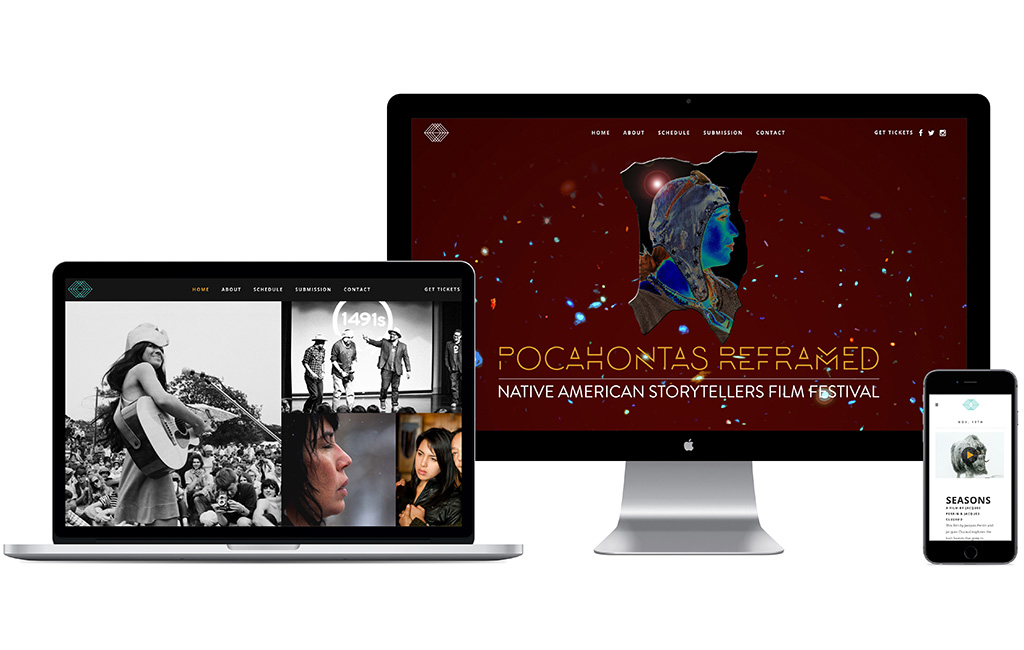
Native Collaboration created marketing materials for the Native American Storytellers Film Festival.

Native Collaboration created a website, banners and film posters for the inaugural Pocahontas Reframed: Native American Storytellers Film Festival at the Byrd Theatre this weekend.

Circle S studio completed two TV spots for TowneBank Richmond. The spots, highlighting individual TowneBank members and their bankers, feature women’s clothing company Frances Kahn and banker Curt Straub and the Cameron K. Gallagher Foundation and banker Ty Crone.

The Martin Agency released a video for Purina called “This Old Horse.” The 90-second video promotes the pet food maker’s Equine Senior feed and aims to highlight horse rescue awareness.

Martin launched its latest campaign for Geico called “Count On.” The first 30-second spot, called “Game Night,” features a sloth drawing pictures at an extremely slow pace, followed by a spokesman saying, “As long as sloths are slow, you can count on Geico saving folks money.” Martin also released its latest spot for Geico’s “It’s Not Surprising” campaign. Titled “Dawg,” the spot stars American Idol’s Randy Jackson judging a kennel club dog competition.

The King Agency completed four web videos and a landing page for Sentara Martha Jefferson Hospital Cancer Center in Charlottesville. The videos highlight four hospital patients and their cancer survival stories. The spots were shot and edited with local studio Spang.

The Richmond office of Solutions Advisors picked up 11 National Mature Media Awards. The office won golds in website design for two retirement communities: Applewood in New Jersey and Fox Hill in Maryland. It was also recognized for direct mail and collateral creative campaigns for five other retirement communities across the country.

Randall Branding launched websites for local engineering firm Timmons Group and Sabot at Stony Point school. The agency designed logos for event planning business Wonder Event Strategy and St. Andrews Episcopal Church in Richmond. Randall also picked up local logistics service Orange Grove Fleet Solutions as a website client.

Addison Clark was hired by OnCampus Brands for college marketing services.

Addison Clark was hired by OnCampus Brands, a local business development service focused on college campus retail. Work will include design of online sales materials for brands such as Firehouse Subs and Smoothie King, as well as email marketing support.

A student team from the Brandcenter has been selected by Greater Richmond Partnership and ChamberRVA to help with their talent attraction efforts at the South by Southwest Interactive tradeshow in March. The team was selected over 13 other teams in a branding competition and will travel to the tradeshow in Austin, Texas, to help the groups promote Richmond to tech executives. Team members include first-year students Andrew Allen, Megan Reilly and Ariana Safari, who will help staff a booth at the show.

Brandcenter alum Charles Hodges launched Arts Letters Creative Co. with Google as its first client. The agency’s leadership team includes Rich Weinstein and Letitia Jacobs, most recently with The Martin Agency. Its staff includes 10 Brandcenter grads.

Ndp won a gold in the eHealthcare Leadership Awards for its digital “Stroke” campaign for University Health System in San Antonio, Texas. The competition drew about 1,000 entries and recognizes healthcare-specific websites and digital communications.

The Idea Center launched a new website for Virginia Eye Institute and an e-commerce site for Ashland-based Agee Woodworks. It was hired by Henrico-based All-Star Orthodontics to redesign its website and implement a digital marketing campaign with YouTube, Google, Facebook and Instagram advertising.

Think was hired by Midlothian-based Village Bank to roll out a campaign promoting its new branch location in New Town Williamsburg. Work includes print and digital ads and a news sponsorship. Think was also hired by local food producer The Green Kitchen to build a business identity package and update its social media presence.

Barber Martin Agency moved its office to 1408 Roseneath Road in Scott’s Addition and launched Quick Brown Fox, a video post-production division.

CarMax created a 90-second video to respond to a parody used-car ad that went viral on YouTube with more than 5 million views. The parody ad, by California writer-director Max Lanman, offered to sell his girlfriend’s 1996 Honda Accord starting at $499. The used car retailer responded with its own video offering to buy the car and other items in the ad for $20,000. As of Monday, the response video, produced by North Carolina-based agency McKinney, had received more than 293,000 views.

18 Marketing Trends And Predictions From C-Level Leaders In China

Shutterstock

I recently spent time in China meeting with and interviewing C-level executives across different industries and roles. What I learned was nothing short of mind-bending. Over the next few months, I will publish a series of articles that shed light on what marketers in the West can learn from their counterparts in the East.

To kick off the series, I invited C-level leaders working at companies located in China–from Tencent to Google to Korn/Ferry to WPP to Visa and McDonald’s–to weigh in on relevant trends facing marketers. The below insight is fascinating as it provides a window into the challenges and priorities of Chinese business leaders. To see how marketing in the new year is shaping up on either side of the Pacific, compare and contrast the Chinese business leaders’ perspective below with that of U.S.-based leaders. To ensure authenticity, the following are presented from the authors’ perspective with little editing.

CMOS and their teams will embrace AI in 2018 – Knowingly or Unwittingly. Scott Beaumont, President Google Greater China, Google

AI will advance more sophisticated attribution modeling, better audience targeting, better messaging, better creativity and experiences, customizing them according to time, location and event. AI will assist human expertise and talent with a scientific touch. IDC predicts that global spending on cognitive systems will reach $31.3 billion by 2019: China’s marketing community will lead the way.

The Future of Marketing is About Connection and Content. Steven Chang, Corporate Vice President, Tencent

China’s internet economy has undergone a rapid expansion over the past decade. From humble beginnings as an imitator, China has taken a dramatic leap to become a trailblazer in digital marketing. In 2018, Chinese innovation and imagination in marketing will increasingly benefit from Chinas’ sophisticated digital ecosystem that combines data, technology, and content to enable better customer insight and new opportunties.

Information Asymmetry Between Brands and Consumers Will Disappear. Jin Yudong, CMO, Great China Area, Visa

Marketing used to rely largely on the asymmetry of information between brands and consumers. However, with technological development and easier access to information, consumers now have a more significant role in information selection and screening.  Brands and marketers will find that the structure, content, and communication methods of marketing systems must change. How to develop marketing content to keep abreast with the pace of technological advancement is the most pressing question for every marketer.

In 2018, There Will Be a Line of Division Between Those Who Can Adapt to Digital Tech and Those Who Can’t. Chen Gang, Dean of the Department of Advertising, Beijing University

The current disruption occurring in marketing requires CMOs to not only rethink how they manage and execute marketing, but to realize that new marketing philosophies will gradually take form. One of these realities is a shift toward a digitally-centric world. While this move has been occurring for several years, we are reaching the point where the world will be divided by those who have adapted and those who haven’t.

2018 Will Be the First Year of Real AI Marketing. Tsuyoshi Suganami, President Amplifi China, Dentsu Aegis Network

In 2018, more than ever, leading companies in China and elsewhere will pioneer AI and this will be done at speed. In China, the fastest and biggest change will be in the scale of consumers’ lifestyles. In order to keep up, marketing will focus on the utilization of advanced technology and data globally. AI will be the key change of not only Ad-tech (programmatic and propensity model) but also in changing content consuming and shopping behavior of consumers.

Content will Bring New Challenges and Opportunities for Industry. Christine Xu, CMO, McDonald’s China

The aim of grabbing consumer attention through Content marketing will remain a key priority for marketers in China. In this highly digitized world, high quality content is in short supply so people will have to be creative in their approach and with whom they are working. To develop super-relevant content requires speed, agility, and risk taking. And this will favor local companies (over multi-nationals) as they move faster, take bigger bets, and are therefore more able to be timely and relevant with their content.

AI, CSR, and BAT are the 3 Critical Priorities for All Chinese Companies in 2018. Sheena Jeng, Chair Chief Creative Officer, Publicis China

There are three key trends that will impact all Chinese companies. First, we want to use AI to let consumers touch and feel the warmth of brands more easily, not just to show them artificial and cold intelligence. It will be critical to combine AI with humanity. Second, the desire to give back to society through CSR is powerful. Companies will step up CSR efforts in order to win companies consumers’ respect, which, in turn, increases trust in brands. Finally, companies will need to team with BAT (Baidu, Alibaba, Tencent). Only by learning from and working with the BAT platforms can agencies be empowered to create win-wins.

Cross-Sector Marketing will Gain Popularity in the New Year. Helen Luan, Vice President of Online Media Group (OMG), Tencent

Cross-sector marketing is where a single brand needs the collective influence of other brands, even ones in other industries and sectors, to achieve better marketing results. While many companies engage in strategic partnerships, cross-sector marketing will require more extensive networks to enable a focal brand to achieve better results. Companies must now forego previous conventional wisdom that used to spell success for them and let the people who are good at cross-sector marketing try out their ideas with greater freedom.

Marketers Will Continue to Prioritize “New Consumption”. Zhao Xingji, GM, Marketing, Ambient Milk, Mengniu Dairy (a leading Chinese manufacturing and distribution company of dairy products and ice cream)

Almost all brands are focusing on “new consumption”—a group of more individually-centered young people. Not only do these young consumers have different emotional needs and values, they also want completely different products. Whatever emotional and value communication we send out for traditional products, they simply cannot satisfy this new generation of consumers’ needs for upgraded products. Therefore I believe that we are to  an era where “best product wins.” The success acquired by “winning with an exceptional product” can bring both monetary and reputational benefits.

“Growth Hacking” Will Become the Priority for CMOs and CEOs. Yang Fei, CMO, UCAR (a Fleet Services rental vehicle program available for hourly rentals)

The disappearance of a traffic dividend, the waste of traditional advertising and cheating in digital ad releases are actual problems vexing most companies in their growth. The idea of “growth hacking,” which means seeking growth from a company’s existing traffic, driving marketing through technology, and gaining results through greater efficiency is a new mentality and skill that today’s company managers and marketers will need to master.

With the Advent of “New Retail,” the Gap between Traditional and E-Commerce Retailers Will No Longer Exist. Guo Guangyu, CMO, Three Squirrels (specialize in the RD, distribution, and online brand marketing of nuts, dried fruit, tea, and more)

The role of the CMO will transition from a centralized role to a localized one. The individual value of each consumer will increase even more, at the same time that brand differentiation will be driven by the customer’s experience in retail. Thus, every shop manager will become the CMO for their region, for only he/she understands their consumers the most. The CMO’s responsibility will, therefore, evolve from strategy development and implementation to defining rules that enable the brand the breathe at the experience level.

CMOs Will Spend More Time Figuring Out How to Make Internet Companies More than Their Products. Ed Zheng, Senior Client Partner, Lead of Digital Practice, China, Korn/Ferry International

One of the best-observed doctrines for internet companies is “product is king”, which is to say, no matter how good a company’s strategy and execution (including marketing) is, it will not succeed unless it has a killer product. While this doctrine will still hold, more and more internet companies in China are expecting their CMOs to go beyond promoting products, to create a holistic image of innovation, technology leadership, and social responsibility.

Marketing Mental Models Will Need To Change in the New Year. Sun Bo, Senior Vice President, Ctrip (China’s leading travel service enterprise)

Existing marketing mental models need urgent change to meet the needs for companies’ future growth. In an environment defined by a new generation of users who have sensitive and fickle consumption habits, many models that used to be reliable are obsolete. To cope with the change, we need more pioneers with a strong desire to innovate and a deep understanding of Growth Hacking, who endeavor to make breakthroughs in innovation, media, channels, product RD, big data, and AI.

The Top Three Priorities in 2018 Will Shift. Patrick Xu, CEO, GroupM China WPP China

There are three key aspects that will earn a disproportionate amount of marketers’ attention: 1) The youth culture—shifting from niche to mass culture; 2) More efficient integration and use of big data; and 3) Brand security – building a more honest and safe marketing environment.

Content Priorities for Marketers Will Focus on Short Videos. Shen Yiren, Head of Marketing Planning, OPPO (A global leader in phones, enjoyed by young people around the world.)

In the era of mobile, the period of short video marketing has come and will be a focal point for marketers next year. While consumption habits are shifting from text and pictures to short videos, marketers’ biggest challenge next year is to sustainably and effectively produce high-quality short video content that interest users.

Content Production Will Become Even More Important. Lv Haiyan, Chief Brand Officer, CreditEase (A leading FinTech company in China)

Content production will be a larger priority for fintech marketers. The brand that occupies most of users’ reading time will eventually occupy their wallets. Easy-to-understand and fun content, text, short videos and touching stories designed to capture users’ fragmented time is a priority that financial brand will undertake.

Marketers Will Build More Comprehensive Brands. Mei Xiaoqun, Vice President Marketing, BMW China

Brands are becoming increasingly sophisticated as marketers work to ensure they exhibit more human-like attributes including values, behaviors, and tastes. Communication [in marketing] is metaphorically like the effort an individual undergoes to become a member of a group through interaction. As such, data driven content distribution will become the core of marketing communications, which will require content to be broader and more diverse

CMOs Will Continue to Focus on Improving the Integration of Data and Content. Su Tong, CEO, Hylink Digital Solutions (China’s largest, independent digital full-service agency)

With machine learning gradually becoming a driving force, data optimization will take center stage as marketers realize that this underpins the future of AI. A key challenge for CMOs lies in figuring out how to efficiently integrate data and content. As marketers increase their sophistication, the ability to realize the potential of machine learning and AI will emerge.

Join the Discussion: @KimWhitler


The Top Digital Marketing Trends Of 2018

As 2017 enters it’s final phase, it’s the perfect time to look ahead and predict the Digital Marketing trends of 2018. There are a clear number of industry trends that have exploded onto the scene this year. Trends that are bound to flourish further into 2018.

We divided our Digital Marketing trends of 2018 into three key prediction categories: Social Media, Sales and SEO. These are the three areas you need to keep an eye on in order to stay ahead of the curve. Let looks at what’s in store…

1. Social Media

Video Marketing

Video really is the future of content marketing and it’s a format that’s gained serious momentum in the last 12 months. It shows no signs of slowing down as we move into 2018 and with social media giants like Facebook, Instagram and Twitter investing more energy and money into improving their video capabilities, it’s time to ask, why is this? Here’s why video is set to be one of the biggest Digital Marketing trends of 2018.

Improved SEO

According to industry experts, « adding a video to your website can increase the chance of a front-page Google result by 53 times ». This is definitely something to think about. Check out some great SEO tips for video, they’ll help you out!

Higher Engagement

It clear that video has become a major player when it comes to driving engagement. According to the Content Marketing Institute, audiences are around « 10 times more likely to engage, embed, share, and comment on video content than blogs or related social posts ». This is because video speaks one, universal language, meaning you’re able to connect with many audiences right across the globe.

Higher Retention Rates

According to Brainshark, 65% of viewers watch more than ¾ of a video, which is more than we can say about text-based content. Want to get an important message across or convey brand image, then choose video.

Room To Explore

When it comes to social media and video, there are so many different types of video you can experiment with. You can use them to shoot tutorials, perform a recipe, preview programme or movie trailers, show news updates and even tell your brand story.

Social media platforms are really leading the way when it comes to video, take Instagram for example, it has Instagram Live, Boomerangs Instagram Stories and much more to use for your business to play with – and this is just from one social channel!

Increased Accessibility

While creating a video used to take many months and potentially thousands of pounds, the production of great video content has become much more affordable in the last few years. Nowadays, you can use everything from your iPhone to a high-end DSLR to capture high-quality visuals. Getting in on the video game is for everyone.

Micro-Moments

Another trend being carried over to 2018 is that of micro-moments. These occur when people turn to their devices (increasingly a smartphone) to act on a need to learn something, do something, discover something, watch something, or buy something.  They’re intent-rich moments. « If 69% of online customers agree that the quality, timing, or relevance of a company’s message influences their perception of a brand » (Think With Google) it’s worth knowing about micro-moments.

The brands that do the best job of addressing our needs in each moment will win. Here’s how you can create the best micro-moments:

  1. Make a “moments map”
  2. Understand customer needs in the moment
  3. Measure every moment that matters
  4. A/B testing

Geo-Targeting

Sounds fancy right? It’s actually just tailored location-based marketing and below are some ways you can use geo-tagging in your digital marketing efforts:

Local Search Ads

Local search ads display only to users in the relevant geographic area. A user inputs a search term with a specific location, such as “cafes in London” and a list of businesses in that vicinity will show up.

You can tailor messages to locals searching for your product or service and increase your visibility and help potential customers find you more easily by setting up a search ad on Google (as well as on other major search engines).

google local search

2. Social Media

On Facebook, unlike most other social networks, you’re much more in control of geo-tagging. To ‘check in’ all you need to do is enable location setting and then add a location to your status. This capability also allows other users to see how many people have checked into a certain place, as well as status updates from other visitors.

geotagging

Real-Time Geolocation Marketing

Geolocation marketing lets brands target mobile device users. With geolocation marketing, businesses can reach consumers as soon as their phone’s GPS is nearby. For example, Starbucks offers “Mobile Order and Pay” which allows customers to purchase items and pick them up at their nearest store.

Cross-Technology Location Based Marketing

A great example of this was the phenomenon that was Pokemon Go. As an augmented reality app, it used location data to guide users and provide branded entertainment. Remember those people running all over the place trying to catch Pokemon? We do, it was a big hit!

Influencers

If 2017 was the year of micro-influencers (influencers in a niche field), then 2018 is set to be a year of integration influencing. There will be a growing demand to formulate integrated influencer marketing strategies which will weave together mega-influencers, macro-influencers and micro-influencers as well as merge other well-established word-of-mouth strategies such as loyalty, advocacy and referral programmes.

3. Sales

Chatbots

The chatbot which functions solely with an artificial brain (AKA artificial intelligence)is proving to have an increasingly larger role when it comes to dealing with customers via chat interfaces. They’re really set to be one of the biggest Digital Marketing trends of 2018, so watch out, because they’re popping up everywhere.

Clothing brands like HM and makeup retailer Sephora have both used chatbot technology to their benefit. Sephora has used it to offer their customers bespoke and tailored customer interaction, tips, treatment and advice, whereas HM have offered their users a personal stylist Chatbot. It’s clear that Chatbots are creating new and dynamic ways in which brands provide customer service.

Social Proofing

It’s easy to see why ‘social proofing’ is set to be one of the biggest Digital Marketing trends of 2018. Really, it’s just a fancy way of describing the sense of collectively affirmed assurance that shoppers feel when they read about positive online experiences in reviews, through testimonials or via social shares.

As a concept, social proofing can really make customers feel much more comfortable about buying from an eCommerce store. Below, online memory retailers MyMemory have utilised the power of reviews by featuring Google Customer Reviews on their site.

social proofing

Augmented Reality

Augmented reality is fast growing and indications already suggest that it’s going to be one of the big Digital Marketing trends of 2018. Several Apps are already using augmented reality including Pokemon Go and Specsavers.

As a concept, it’s set to improve the way businesses and customers communicate with one another, as well as how we engage in marketing. It allows for the creation of a three-dimensional thinking, where users not only see ads ahead of them but also around them.

The latest retailer to launch an AR App has been IKEA. Having experimented with augmented reality as early as 2012, flat-pack furniture giants, IKEA, have come back with a brand new AR App called IKEA Place, which used the Apple ARKit framework.

It’s pretty cool. See for yourself on the Appstore.

4. SEO

Voice Search and Digital Assistants

New voice-enabled devices such as the Amazon Alexa and the Google Assistant have been a breakout hit with consumers in 2017 and trending products on Amazon. It’s clearly set to grow and expand even more to become one of the biggest Digital Marketing trends of 2018.

Whether we like it or not, voice search affects SEO and incorporating voice command into our websites as well as increasing the amount of quality, conversational style content are imperatives. But what optimisation strategies can we use?

Long Tail Keywords

While it’s unlikely that one word, short tail keywords will ever vanish entirely, but they don’t exactly fit in with the natural, conversational tone used in voice searches. The truth is, we don’t want to feel like we’re talking to machines anymore. We need to focus more attention than ever on personalised, long tail keywords.

Informal Content

If you’re writing content in a natural, conversational tone — you’ll be speaking the consumer’s language, the language they use in voice search. Since Google doesn’t penalise for voice search, the websites that are seen to adapting to the voice search world are the ones incorporating (voice) search strategies for typers and talkers, alike.

Schema Markup

One of the latest evolutions in SEO, is a new form of optimisation, a semantic vocabulary code used on websites is here to help return more detailed, informative results for users.

For example, if someone searches for a music venue or concert tickets, by applying Schema to the SERP, (Search Engine Results Page) you can instruct the results to show a list of upcoming dates beneath the original search. This helps to promote your own business but also giving the searcher extra, additional information, without having to ask for it.

schema markup

FAQs

Voice searchers ask questions typically with Who, What, Where, When, Why and How — and they’re looking for quick fixes to their search problems. Have a page for Frequently Asked Questions (FAQs) that begins with each of these adverbs. Then answer them conversationally and informally. This exemplary effort from Bimuno shows just how well FAQ’s should be executed.

Personalised UX

« 56% are more likely to return to a site that recommends products, using simple customer data such as account details, shopping history and my potential shopping needs ». Here’s how you can personalise the shopping experience for your customers:

Personalised Products and Product Recommendations

Really, this is just a better version of upselling. Like this example below from Your Design, the automatic, built-in product recommendations helps to generate personalised suggestions for customers based on past purchasing behaviour and present browsing behaviour, combined. This is simple but effective personalisation at it’s finest.

product recommendations

Personalised emails

There’s so much to be said for personalised emails hitting the right note with customers. All you really have to do to hit is to include simple email features like  1) customer name greetings, 2) content segmentation and 3) personalised email subject lines. Below is a good example of personalised emails from Supermarket retailer Sainsbury’s:

personalised emails

Retargeting

« Did you know that 97% of people who visit an online store for the first time leave without buying anything » Woah that’s high! With these stats, it’s no wonder that retargeting is a trending marketing topic right now and set to be one of the big Digital Marketing trends of 2018. At the core, it serves advertisements to people that have already engaged with your store, in an attempt to draw them back to your eCommerce store to buy.

retargeting

Here is an example of a remarketing campaign from New Look. They’ve obviously set their remarketing efforts to include basket abandonment status, to help remind it’s users to come back and check out.

new look

Dynamic Content

Dynamic content is HTML content on your website, forms, landing pages, or emails that changes based on the viewer. As people match the criteria you set for your dynamic content (like an industry, job title, or even a score or grade), a variation of content will display that’s relevant to that viewer.

For example, a national retailer could have their “locations” page only provide the three closest stores to a viewer’s location. A B2B firm, on the other hand, could use dynamic content on their case studies page to highlight the most relevant content based on each viewer’s industry.

Featured Snippets Quick Answers

Rich snippets or featured snippets really are a hugely popular emerging trend, firmly set to be one of the biggest Digital Marketing trends of 2018! In short, a featured snippet is a summary or an answer to a user query or question that is entered into a search engine. This answer is displayed at the top of Google search results. This result is found because it has been extracted from good on-page content that best responds to the search engine query.

If you’re looking to earn a featured snippet, then here’s how you can:

Keywords

Use a keyword research tool to find a niche or less popular keywords that are ideal for your site. The Moz Keyword Explorer tool is very handy.

Strategic Content

When it comes to creating your content it’s important to always keep in mind the featured snippet – but equally, ensure your content isn’t repeating the same words or phrases so often that it sounds unnatural – that’s keywords stuffing and Google doesn’t like it.

strategic content

Consider the viewpoint, tone and approach of the user and produce content that would appeal to you as much as a user.

Tip: A good rule of thumb is to pick a keyword, then write copy adding the keywords in at the end.

QA Formatting

It’s worth devoting a complete landing page to a single question, as well as attempting to incorporate actual FAQ’s or even ”FAQ-style” content onto your pages. With the growing rise of voice search, people are no longer searching for isolated keywords, but in complete sentences.

Slice It Up

Make it easier for Google by slicing up your copy with subheadings, listings and tables. These content strategies form part of a basic understanding of on-page optimisation techniques that are crucial in today’s world.

From an analysis made by STAT, where they analysed one million high-CPC queries for its latest study, « they discovered that 70% of the featured snippets didn’t come from the very first organic result ».

Visual Search

Though the tech isn’t new, it’s finding new life in eCommerce websites and mobile apps. Visual search works by comparing the pixels in imagery to identify and return results that are similar. So, instead of typing in a keyword such as ‘black mini dress’ – which will return thousands of general results – users can upload an image to help narrow it down to something much more specific.

Visual search offers an advantage over keyword-matched search. This is because search results are only as good as the searcher’s ability to describe an item.

Capturing the spearfisher

Visual search is a particularly great tool for shoppers who are looking for a specific item – also known as ‘spearfishers’. This is because it reduces the number of steps the user would otherwise have to go through, such as typing in a keyword or scrolling through results. Instead, the desired product is immediately brought to the shopper’s attention.

In turn, visual search could also help to reduce basket abandonment, eliminating the tedious processes that usually frustrate and annoy users.

Cross-selling and inspiration

Another benefit of visual search is that it can be a great cross-selling tool. If a website does not have the desired product in stock, it is able to show similar or related items that might still prompt a purchase.

Moreover, it can also help consumers to imagine how other products might complement it. For instance, someone might search for a red dress, but if they see an image of a woman wearing a red dress and a bag that completes the entire look – they might be inclined to buy more than originally intended.

The Top Digital Marketing Trends Of 2018: Final Thoughts…

This is a round-up of all the items and products that we think are going to hit the and feature as the prominent Digital Marketing trends of 2018. It’s not imperative that you incorporate every single trend into your marketing or sales strategy this second, it’s all about assessing what works for your business and your customers – trial and error!